Everything you need to go from never having held a padel racket to playing your first proper game: what padel is, what to bring, how booking and costs work, and what to expect on court.
What padel is
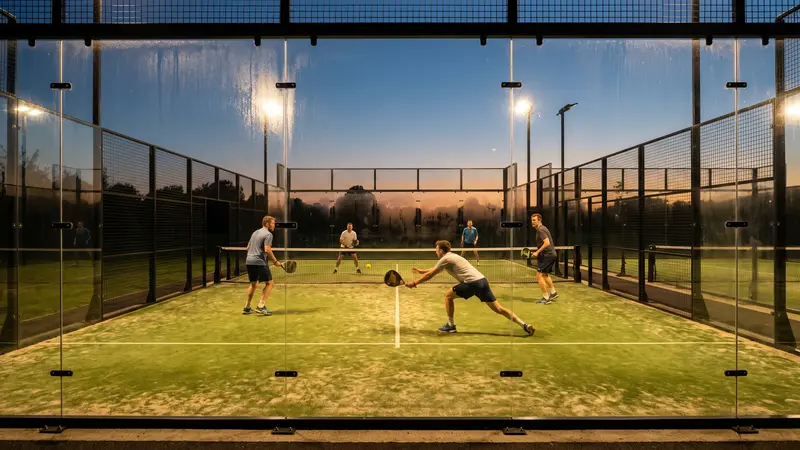
Padel is a doubles racket sport played on an enclosed court about a third of the size of a tennis court. The court is 20 metres long and 10 metres wide, split by a net, with glass or solid walls at each end and along part of each side, and wire mesh fencing filling the rest.
You play two against two with solid, stringless rackets and a ball that looks like a tennis ball but has slightly less pressure. Scoring works just like tennis (15, 30, 40, game), and the big difference is that the ball can come off the walls after it bounces and stay in play.
It started in Mexico in the late 1960s, grew huge in Spain and Argentina, and is now one of the fastest-growing sports in the UK. Most of that growth has come from people who had never played a racket sport seriously, which tells you how quickly it can be picked up.
How it differs from tennis and squash
Padel borrows from both, but it plays differently to either.
- Against tennis: the court is much smaller, the serve is underarm, and you can use the walls. Rallies tend to be longer and power matters less, so beginners get far more time hitting the ball and far less time collecting it.
- Against squash: there is a net, you face your opponents rather than sharing the space, and the ball has to bounce on their side of the court before it touches any wall. You cannot hit the ball straight into the opponents' walls, which is the most common mistake squash players make in their first game.
- Doubles by default: almost all padel is played as doubles. Singles courts exist but are rare in the UK.
The full detail on walls, serves and scoring is in our padel rules and scoring guide.
What you need for your first game
Racket
You do not need to own a racket to start. Most UK venues hire rackets for a small fee or include them with a court booking, though this varies by venue, so check when you book.
Padel rackets have no strings. They have a foam core (usually EVA) inside a fibreglass or carbon face, drilled with holes, and a wrist strap you should always wear. If you decide to buy, a round-shaped racket is the usual recommendation for beginners because the sweet spot is larger and more forgiving. Our racket finder quiz and racket guide can narrow it down once you know you are hooked.
Balls
Use padel balls, not tennis balls. They look almost identical but have lower pressure, which slows the rebound off the glass and gives you more time to react. Venues often sell tubes of three at reception, and someone in your group usually brings a tube. Balls lose their bounce over a few sessions, so a fresh tube makes a real difference.
Shoes
Shoes matter more than anything else you wear. Most UK courts are artificial grass with sand on top, and running shoes slide on it. Tennis shoes with a herringbone or omni-court sole are a sensible start, and padel-specific shoes are better still. Some indoor venues ask for non-marking soles, so check if you are unsure.
Clothing
There is no dress code at most venues. Wear comfortable sports clothes you can move and stretch in, and bring a layer for outdoor or covered courts in winter. A water bottle and a small towel are worth packing.
How to book and what it costs
Padel courts are almost always booked by the hour (sometimes 60, 90 or 120 minutes) and the price is for the whole court, not per person. With four players you split it four ways, which is why padel can work out cheaper per head than you might expect.
Prices vary a lot across the UK. They depend on the city, whether the court is indoor or outdoor, the time of day, and whether you are a member. Peak evening and weekend slots cost more than weekday daytime ones, and many clubs offer member or off-peak rates. Racket hire and balls may be extra.
Most venues take bookings online, either through their own website or a booking app. Playtomic, MATCHi and the LTA's ClubSpark system are common in the UK, but each venue uses its own system, so the court finder listing tells you where to go.
If you do not have three friends ready to play, look for:
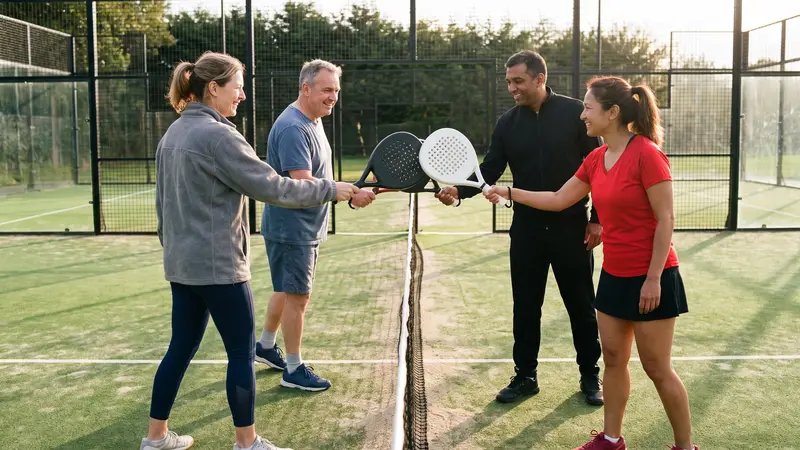
- Beginner sessions and taster classes with a coach, where kit is usually provided.
- Group courses such as the LTA's Padel Xpress, run at some venues for adult beginners.
- Open matches in booking apps, where you join a game that needs a fourth player at your level.
- Social nights and Americanos, which rotate partners so you play with everyone.
Many venues also run women-only beginner sessions, and a growing number offer inclusive sessions for disabled players and wheelchair users. Our guides to women's padel and adaptive and wheelchair padel explain what to look for.
How a first session usually goes
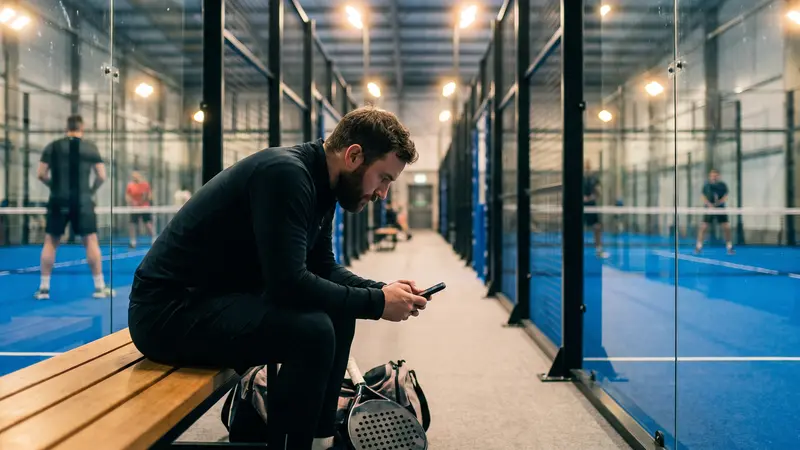
Arrive ten minutes early to check in, collect hired rackets and find your court. Most groups spend the first five to ten minutes rallying gently to get used to the bounce and the glass.
Expect the walls to feel strange at first. The instinct from tennis is to hit the ball before it reaches the back glass, but in padel it is often easier to let it come off the wall and hit it as it drops. Give yourself permission to miss a lot of these early on.
Once you start playing points, remember the basics. Serve underarm after one bounce, diagonally into the opposite service box. The ball must bounce on the other side before it touches any wall. After that bounce, it can hit walls and stay in play, but it must not bounce twice. Agree on golden point or advantage scoring before you start, so there is no confusion at 40-40.
Talk to your partner. Calling "mine" or "yours" on balls down the middle saves rackets from clashing, and it is how good pairs play anyway.
Levels and how to improve
Padel players often describe their standard on a numbered scale. Booking apps such as Playtomic use their own level system, which goes up as you play rated matches, and clubs may run their own ladders. These scales are not the same everywhere, so treat a level as a rough guide to who you will enjoy playing with.
The quickest ways to improve are:
- Take a lesson or group course early. Grips and wall play are much easier to learn properly from the start than to unlearn later.
- Play regularly with slightly better players. Open matches and club socials are good for this.
- Learn to use the back glass. Letting the ball come off the wall is the skill that separates beginners from improvers.
- Get to the net. Learn the volley and the bandeja, and you will win far more points than you lose.
When you want to work on something between games, our padel drills and practice library has drills for one, two or four players, sorted by level. Unfamiliar words like bandeja, víbora and chiquita are explained in our padel glossary.
Finding a court near you
Padel courts in the UK are spread across tennis clubs, leisure centres, parks and dedicated padel centres. Our court finder lists over 650 UK venues, so you can search by location and see which are near you, whether they are indoor or outdoor, and how to book. If you live in a big city, start with a city page such as padel courts in London.
Questions players ask
Is padel easier than tennis?
Most people find it quicker to get started. The smaller court, underarm serve and walls mean you can rally in your first session. Playing it well takes as long as any other sport.
Can I use tennis balls for padel?
You can in a pinch, but they are not ideal. Tennis balls have more pressure, so they bounce higher and faster off the glass. Padel balls are cheap and widely sold at venues.
Do I need my own racket to start?
No. Most venues hire rackets, so play a few times before buying. Check with the venue when you book, as hire policies and charges vary.
Can I play padel on my own?
Yes. Join a beginner class, a social night, or an open match in a booking app, and you will be paired with other players at a similar level.
How long is a typical padel booking?
Usually 60 or 90 minutes, and some venues offer two hours. Ninety minutes is popular for a relaxed doubles match with a warm-up.
Is padel suitable for older players or children?
Yes. It is less demanding on the body than many racket sports, and junior rackets are made for younger players. Some venues run junior and over-50s sessions.
Find a court near you
Over 700 UK venues with opening hours, facilities, nearest stations and booking links.
Open the court finder