Padel is a friendly game, and a few habits make you the kind of player people want to book with again. Here is the etiquette that matters on a UK court, what to wear (shoes most of all) and what to bring.
Before you start
Arrive early
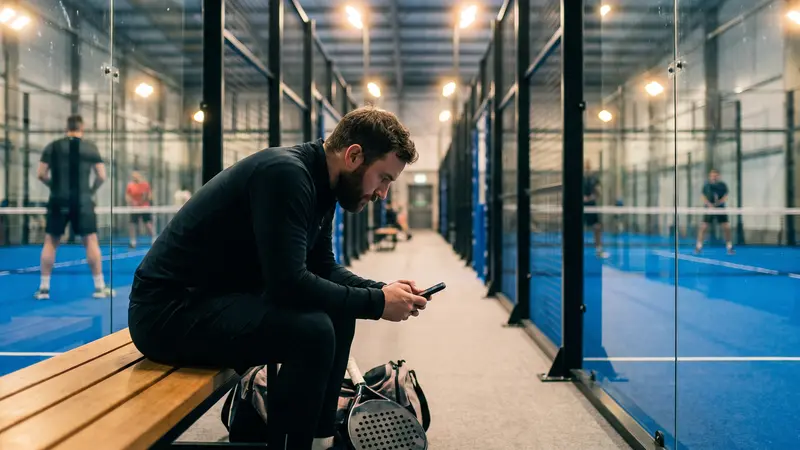
Get to the venue ten minutes before your slot. Courts are booked back to back, so your time starts on the minute and the group after you will want the court on time. Arriving early gives you a chance to change, fill a water bottle and hire a racket without eating into the game.
When your slot ends, pick up your balls, bottles and rubbish and leave promptly. LTA venue guidance asks players to leave the court as they found it and lock the gate if nobody is following straight on.
Warm up together
Spend the first five to ten minutes warming up with everyone. A common routine is gentle rallies from the back, then volleys at the net, then a few lobs and smashes. Hit to the other players rather than past them, and keep the pace sensible. The warm up is for finding your timing, not for winning points.
Agree the format before you start: how many sets, whether you will use golden point at deuce, and who serves first. Golden point (a single deciding point at deuce, with the receiving pair choosing who receives) is common in social play and pro events, so it is worth asking.
During the game
Calling balls
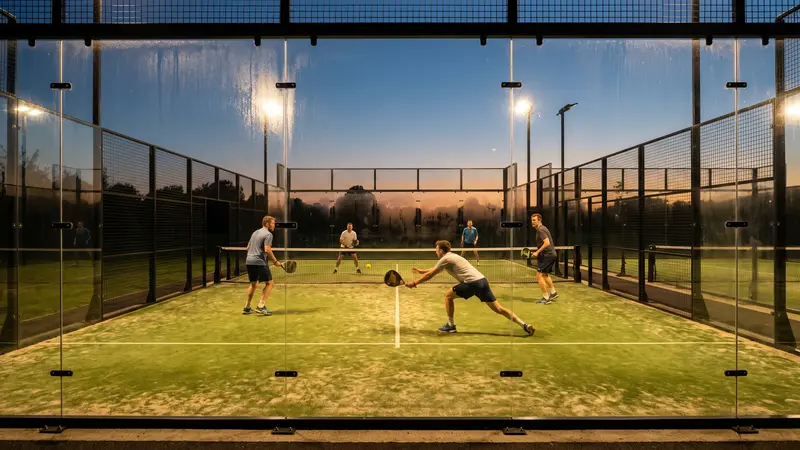
Padel has fewer line calls than tennis because the walls do most of the work. The lines that matter in a rally are mainly on the serve, where the ball must land in the diagonal service box. Each pair makes the calls on its own side of the net.
Call your own faults honestly. If the ball bounces twice before you hit it, or touches your body or clothes, the point is gone. Owning up straight away keeps the game friendly, especially with players you do not know.
If you are not sure about a call, the usual custom is to give the point to your opponents or replay it. Arguing over a social point is never worth it.
Safety near the glass
The walls are part of the game, but they are hard. Do not chase a ball into the glass at full speed. Let it come off the wall and play it on the rebound. That is the skill padel rewards.
Your partner is close by on a court 10 metres wide, so racket clashes are the bigger risk. Call "mine" or "yours" on balls down the middle, and keep your swing short near the net. The FIP Rules of Padel require the racket's wrist strap to be worn during play, so put it on every time.
Some courts have open doorways that let advanced players chase a ball outside. Only do this if the venue allows it and the area outside is clear. Most social games simply let those balls go.
Passing balls back
Between points, send balls to the server with a gentle bounce or roll them under the net. Do not fire them back hard or over the top, and do not hit them over the fence into the next court. If your ball rolls onto another court, wait for their point to finish before you ask for it back.
Net cords and lucky shots
Some players raise a hand after winning a point off the net or the frame. That custom comes from tennis and is entirely optional in padel. A smile or a nod is enough.
Shaking hands
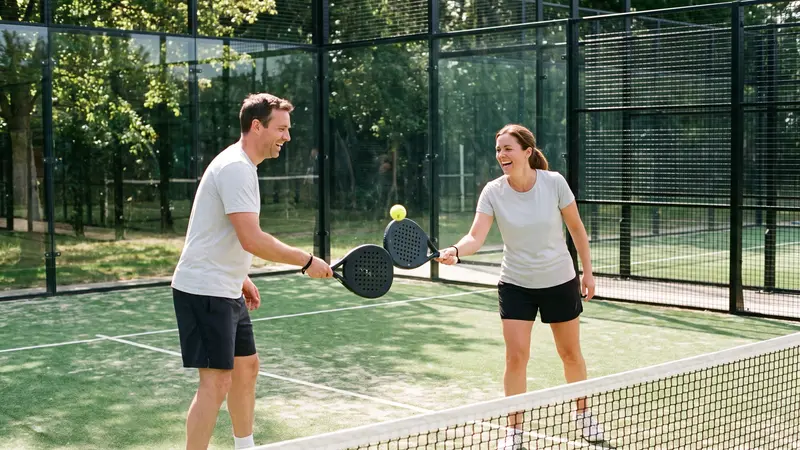
At the end, meet at the net and shake hands or bump rackets with all three other players. Thank them for the game. In padel the post-match drink is half the point, so if the venue has a bar or café, it is a good way to line up your next game.
Playing open matches with strangers
Open matches on apps such as Playtomic let you join a game with people you have never met. They are one of the best ways to play more often, and a little etiquette goes a long way.
- Set your level honestly. If you overrate yourself, the game will be lopsided and others may decline to play with you again.
- Turn up. Three people are relying on you. If you must drop out, do it early. Booking apps set a cut-off for leaving open matches, after which you need to contact the club.
- Introduce yourself. Swap names before the warm up and agree the format.
- Rotate partners if you agree to. Some groups switch pairs each set so everyone plays together.
- Record the result fairly. In a competitive match the score affects everyone's level, so enter it accurately.
- Pay your share promptly. With split payment, the person who booked is charged for anyone who does not pay.
Our booking guide explains open matches, levels and split payment in more detail. If you find yourself playing with a wheelchair user or a player with another impairment, the same manners apply with a little more planning, and our adaptive and wheelchair padel guide has tips for playing partners.
What to wear
There is no dress code for social padel. The LTA's advice is to wear whatever sports kit you feel comfortable in. A few choices do make the game easier, though.
Clothing
Wear light, breathable sports clothing that lets you lunge and stretch: a technical T-shirt or polo with shorts, a skort or leggings. Avoid heavy cotton, which gets soaked quickly indoors. On outdoor courts in winter, layer up with a long-sleeved top you can take off after the warm up. Pockets or a ball clip help when you are serving.
Shoes
Shoes matter more than anything else you wear. Most UK courts are artificial grass dressed with sand, which is slippery in the wrong shoe. Padel shoes use one of two outsoles:
| Sole | Pattern | Best on |
|---|---|---|
| Herringbone | Zigzag grooves across the sole | Courts with plenty of sand; gives strong grip and a controlled slide |
| Omni | Small, closely packed nubs | Courts with less sand and many indoor courts |
| Hybrid | A mix of both | Players who move between different venues |
If you do not want to buy padel shoes straight away, the LTA notes that clay court tennis shoes are the closest alternative, since they also use a herringbone pattern.
Why running shoes are a poor choice
Running shoes are built for moving forwards. Their soft, high heels and smooth or lugged soles are not made for the sideways stops, lunges and quick turns padel asks for. On a sandy court they can slip, and the tall, soft heel makes rolling an ankle more likely. Sand also wears through the light mesh uppers quickly.
Gym trainers with flat soles are a little better but still lack grip. If you play more than once a fortnight, padel shoes are the first thing worth buying, ahead of a racket.
What to bring
- Water bottle. Ninety minutes of padel is thirsty work, indoors especially.
- Racket, or check the venue hires them. Try the Racket Match quiz when you are ready to buy your own.
- Balls. A new can is good manners if nobody else has brought one. Padel balls have slightly lower pressure than tennis balls, so do not bring tennis balls.
- Grip or overgrip if your racket handle is getting slippery.
- Towel and a spare top for sweaty indoor sessions.
- Sports glasses or a cap on outdoor courts if the sun is low.
- Your phone for split payment, door codes and recording the score.
Questions players ask
Is there a dress code for padel in the UK?
Not for social play. Wear comfortable sports kit. Some clubs and competitions have their own rules, so check if you are entering a tournament.
Can I play padel in running shoes?
You can, but it is not a good idea. They lack sideways support and grip on sandy artificial grass, which raises the risk of slipping or turning an ankle. Padel shoes or clay court tennis shoes are much safer.
Herringbone or omni sole?
Herringbone suits courts with plenty of sand. Omni suits courts with less sand and many indoor courts. If you play at several venues, a hybrid sole is a sensible middle ground.
Who makes the calls in a social game?
Each pair calls the ball on its own side. Call your own double bounces and touches honestly, and give the point or replay it if you are unsure.
Should I apologise after a net cord?
It is optional. Some players raise a hand out of habit from tennis. Nobody will mind either way.
Do I have to wear the racket strap?
Yes. The FIP Rules of Padel make wearing the wrist strap compulsory, and it stops a racket flying into the glass or another player.
Find a court near you
Over 700 UK venues with opening hours, facilities, nearest stations and booking links.
Open the court finderSources
- ltapadel.org.uk/play/how-to-get-started-playing-padel/
- ltapadel.org.uk/play/how-to-get-started-playing-padel/padel-equipment-guide/
- padelfip.com/wp-content/uploads/2025/12/FIP_Rules-of-Padel.pdf
- ltapadel.org.uk/play/how-to-get-started-playing-padel/rules/
- playerhelp.playtomic.com/hc/en-gb/articles/19831672824465-Cancellation-Policy-for-Open-Matches-Padel-Tennis
- playerhelp.playtomic.com/hc/en-gb/articles/19832089052561-How-to-split-the-payment-of-a-reservation
- padelshop.com/en-be/blogs/padel-tips/which-sole-should-you-choose-for-padel-shoes
- tennisnuts.com/shop/blogs/padel-shoes-explained.html