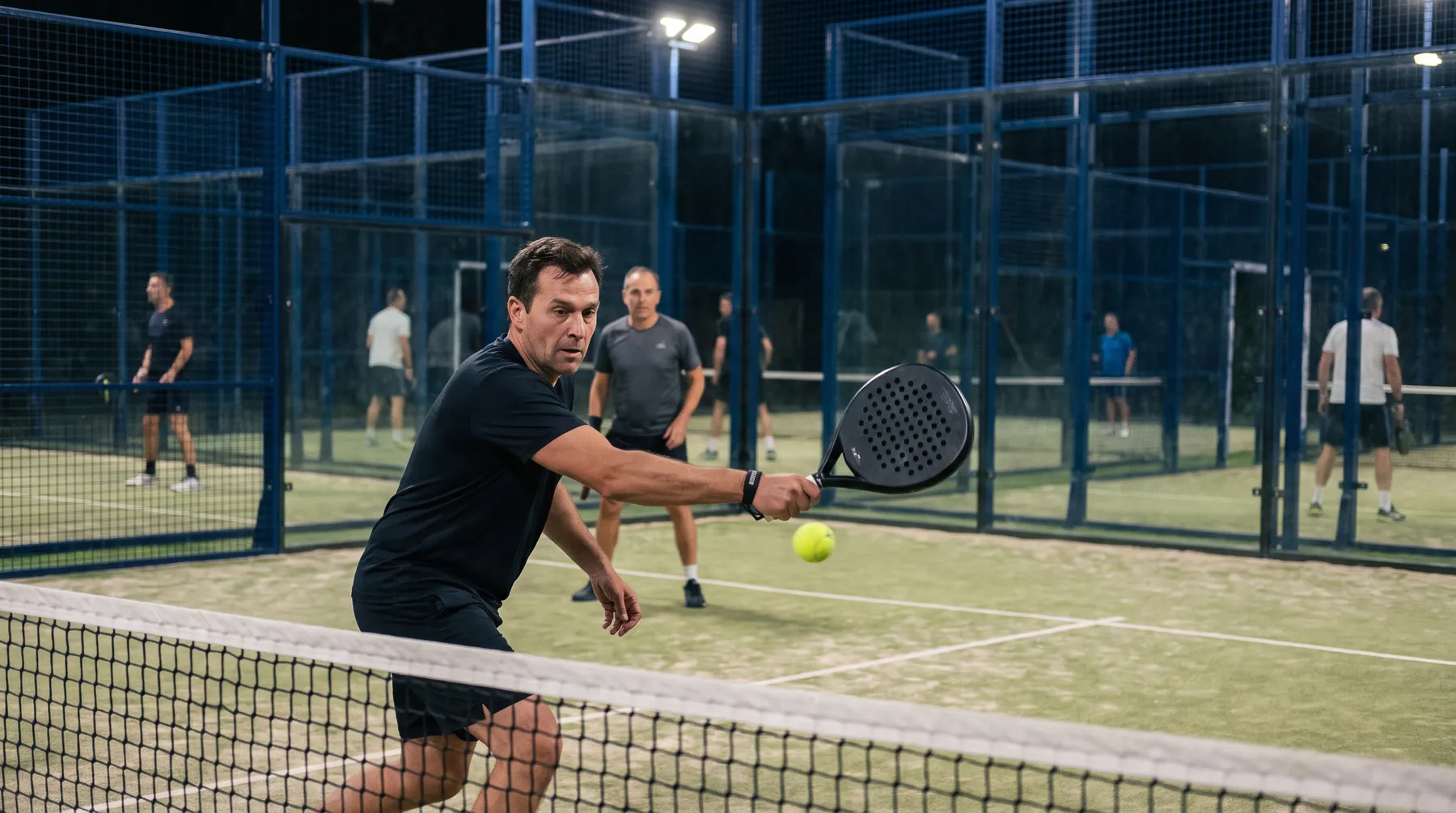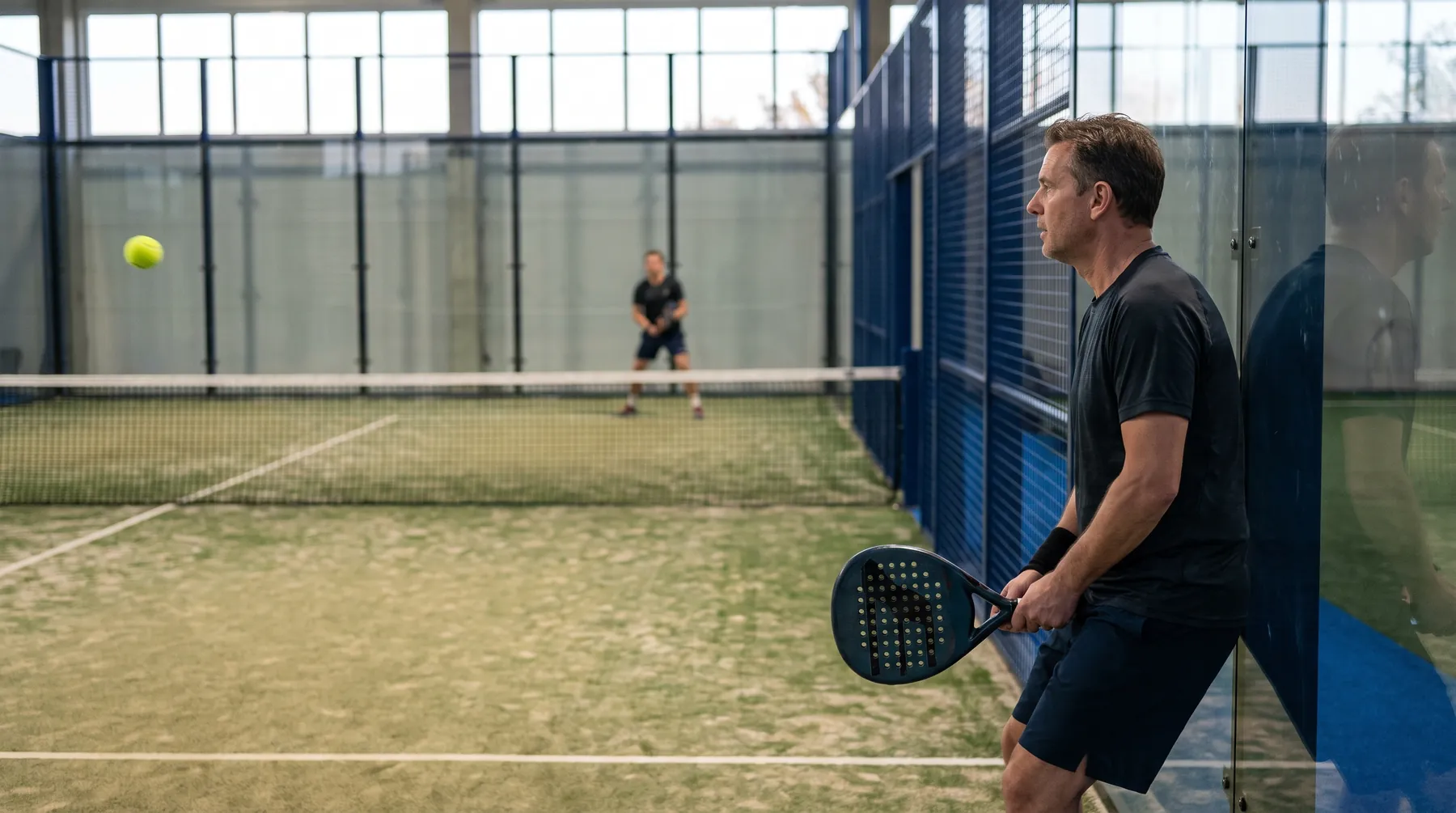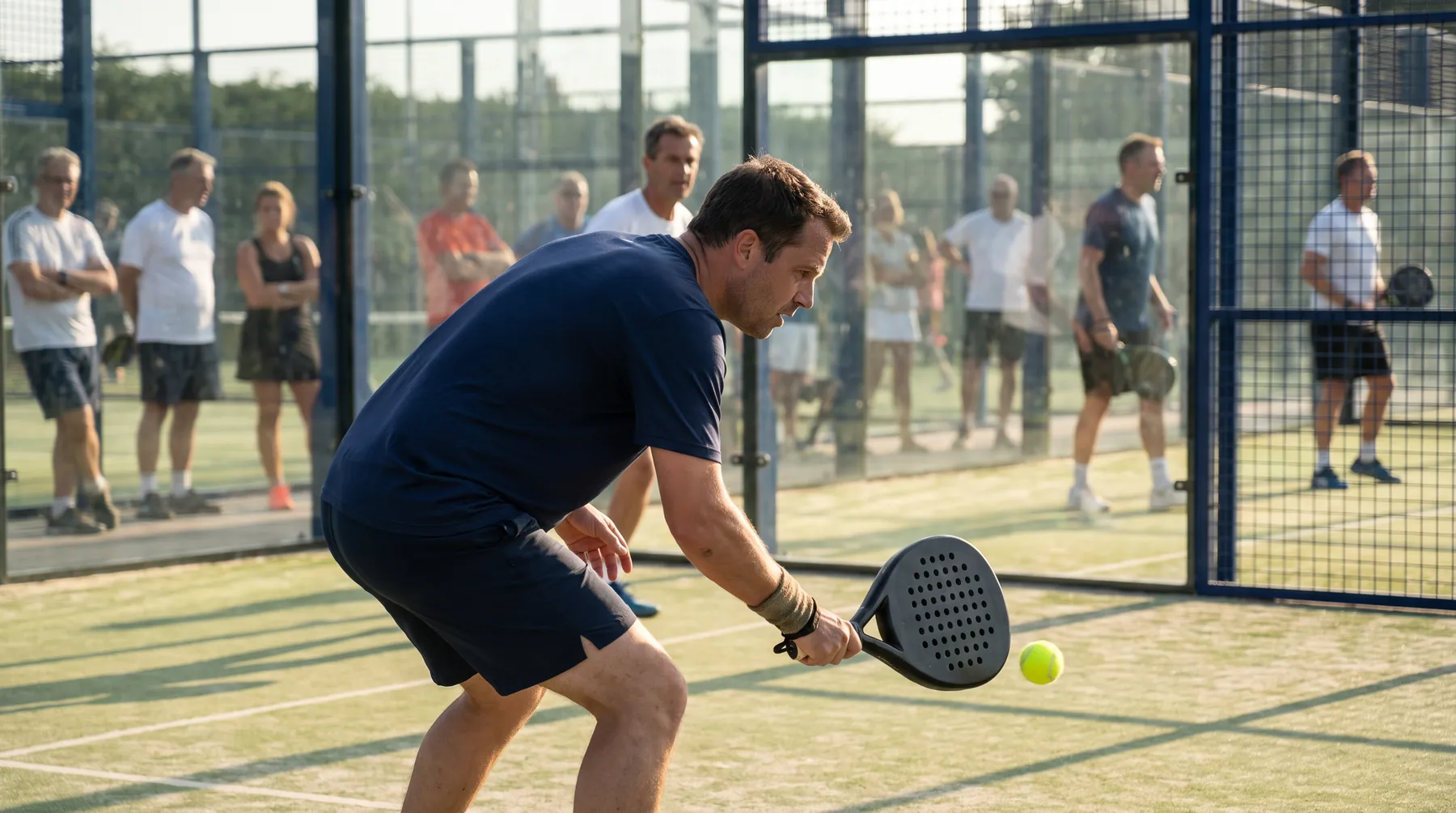
Pick up a padel racket for the first time and your hand will settle wherever feels comfortable. For most people that’s a frying-pan grip, with the palm flat behind the handle. It works for about ten minutes, until the first ball comes to your backhand or someone hits a volley at your chest.
The fix is one grip, and we’d get it right before you touch any other part of your technique.
Why one grip does most of the work
Tennis players swap grips constantly, a different one for the forehand, the backhand, the serve and the volley. Padel mostly doesn’t bother. On a court this small the ball comes back quickly, and there often isn’t time to turn the handle in your hand between shots.
So padel players use the continental grip. It holds the racket face close to upright, which lets you block a ball on either side of your body without changing anything. Volleys, the serve, the bandeja (padel’s controlled overhead), lobs and most shots off the glass all start from it. Coaches reckon around three quarters of shots or more are played with it, and for a beginner it’s close to all of them.
It also tilts the face very slightly open, which puts a little slice on the ball. In padel that helps. A low, skidding ball is harder to attack than a fast one that sits up off the glass.
Finding the continental grip
There are two easy ways in. Try both and keep whichever makes sense to your hand.
The quickest is the hammer method. Hold the racket out in front of you with the edge of the frame pointing at the floor, as if you were about to knock a nail into the ground with it. Wrap your hand round the handle in that position, and you’re there.
The other is the slide method. Hold the racket by its throat with your free hand, face on its edge. Rest your hitting hand flat against the strings side of the frame, then slide it down the handle until the heel of your hand sits at the butt cap, and close your fingers.
Either way, check a few things once you’re holding it:
- The V between your thumb and index finger sits on the top edge of the handle, not round the back of it.
- Your index finger is spread slightly up the handle, a bit like a finger on a trigger. That gives you feel for where the face is pointing.
- The base of your hand is near the end of the handle, so you’re using the full length of the racket.
If you look down and see the strings facing the sky, you’ve slipped into a forehand grip. Strings facing the floor means you’ve gone too far the other way.
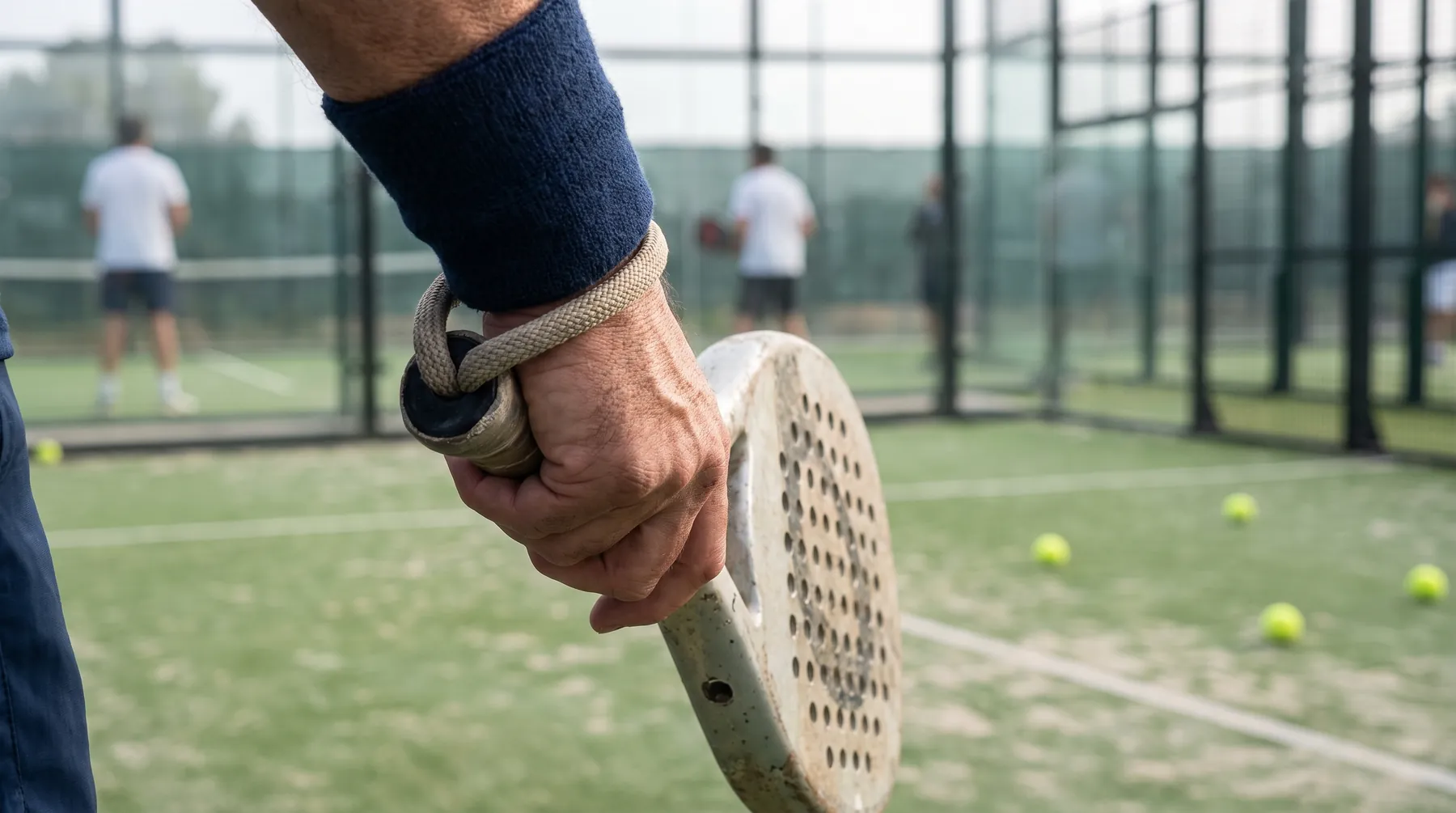
One last thing before you hit a ball: put the wrist cord on. On a glass court, a racket flying out of a sweaty hand is the last thing anyone needs, and the rules are strict about it.
The rule
The FIP Rules of Padel make the wrist cord compulsory. It must be non-elastic, no longer than 35cm and worn round the wrist. If you drop your racket or snap the cord during a point, your pair loses that point.
How tightly to hold it
Most new players squeeze far too hard, especially when the ball is coming at them quickly. A death grip locks the wrist and kills any feel on soft shots. It also sends the vibration of every hit up your forearm towards the elbow.
Aim for a relaxed hold between shots, roughly half your full strength, firm enough that the racket won’t twist if you catch the ball near the frame. You’ll tighten up for a moment as you hit, then let go again. If your forearm aches after an hour, look at grip pressure first.
A quick check: there should be a small gap between your fingertips and the heel of your hand as you hold the handle. Fingers digging into your palm means you’re squeezing, or the handle is too thin for you.
Getting the handle size right
Padel rackets don’t come in grip sizes the way tennis rackets do. Most handles are made to one standard size, which suits a lot of hands and is too thin for plenty of others. A thin handle makes you squeeze harder to stop it turning, which is the very habit you’re trying to lose.
The fix costs a couple of pounds. An overgrip, the thin wrap that goes over the base grip, adds a little thickness and some tack, and you can find out more about them in the shoes, balls and grips guide. If one isn’t enough, add a second.
Hold the racket in your continental grip and look for a gap of about a finger’s width between your fingertips and your palm. Go too thick and the racket feels clumsy and your wrist loses movement, so build it up one layer at a time. If you haven’t bought a racket yet, handle feel is one more thing to check when choosing your first racket.
Use your free hand
Watch good players between shots and their non-hitting hand is resting on the throat of the racket. It’s there for a reason. It holds the racket’s weight so your hitting hand can stay loose, and it lets you reset the grip without looking.
When the ball comes, the free hand helps turn your shoulders and take the racket back, then lets go as you swing. On the backhand side it stays on longer, which keeps the racket steady and your shoulders turned. If your grip keeps creeping round during a rally, your free hand has probably gone missing.
Between every point, take the racket in your free hand by the throat and re-find the continental grip with your hitting hand. It takes a second, and it stops a bad grip from following you through a whole game.
When to turn the handle a little
Coaches don’t all agree here. Most say to use the continental grip for everything in your first few months, until you stop thinking about it. After that, some players turn their hand a fraction towards a forehand grip for drives from the back of the court, where there’s more time and a little extra pace helps. A few do the same for flat smashes later on.
A fraction is the most you want. Turning the handle slightly behind the baseline is fine. Turning it at the net, where balls arrive in under a second, usually puts the next volley into the net or the glass. If in doubt, stay continental.
Coming from tennis
Tennis players fight this change harder than anyone. A semi-western forehand grip feels powerful, and for the first few weeks the continental grip will make your forehand feel weak and a little floaty. Stick with it. The big topspin drive that wins points in tennis tends to come off the back glass at a nice height for your opponents, and a closed racket face makes volleys and overheads awkward.
The two-handed backhand is a similar story. You can play one off a ball that hasn’t touched the glass, but low balls, wide balls and anything off the wall are far easier one-handed. There’s more on what carries over from tennis (and what doesn’t) in padel for tennis players.
A five-minute practice routine
A wall and a ball are enough to groove the grip, so this works before a booking or on your own.
Try this on court
Stand side-on, about two metres from a wall or a stretch of glass.
- Hit gentle forehands against it in the continental grip, keeping the ball at waist height.
- Switch to backhands only, with your free hand on the throat as you prepare.
- Alternate forehand and backhand, resetting the grip with your free hand between hits.
- Step closer and volley the ball against the wall without letting it bounce, same grip on both sides.
Once it feels steady, pick a spot on the wall and aim at it. It’s dull, we know. A few sessions of it will still do more for your grip than a month of matches.
Next on the blogWheelchair padel: how the rules change and how to start