A volley in padel rarely needs to win the point. It needs to land somewhere awkward and keep you at the net for the next ball, which is a different job from the one tennis trains you for.
It’s the shot you’ll hit most once you’ve moved up to the net, and it’s where a lot of tennis habits need unpicking.
Why the volley matters so much
A volley is any shot you hit before the ball bounces. In padel it’s mostly played from the front of the court, in the attacking position. LTA Padel’s coaching guide puts it plainly: most points are won at the net. From up there your opponents have less court to aim at and less time to react.
The catch is that the court is small and the back glass is always there. A volley that would be a winner in tennis can bounce, hit the glass and sit up nicely for the defender. So the padel volley is less about pace and more about where the ball bounces first, and how comfortable it is to play after that.
The ready position
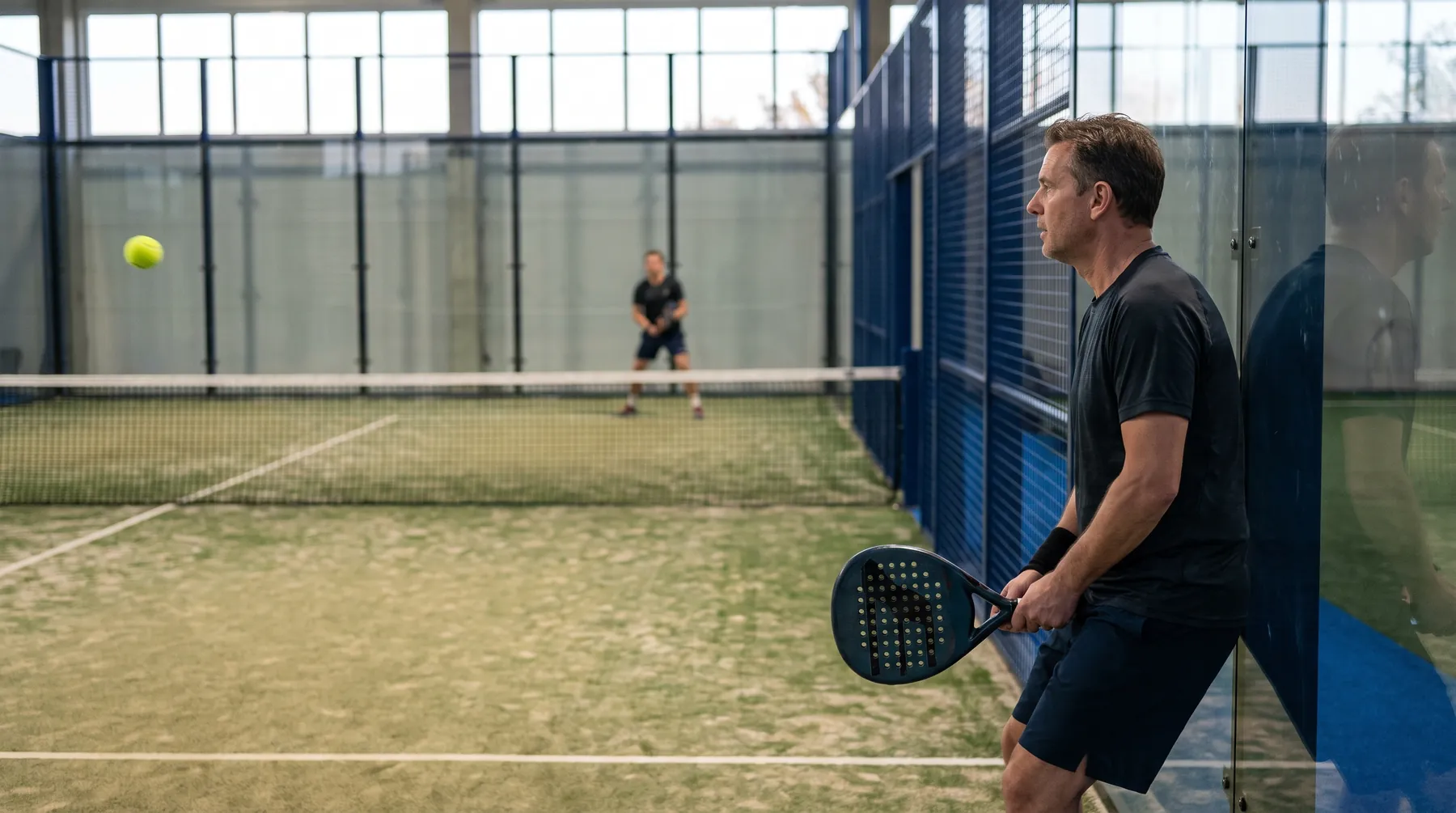
Everything starts before the ball is hit. At the net, stand facing the play with your knees slightly bent and your weight forward on the balls of your feet. Hold the racket up in front of you, head above the handle, at roughly the height you expect to make contact. That’s above the top of the net, so you aren’t lifting the racket from your waist every time.
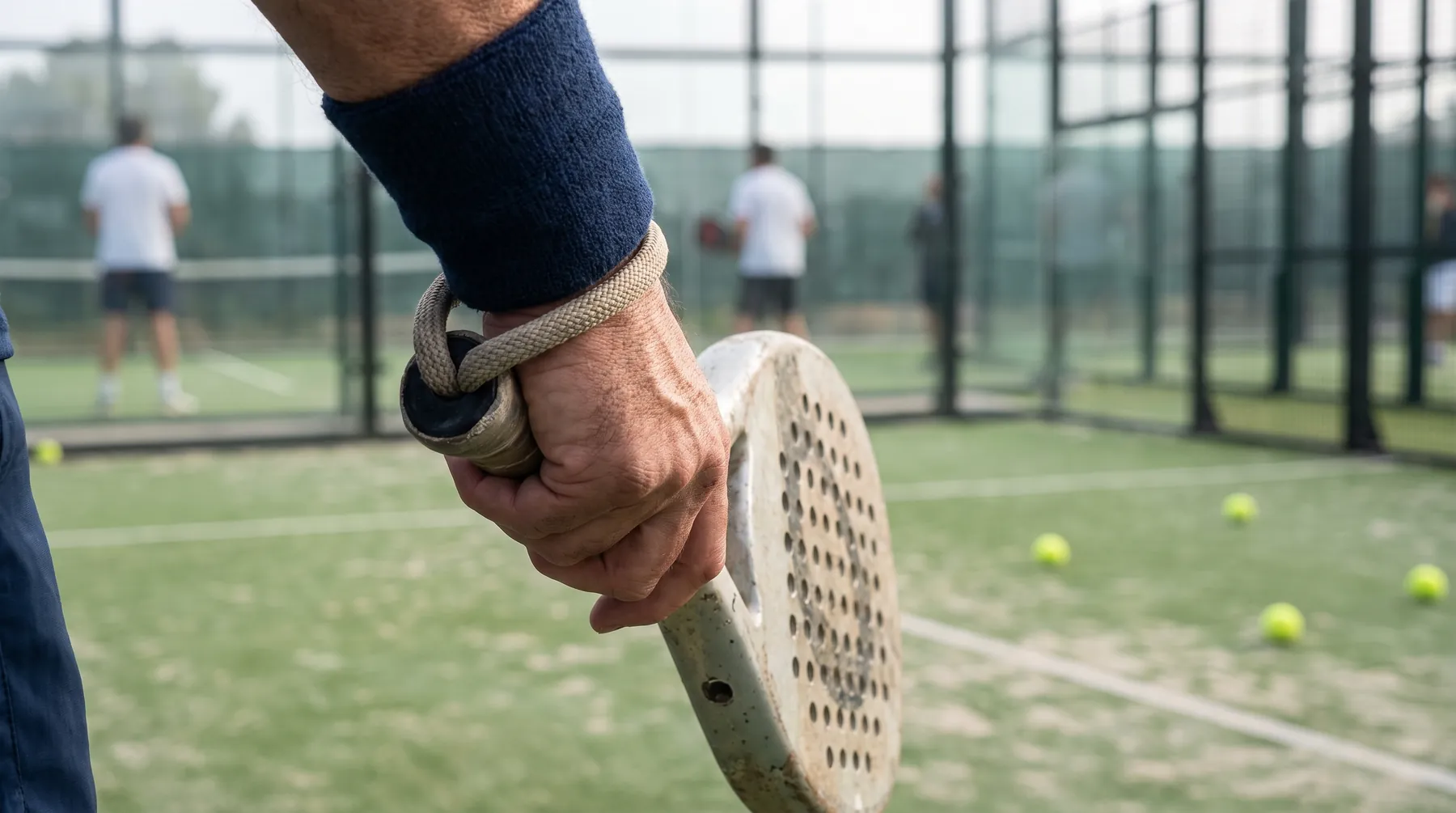
Hold it in the continental grip. It covers forehand and backhand volleys without a grip change, and at the net there’s no time for one anyway. Rest your free hand lightly on the throat of the racket between shots, which keeps the face up and steady.
Watch for two habits in your own game: letting the racket droop towards your knees between shots, and holding it flat like a tray. Both cost you time, and a racket that comes up from below tends to send the ball into the net or up into the glass.
A short swing, a step and contact in front
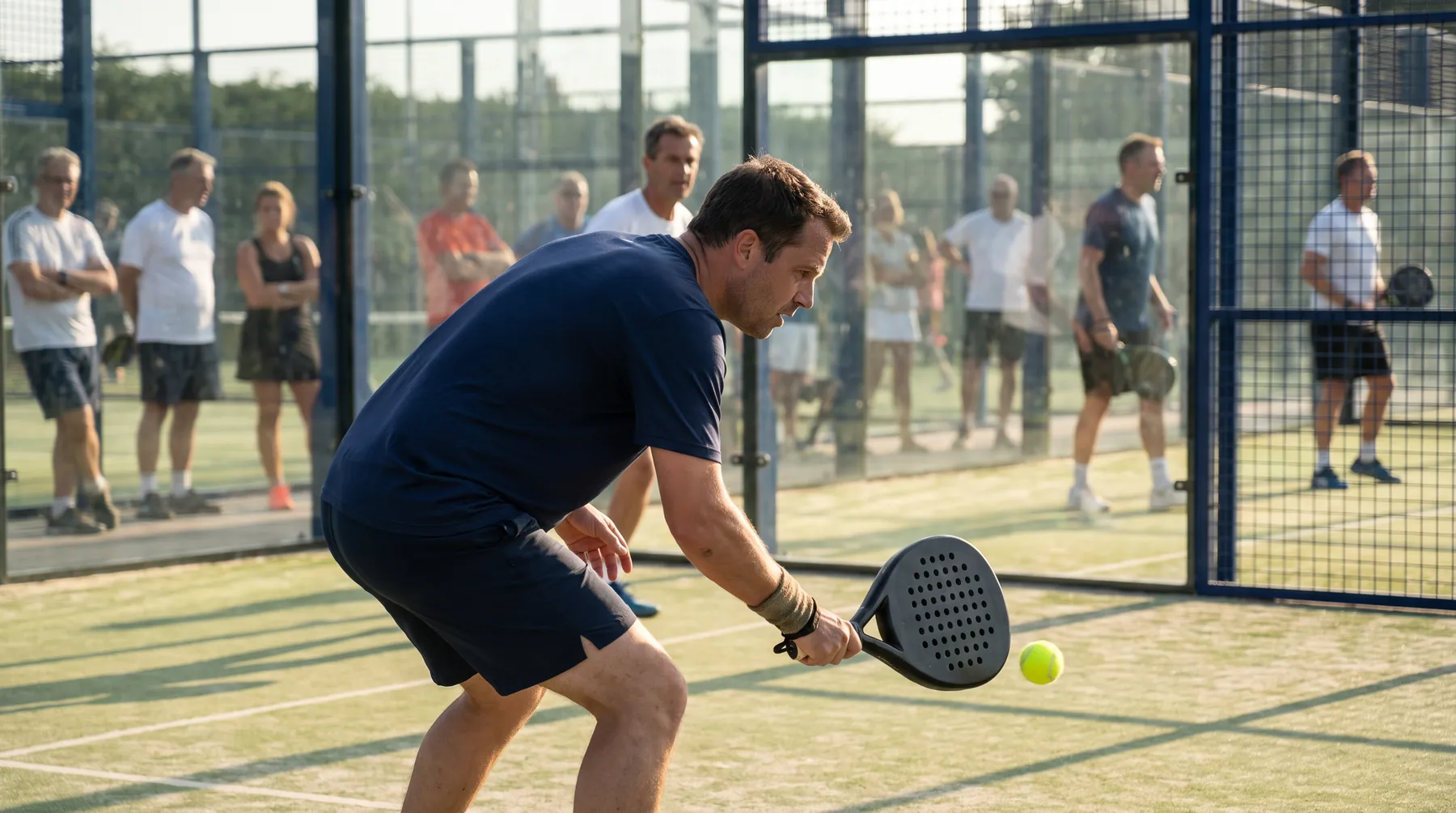
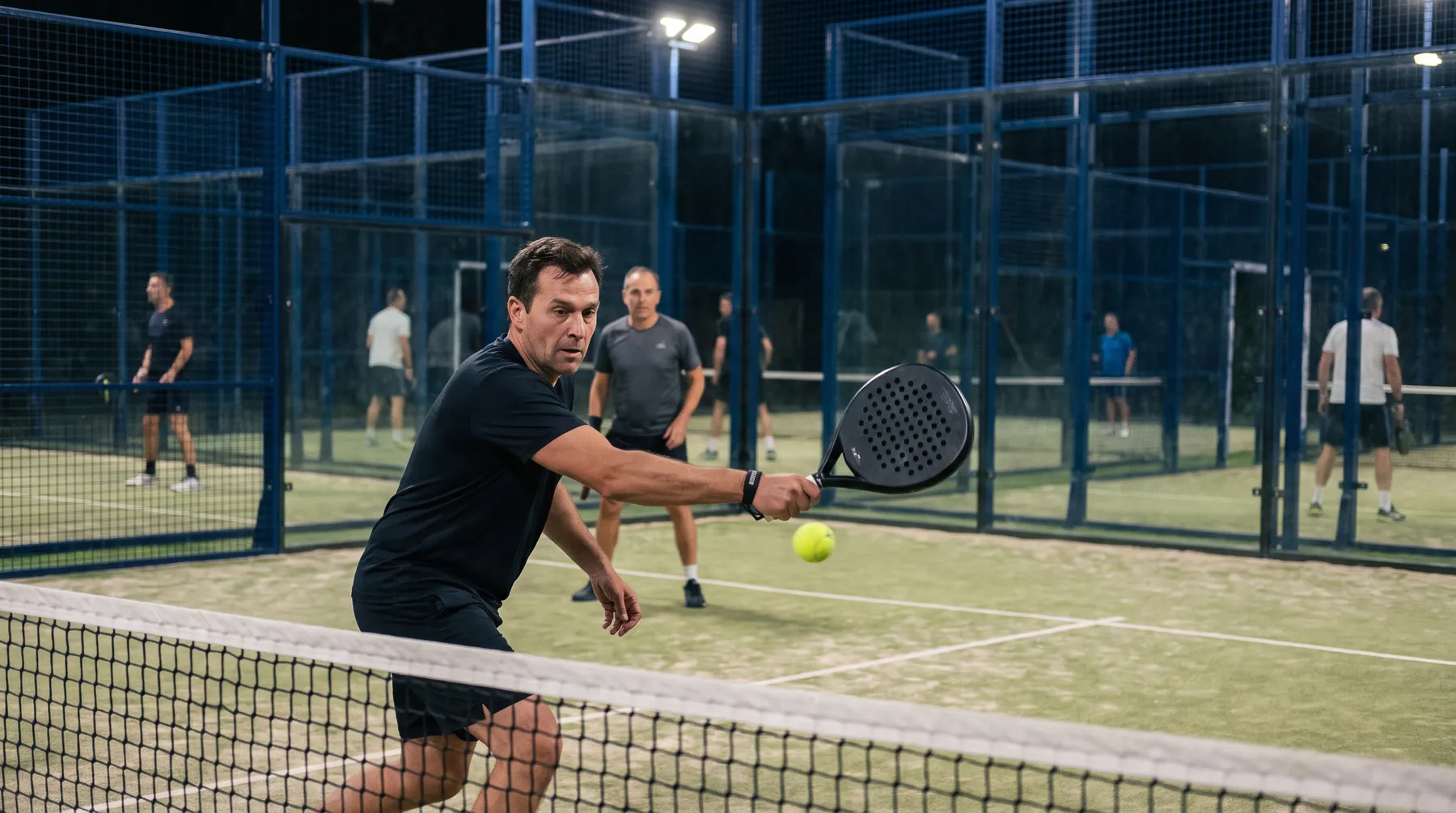
The padel volley is a compact shot. There’s no big backswing and no long follow-through. A small shoulder turn takes the racket back a short way, and the power comes from stepping into the ball, not from swinging the arm.
- On a forehand volley, step forward with the opposite foot (the left foot for a right-hander).
- On a backhand volley, step with the foot on your racket side (the right foot for a right-hander).
- Meet the ball out in front of your body, with your wrist firm and the racket head above your hand where you can manage it.
- Let the racket travel a little towards your target after contact, then bring it straight back up to the ready position.
For a low ball, bend your legs and get down to it. Reaching down with the arm alone usually tips the racket face open and pops the ball up, which is exactly the ball your opponents want.
Block, push or slice: volleys by feel
Coaches name volleys in different ways, and LTA Padel sorts them by how they feel on the racket. In our words, it comes down to how much time you have.
| Type | When to use it | What it feels like |
|---|---|---|
| Block | A fast ball hit hard at you, or one you’re stretching for | Racket held firm, almost no swing; you use the ball’s own pace and redirect it |
| Push (or punch) | A comfortable ball at a good height | A short, firm movement through the ball to send it deep or into a corner |
| Slice (attacking) | A slow, floating ball you can step into | A shorter movement from high to low, putting backspin on the ball so it stays low and dies off the glass |
Learn the slice early. A ball with backspin bounces lower and comes off the glass with less to work with, which makes your opponents’ next shot much harder. A flat volley that bounces high off the glass does the opposite.
Where to aim your volleys
Ask one question about every volley: where does its first bounce land? A volley that bounces deep near the back glass gives the defender time to let it come off the wall and play a comfortable shot. One that bounces nearer the service line, or low at a player’s feet, gives them much less.
A few targets work well at club level:
- Down the middle, between the two defenders. It narrows their angles and can cause a moment of “yours or mine?”.
- Low at the feet of a player coming forward, so they have to volley up to you.
- Into the side glass at an angle, which pulls a defender out wide and opens space.
Pace matters less than you’d think. Players coming from tennis often hit volleys too fast and too deep, which gives the ball a bigger, easier bounce off the back glass. Taking a bit of speed off and landing the ball shorter is often the stronger shot.
Next time you play, watch where your volleys bounce first, not where they end up. If most of them land near the back glass, aim a metre or two shorter and see how the replies change.
Be patient before you finish
Against a pair who are set and balanced, a clean winner from a volley is rare. At a decent level, expect to play three or four volleys to set a point up before a ball arrives that you can finish. Those set-up volleys push the defenders back, pull them out of position or make them hit up.
The ball to attack is one that floats, sits up above net height, or comes from a player who’s off balance. When it arrives, step in and take it early. Until it does, keep your volleys low and well placed and stay at the net. Going for the line off a difficult ball is the quickest way to give the net away.
Footwork and distance from the net
It’s tempting to stand right on top of the net so you can hit down on everything. The trouble is that it makes you easy to lob, and it leaves you no room to step forward into the ball.
Most coaches put your attacking spot about two to two and a half metres off the net, somewhere between the net and the second post of the side fencing. From there a lob is a couple of steps away, and you can still move in on a volley. However close you get, keep the racket on your side.
The rule
The FIP Rules of Padel give the point away if you, your racket or anything you’re wearing touches the net or its posts while the ball is in play. You also lose it if you hit the ball before it has come over the net to your side.
Between shots, a small split step (a little hop that lands you on both feet just as your opponent hits) keeps you ready to move either way. After each volley, recover to your position alongside your partner. A good volley followed by a slow recovery just hands your opponents a gap.
One ball you can’t volley
The return of serve has to bounce. If you’re receiving and the serve hits you or your racket before it lands, the point goes to the server. Once the return has been played, both pairs can volley as much as they like. The serve rules cover the other ways a serve can go wrong.
For a first session focused on volleys, ask a friend to stand at the back and feed you easy balls while you hold the ready position and do nothing but block. No swing at all. Our padel drills library has more net drills for when that gets easy.
It feels too simple, but most new players are surprised how far a firm block travels, and how often a big swing was the thing sending the ball into the glass. The volley and net play guide picks up from there with the drop volley and the chiquita.
Next on the blogCan you build a padel court in your garden?