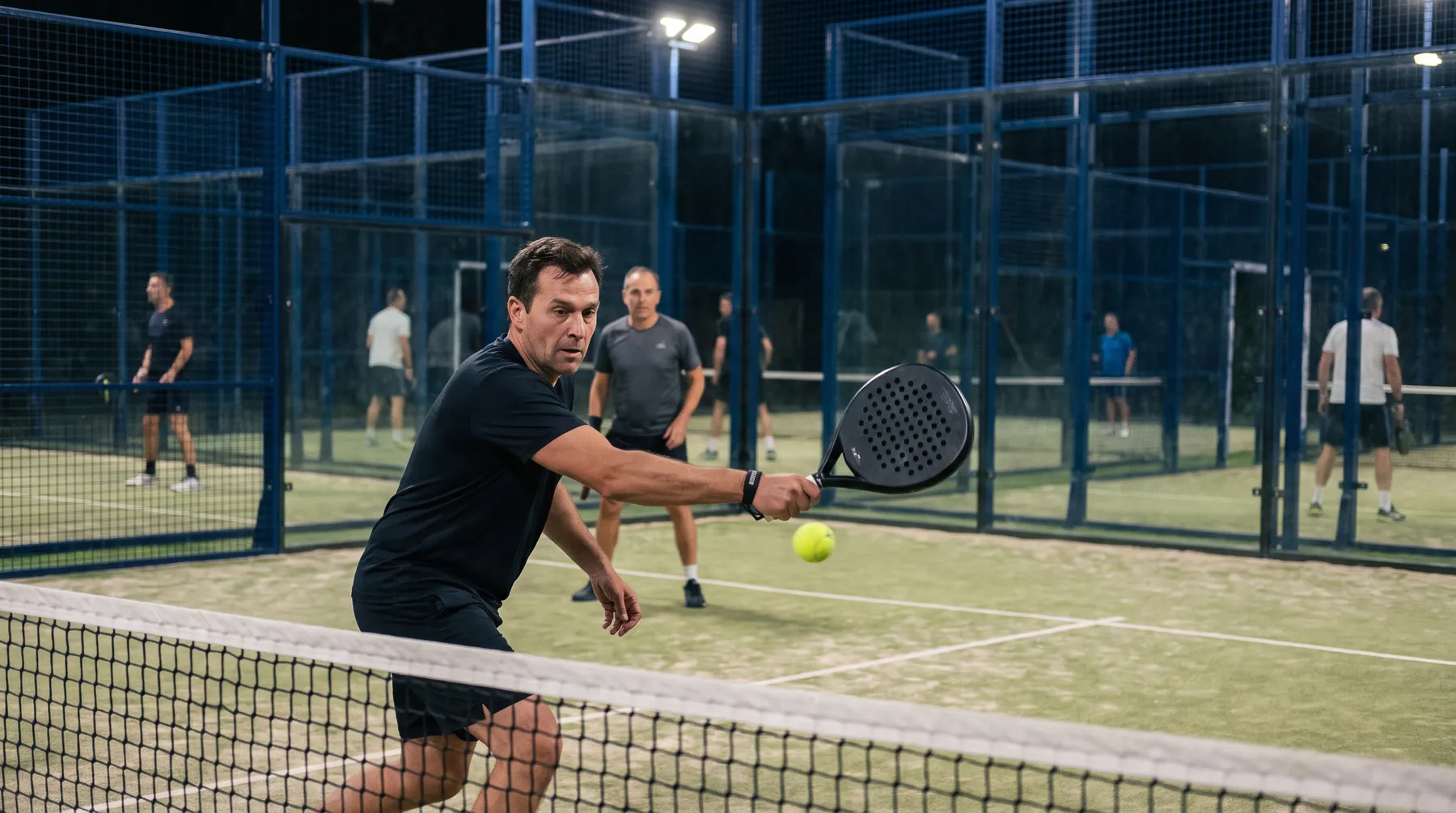
Give a new player a ball at waist height on the back line and they’ll try to hit it through the opposition. In padel that ball usually flies into the back glass and pops up at a perfect height for the other pair to finish.
You’ll play most of your early padel from the back half of the court, so the forehand and backhand are the shots you’ll hit most. A shorter, calmer version of both keeps you in the rally and gives you a chance to move forward.
What a groundstroke is for in padel
In tennis, a big forehand from the baseline can win the point outright. In padel it rarely does. The opponents are usually standing near the net, and a fast ball either gets volleyed straight back or carries on into their back glass, where the wall takes the pace off it and hands them an easy shot.
So from the back, think of your forehand and backhand as a way of making life awkward for the pair at the net. The best ball is usually low, dropping at their feet so they have to volley upwards. When that isn’t on, a lob over their heads sends them back and gives you the chance to take the net yourselves. Power comes later, and only when the ball is right for it.
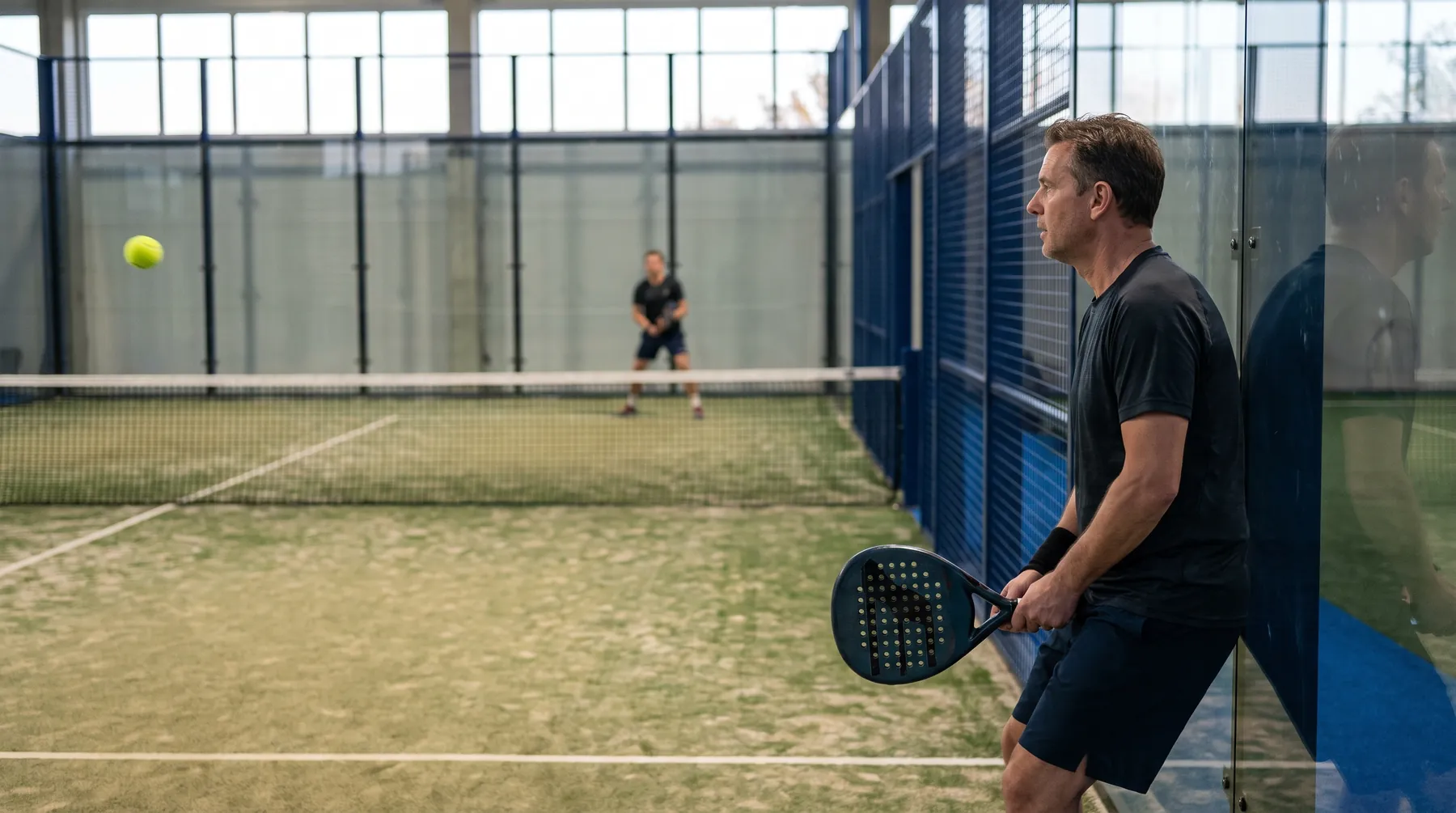
Get ready early
The compact padel swing has one big advantage: there’s very little to prepare, so you can be ready early. As soon as you can see which side the ball is coming to, turn your shoulders and take the racket back. Don’t wait for the bounce to start moving.
A few habits help:
- Stand with your knees soft and your weight on the balls of your feet, racket up in front of you, free hand on the throat.
- Do a small hop, a split step, just as the opponent hits, so you can push off in either direction.
- Move your feet to put yourself beside the ball, a comfortable arm and racket’s length away. Most mishits come from being too close.
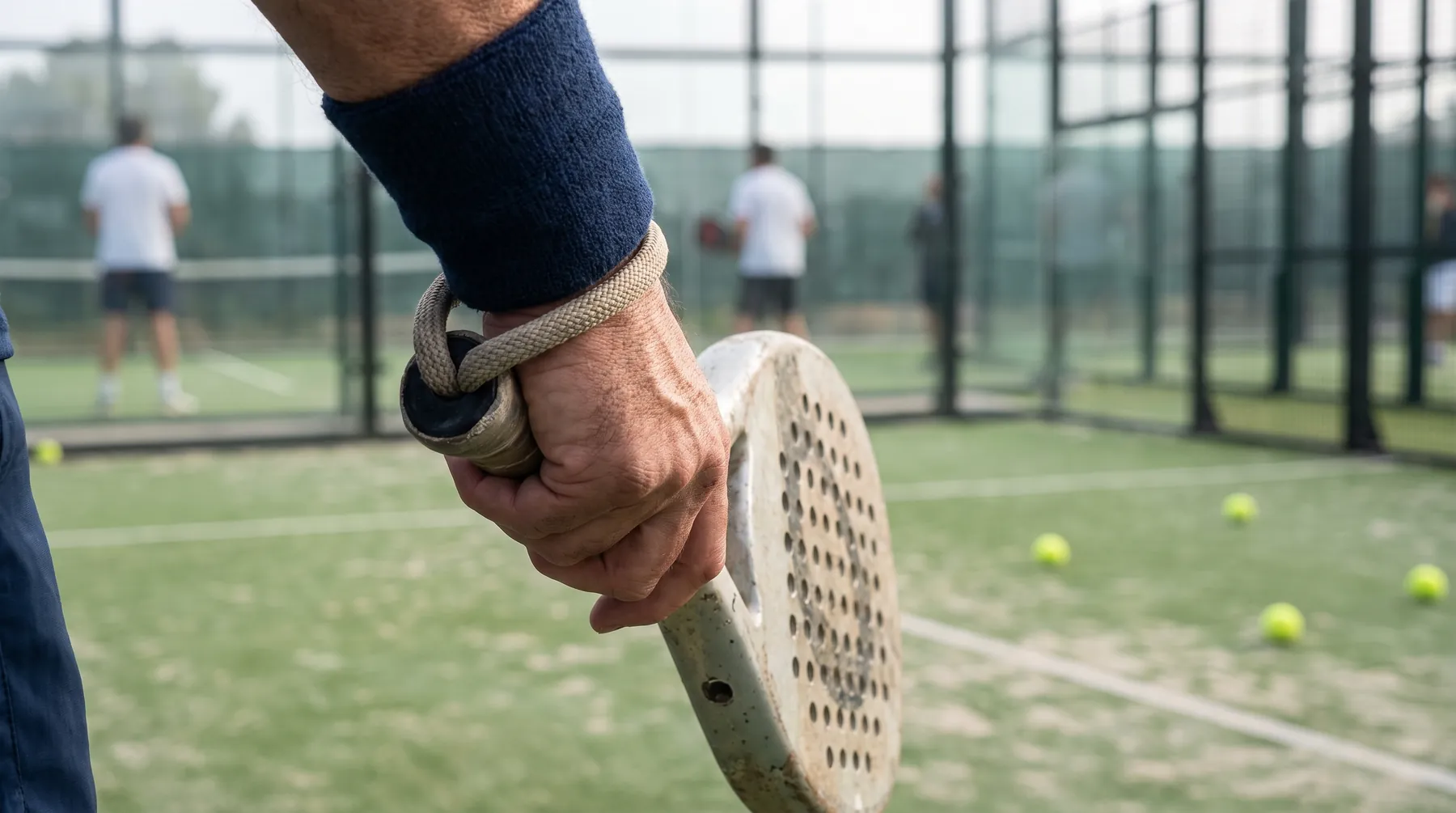
- Keep the continental grip on both sides. There’s no need to change it.
The forehand
The padel forehand is a short shot with very little going on behind your body. Taken in order:
- Turn. Go side-on as the ball comes, so your non-hitting shoulder points roughly towards it.
- Short backswing. Take the racket back only as far as your hip or a little beyond, with no loop and no wind-up behind your back. Less can go wrong, and you get more time to watch the ball.
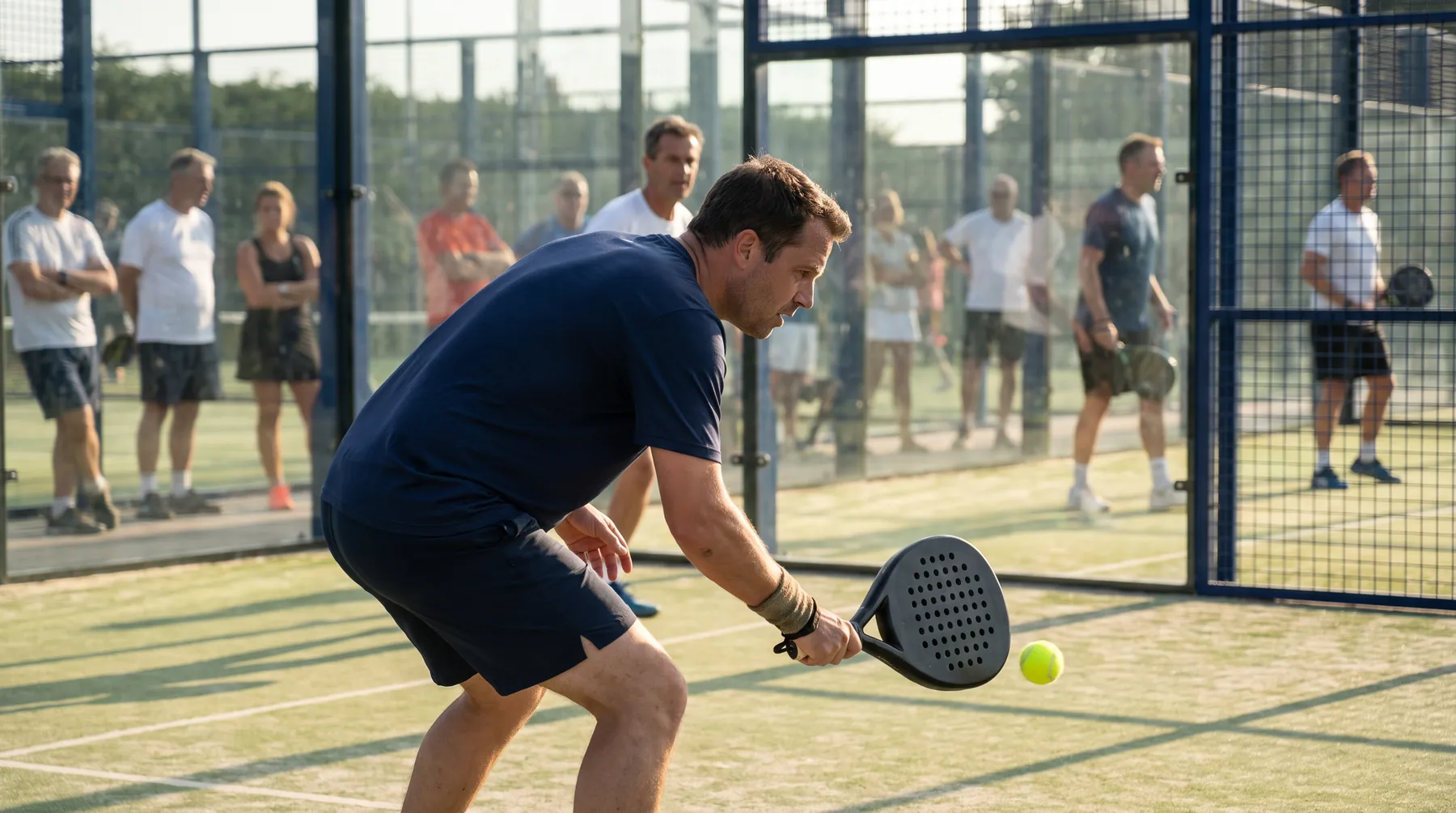
- Let it drop. Hit it somewhere between knee and waist height, lower than a tennis player would, which makes it easier to keep the shot low over the net. Bend your knees to get down to it and keep the racket head up.
- Meet it in front. Contact is roughly level with your front hip, as your weight moves from the back foot to the front.
- Finish towards the target. Push through the line of the shot and stop there.
That last step is the one tennis players skip. A long wrap-round follow-through belongs on a tennis court. In padel a shorter finish keeps the ball under control and leaves you ready for the next one. A partner feeding you balls at the back, as in the groundstroke section of our padel drills library, is the quickest way to groove it.
The backhand
Use one hand. Plenty of tennis players arrive with a two-handed backhand and want to keep it, and you can use it on a ball that hasn’t touched the glass. Once the ball is stretching you or coming off the wall, though, one hand reaches further and adapts more easily. If you’re new to racket sports, learn it one-handed from the start.
The shape is much like the forehand. Turn your shoulders early, with your free hand holding the throat as you take the racket back. That second hand keeps the racket steady and stops you opening up too soon. Step towards the ball with your front foot, the one on your hitting-arm side, and let the free hand come off the racket as you swing.
Contact is a little further in front than on the forehand, out past your front foot. Keep the racket face slightly open and swing through the ball. Most good backhands from the back carry a bit of slice, which keeps the ball low and makes it skid instead of sitting up. Don’t expect the same pace as your forehand. Placement matters far more on this side.
Flat, slice or topspin
Most of your forehands and backhands from the back should be fairly flat with a touch of slice. It’s the most reliable ball in padel, because it stays low even after it hits the glass, so the net pair have little to attack.
The common fault with slice is chopping down steeply on the ball. It feels like spin, but it shrinks the contact point and sends the ball into the net or floating long. You get better slice by swinging slightly from high to low while still moving forward through the ball.
Topspin has a place too, mainly to make the ball dip at the feet of someone at the net. Keep it light. A heavy tennis-style topspin drive kicks up off the floor and the glass, which is exactly what the opponents want.
| Where the ball is when you hit | A sensible choice |
|---|---|
| Below the knee | Lift it back with control, or lob. Don’t try to hit through it. |
| Knee to waist | Your stock shot: flat or lightly sliced, low over the net. |
| Waist to chest | A firmer drive or a low ball at the net player’s feet. |
| Above the chest | Extra slice, or a chance to attack if you’re well set. |
Coaches draw these lines in slightly different places, so treat the table as a rough guide.
Where to aim
When in doubt, go cross-court. The court is longer on the diagonal, which gives you more room for error, and the net is lowest in the middle. The middle of the court is a good target too, because it can cause a moment’s hesitation between the two opponents.
Down the line is riskier and best kept for when the opponent on that side has drifted towards the centre. Height matters as much as direction. A pair who see the same fast ball every time soon get comfortable, while a low ball followed by a lob has them shuffling forwards and back. Choosing between them depends a lot on where everyone is standing, which the positioning and tactics guide goes into.
Try playing a whole game where every forehand and backhand has to cross the net below shoulder height or go up as a lob. Nothing in between. It shows quickly how many points you give away with balls that sit up at a comfortable height for the net pair.
The mistakes that cost the most points
- Hitting too hard. Pace you put on the ball comes back to you off their glass. Change speed and height instead. It made our list of first-month mistakes for good reason.
- Preparing late. If the racket only starts going back when the ball bounces, you’re already behind.
- Standing too close to the ball. Give yourself room and step in, because you can’t hit freely when you’re cramped.
- Flicking the wrist. The power comes from turning your shoulders and moving your weight forward, not from the hand.
- Watching your own shot. Hit, then move straight back into position, ready for the reply.
Plenty of the balls you hit from the back will have bounced off the glass first. The swing you’ve just built still works on those. What changes is the waiting: you let the ball come off the wall and drop before you hit, and the guide to playing off the glass explains how to read it.
Next on the blogThe glass: how to play off the back and side walls