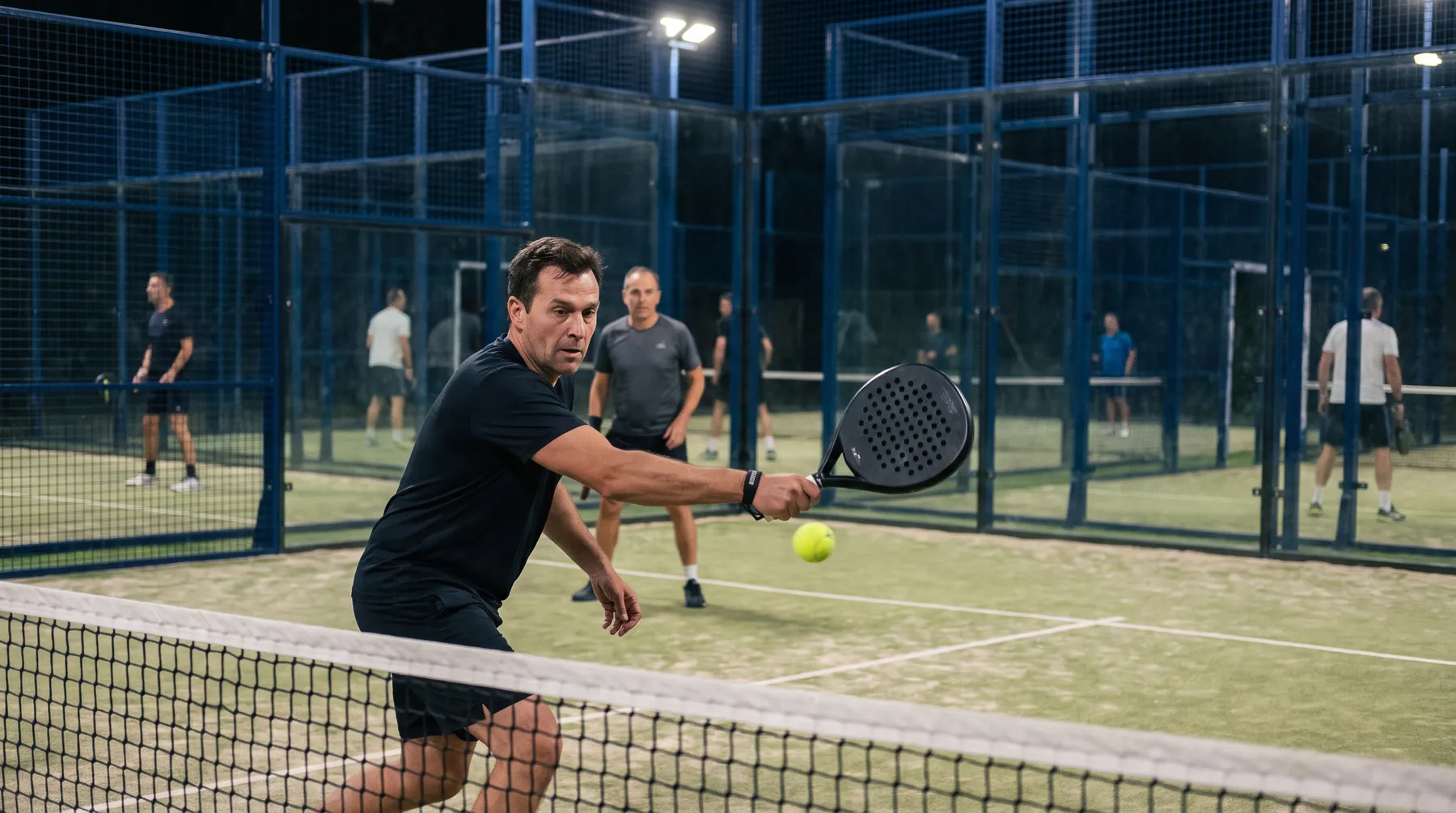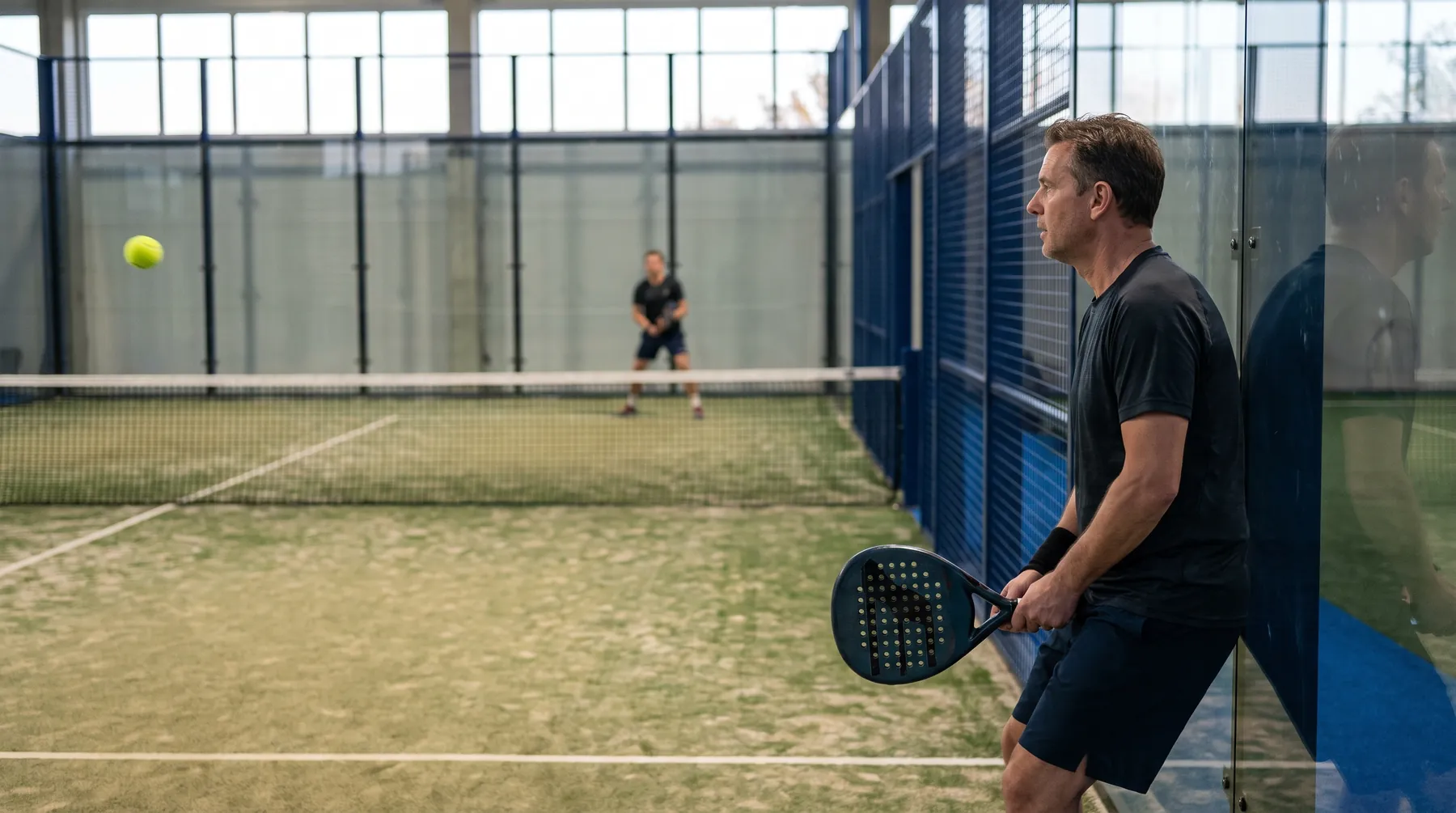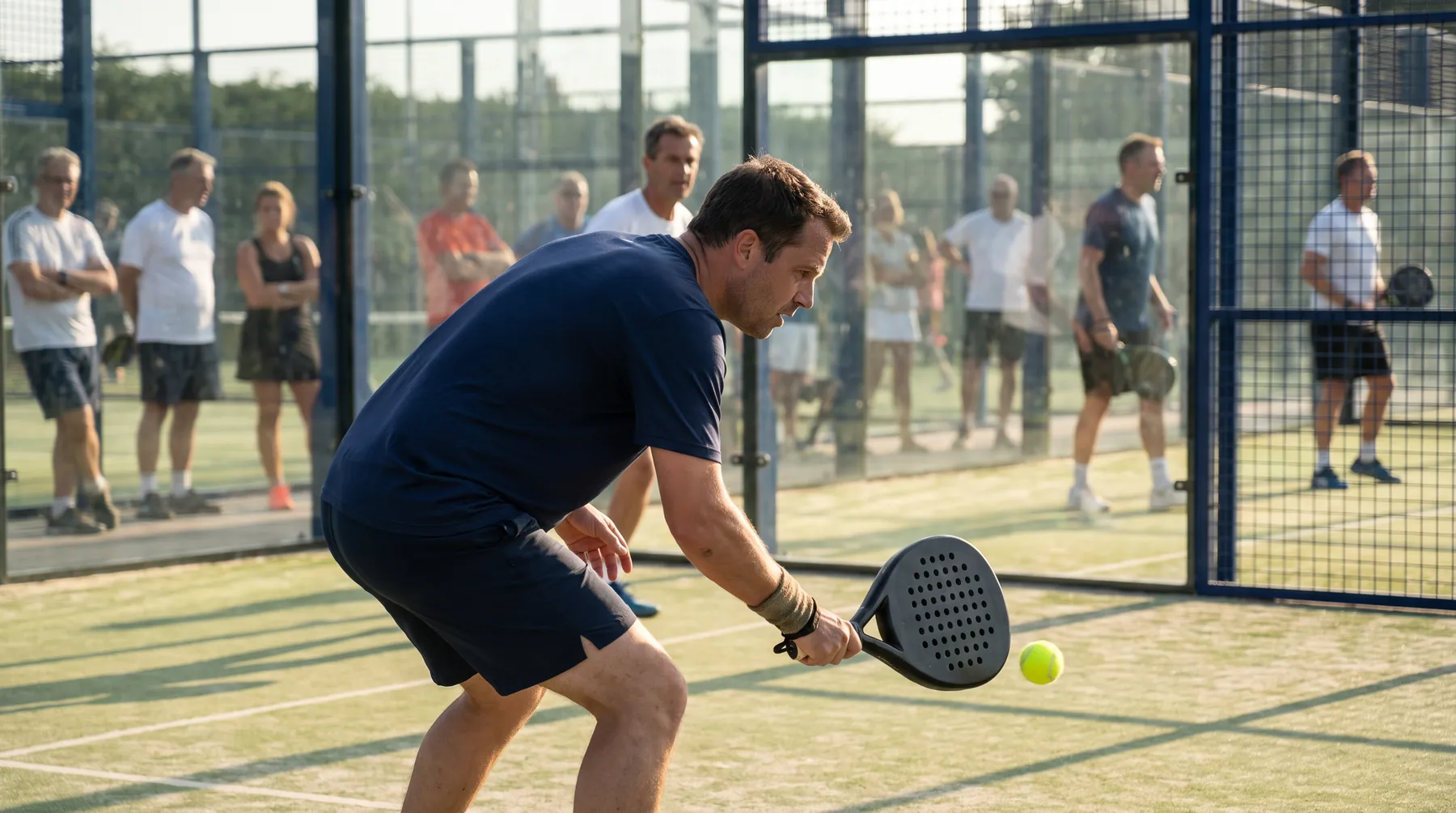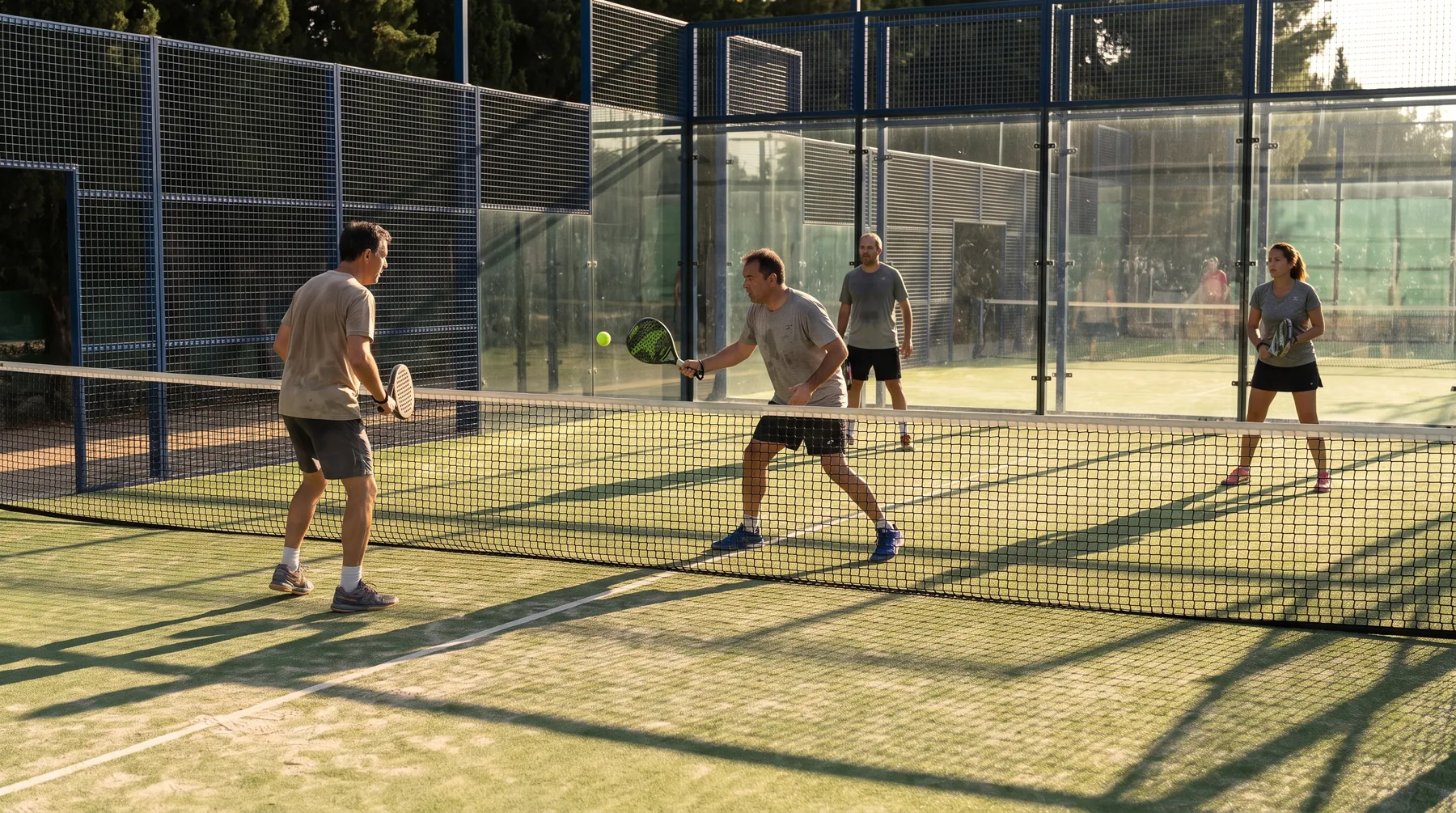
An hour of padel a week adds up to about fifty hours a year. That sounds like plenty until you count how much of each hour you spend picking up balls, chatting at the change of ends and waiting for your partner to find their water bottle.
Most people who play once or twice a week aren’t going to start booking extra courts for drills. They don’t have to. With a bit of planning, the games you already play can do most of the teaching, and the rest fits into half an hour here and there.
Pick one thing at a time
The quickest way to stall is to try to fix everything at once. If you’re thinking about your grip, the glass, your volleys and the serve in the same game, you won’t really work on any of them.
Choose one area and stay with it for a month. A month of weekly games is four or five sessions, enough to notice a change. Good starting points for most club players:
- The back glass, if balls that come off it still catch you out.
- Getting the serve in and following it to the net.
- Keeping volleys deep instead of trying to win the point with each one.
- Lobbing when you’re under pressure, instead of hitting harder.
If you’re not sure which, ask a regular partner. They’ve watched you lose points, and they usually know.
Give the warm-up a job
Most games start with five minutes of gentle rallying. That time belongs to your theme. If it’s the glass this month, ask your partner to hit a few deep balls so you can play them off the back wall. If it’s the serve, hit ten before the first point, aiming at the side glass.
Keep the order sensible: groundstrokes from the back first, then volleys, a few overheads, then some serves and returns. Five minutes of purposeful hitting does more than fifteen minutes of aimless knocking, and nobody in the group has to agree to anything unusual.
Arrive ten minutes early and use them. A few racket taps, some side steps and a handful of serves into an empty box mean you start the first game warm, which is when you’ll want your theme working.
Turn matches into practice
A match gives you something drills can’t: real decisions, under pressure, against people trying to beat you. The trick is to bring one small intention onto court with you and judge the evening by that, not the score.
Some examples, matched to the themes above:
- Every ball that bounces past the service line goes onto the glass before I hit it.
- After every serve, I finish the swing, then move in to the net.
- When I’m pushed back and stretched, I lob high and deep.
- When I’m at the net, I aim volleys past the service line.
You’ll lose some points doing this, especially at first. That’s fine. A social game is the cheapest practice there is, and the lost points tell you what still needs work.
Formats help too. In an Americano or a social with rotating partners, you play lots of short games against different people, which means lots of serves, returns and fresh styles in one evening. LTA Padel also points to club competitions and ladders as a way to get more match practice, and most venues run something.
Keep score of one thing
You can’t remember everything that happened in a match, but you can count one thing. Pick something simple and tally it in your head, or between games on your phone:
- Serves into the box, out of all your first serves.
- Points lost by hitting the ball hard from the back.
- Times you and your partner both got to the net.
Compare the number over a few weeks. It’s a much better guide to whether you’re improving than who won, because results depend on who turned up on the other side of the net.
Short sessions that fit a week
If you can find one extra half hour, use it for something focused. Thirty minutes with one friend is enough for two drills on your theme. A few that suit short sessions:
Try this on court
Thirty minutes, two players, one theme.
- Ten minutes of ladder rallies on half the court: two shots in a row, then three, then four, back to two after any mistake.
- Ten minutes on your theme, such as back glass feeds or volley to volley.
- Ten minutes of points where the first mistake in a game is a yellow card and a second loses it.
The ladder rally and the yellow-card game both come from LTA Padel’s training tips. The drills guide linked at the end has plenty more, sorted by skill and by how many players you need.
If even that’s hard to fit in, book a court alone for twenty minutes and serve. A court often costs the same for one person as for four, so an off-peak slot is the cheapest version. Three targets in the box, ten serves at each, and count the ones that land close.
Five minutes at home
Some of the work doesn’t need a court at all. LTA Padel suggests tapping the ball up off the racket face and counting how many you can do, then alternating faces when that gets easy. It builds the feel for where the ball meets the racket.
Shadow swings help with shape. Practise a slow, compact volley or the turn for an overhead in front of a mirror, without a ball. If you have a solid outside wall (and tolerant neighbours), volleying against it builds the short, firm action that matters at the net.
None of this replaces playing, but five minutes on a few evenings keeps your hands in between games.
When to get help
Repetition makes habits stick, good ones and bad ones. If you’re drilling a shot and it isn’t getting better after a month, there may be something in the technique that repetition won’t fix.
The Padel School makes a point about players from other racket sports in particular: they often skip lessons because they rise quickly through social games, then stall a year or two in because the fundamentals of the glass and overheads were never quite right. If you came to padel from tennis, and the differences between the two still trip you up, an early lesson can save a lot of unlearning later.
It doesn’t have to be a long course. One session on the shot that’s holding you back, then back to your weekly games with something specific to work on.
For the drills themselves, sorted by skill and level, start with the padel drills and practice guide, and if the glass is your theme this month, the guide to playing off the glass covers the footwork.
Next on the blogPadel shoes: soles, grip and when to replace them