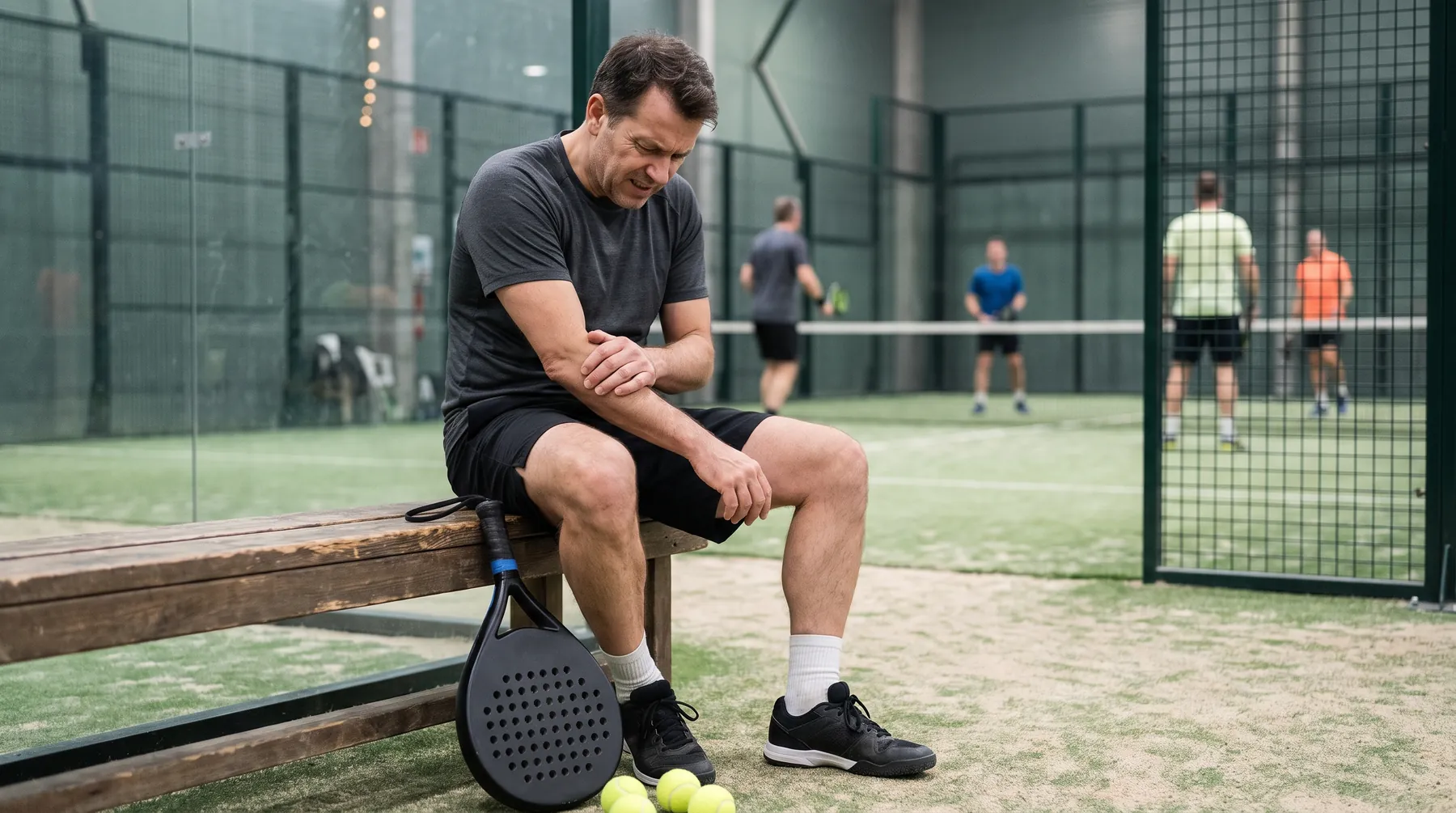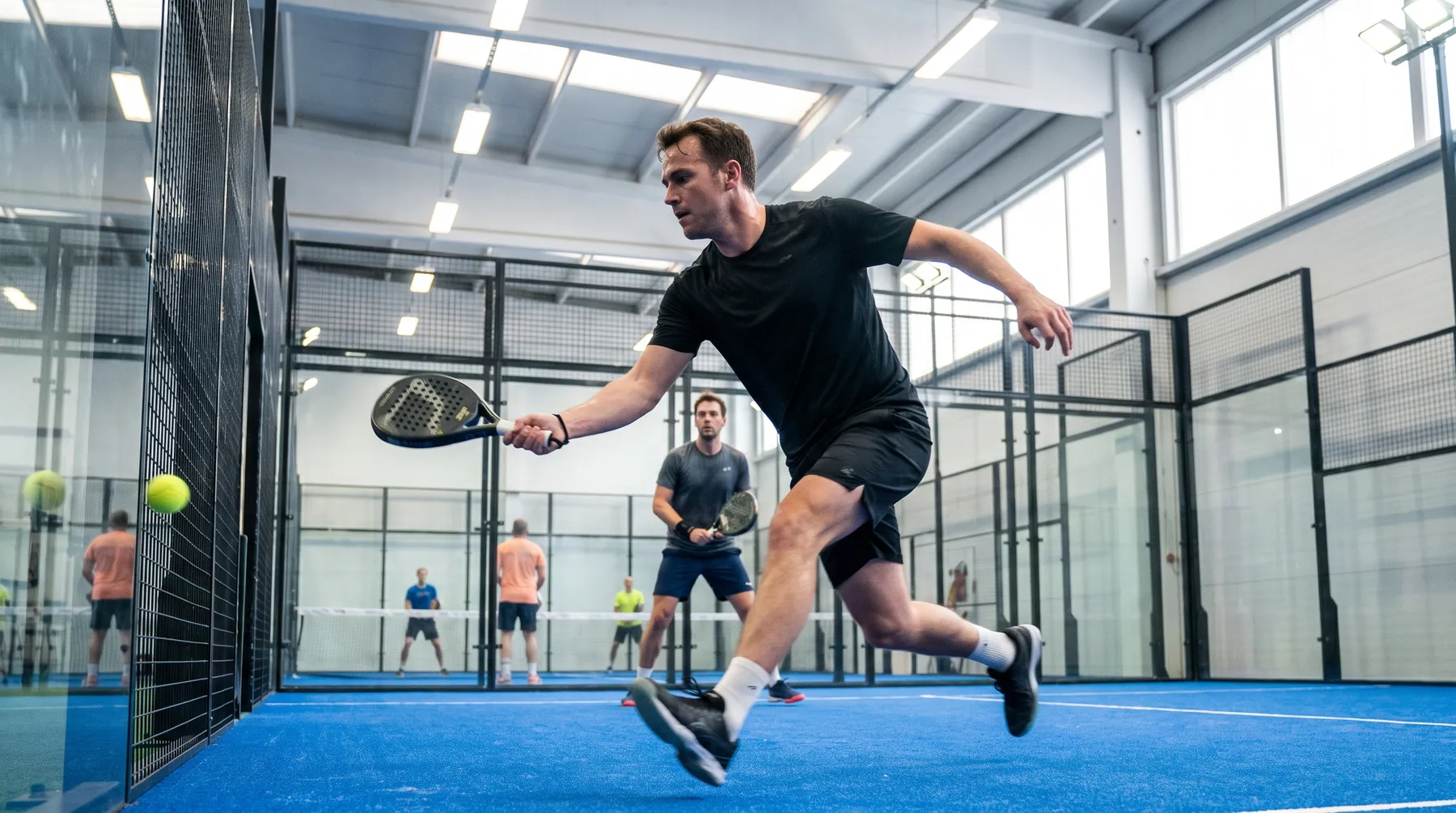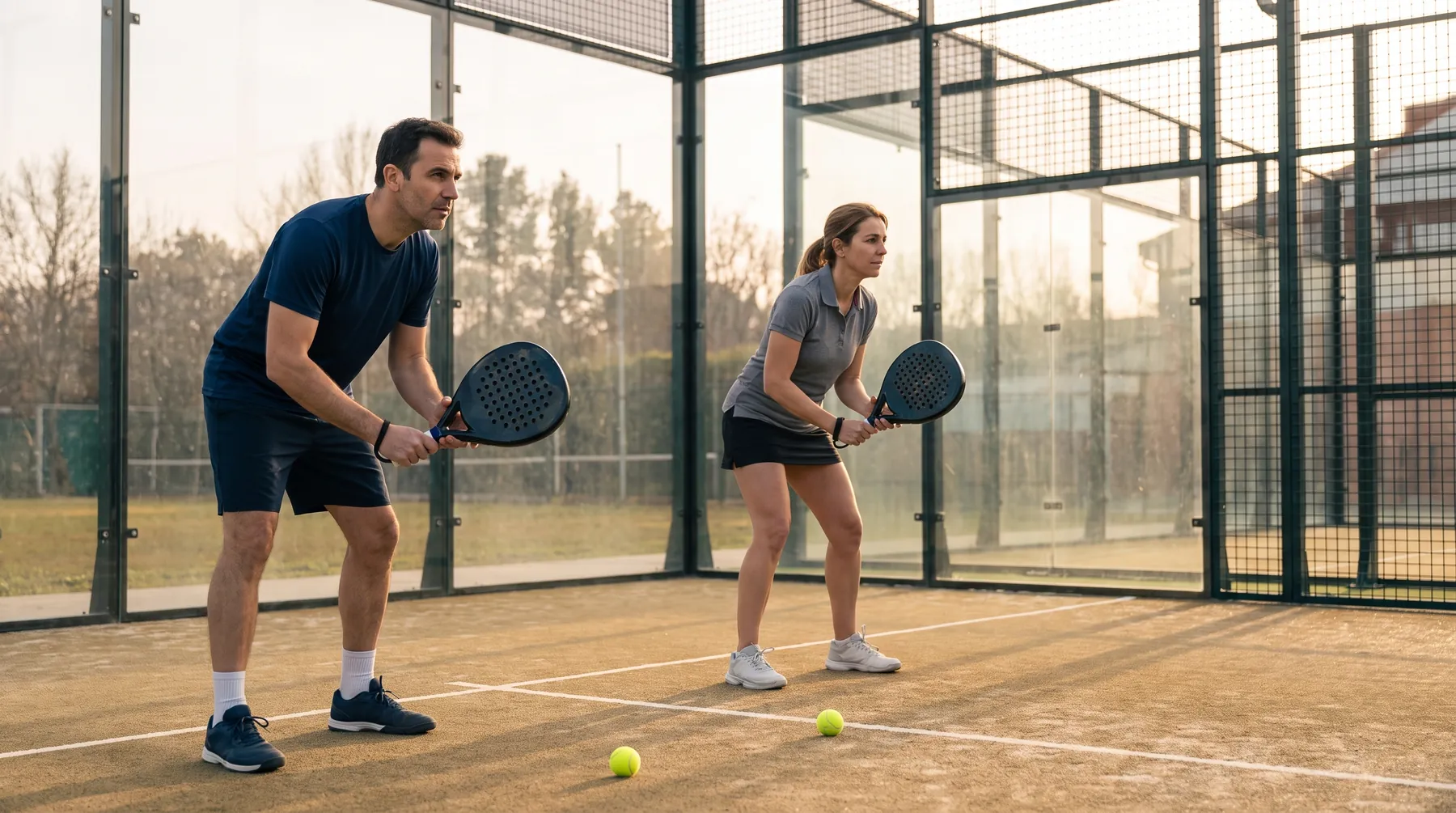
Four people arrive with a minute to spare, someone opens the balls, and within thirty seconds there’s a smash flying past the net player’s ear. Twenty minutes in, someone feels a twinge in their calf.
Avoiding that takes about ten minutes, most of it done before your booking starts. The routine below covers what physios and sports scientists say a warm-up should do, with the reasoning behind each part so you can adjust it to suit you.
What a warm-up is for
Padel is more demanding than it looks, and it’s full of the movements that catch cold bodies out: sudden sprints to the net, quick stops, lunges to a low ball, and fast overhead swings. The calf, the ankle, the shoulder and the elbow take most of the strain.
Physios who write about padel injuries describe the same pattern again and again. People go from very little sport to several sessions a week, and they walk on court and start hitting at full speed. A warm-up won’t fix the first problem, but it does deal with the second.
It raises your heart rate and muscle temperature, takes your joints through the ranges you’re about to use, and rehearses the movements slowly before you ask for full speed. Your first few games tend to be better too, which is a decent reason on its own.
What to leave out
If your idea of a warm-up is touching your toes and holding it for thirty seconds, you’re not alone. That’s how a lot of us were taught at school. The research has moved on.
Long static stretches before exercise haven’t been shown to reduce injuries, and holding them for a long time can briefly take the edge off your power and reactions. Moving stretches, where you swing and rotate through a range, warm the muscle and keep it ready to work. Sports science bodies and national federations, Padel New Zealand among them, now recommend the moving kind before play and save held stretches for afterwards.
A short, gentle hold won’t do you any harm if it feels good. Just don’t let it replace the rest.
The routine at a glance
The structure follows a common sports-science pattern: raise your temperature, mobilise the joints, activate the muscles you’re about to use, then build up to match speed. The first six minutes don’t need a court, so you can do them by the door while the previous game finishes.
| Minutes | Stage | What you do |
|---|---|---|
| 0 to 2 | Raise | Easy jog, side shuffles, skips with big arm swings |
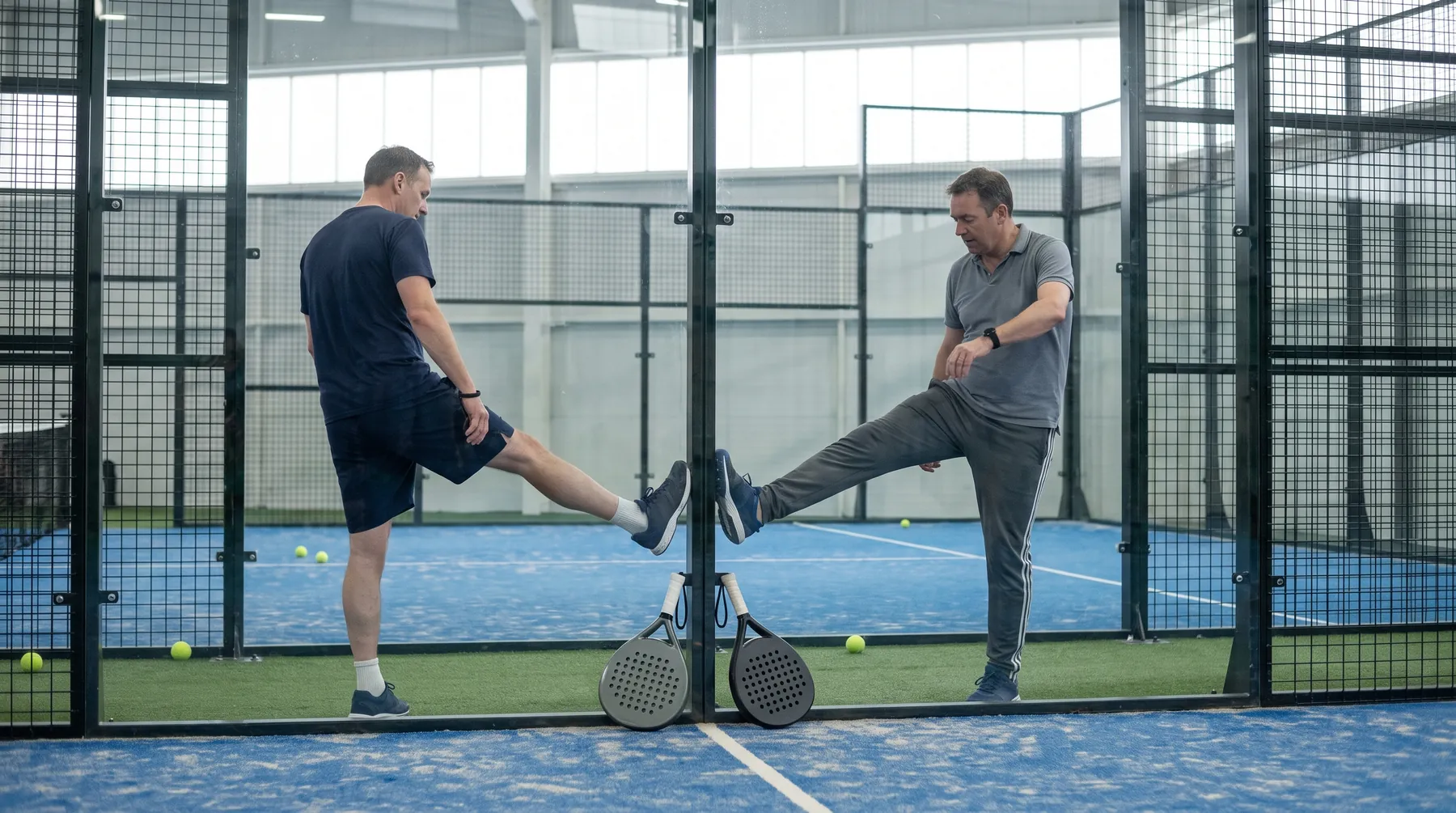
| 2 to 4 | Mobilise | Leg swings, walking lunges with a twist, arm circles, trunk turns |
| 4 to 6 | Activate | Split-step hops, calf raises, shadow swings with the racket |
| 6 to 10 | With the ball | Soft rally, then volleys, a few overheads, serves and returns |
Minutes 0 to 4: get warm and loosen up
Start with two minutes of easy movement. A gentle jog, then side shuffles in both directions, then a few skips while swinging your arms forward and back. By the end you should feel slightly warmer and be breathing a little harder, nothing more.
Then two minutes of moving stretches, about eight to ten of each:
- Leg swings forward and back, holding the fence for balance, then side to side.
- Walking lunges, turning your chest towards the front knee as you go down.
- Arm circles, small to large, both directions.
- Trunk turns with the racket held across your shoulders.
Keep everything smooth and within a comfortable range. You’re waking the joints up, not testing how far they go.
Minutes 4 to 6: wake up the legs and the arm
This part rehearses the two movements padel asks for most. For the legs, do a set of small split-step hops (a little jump onto both feet, landing light and ready to push off), then ten calf raises. Calves and Achilles tendons do a lot of work on a padel court and they appreciate the notice.
For the arm, take your racket and shadow your shots without a ball for a minute or so: a few slow forehands and backhands, a few volleys, then some easy overhead swings, building the speed each time. Spend longest on the overheads, because that’s where most shoulder trouble in padel starts.
If you carry a light resistance band in your bag, a set of shoulder rotations (elbow tucked at your side, rotating the forearm outwards) fits neatly into this slot. Physios who treat padel players recommend rotator cuff work, and this is an easy place to start.
Minutes 6 to 10: build up with the ball
Now get on court and work through the shots roughly in the order they turn up in a match, starting slow and getting quicker. If this sequence starts to feel stale, the warm-up section of our drills and practice library has a few alternatives.
- Mini-rally. Stand around the service lines and trade soft, controlled shots.
- Back of the court. Move back and rally from there, letting a few balls come off the glass.
- Volleys. One pair goes to the net and volleys while the other feeds from the back, then swap.
- Overheads. A few gentle ones each, aiming for depth and control. Save the winners for later.
- Serves and returns. Two or three each, so nobody’s first serve of the day counts.
Keep the pace friendly. A warm-up rally isn’t a contest, and the other pair are warming up too, so feed them balls they can actually hit. That’s one of the unwritten rules of padel etiquette, and the pair who ignore it tend to find their opponents less generous later on.
Adjusting it for the day
Ten minutes is a minimum, not a target. A few situations call for longer:
- Cold mornings and unheated indoor halls. LTA Padel suggests allowing about fifteen minutes to warm up in winter, and starting in extra layers that you peel off once you’re warm. The what to wear guide covers kit for colder sessions.
- If you’re older, returning after a break or carrying an old injury, give the raise and activation stages a few extra minutes.
- Early starts straight from bed or a long drive. Stiff hips and backs need more time.
Footwear matters here as well. Running shoes aren’t built for the sideways stops padel asks for, and a warm calf in the wrong shoe can still go. There’s more on soles and grip in padel shoes.
Don’t forget the other end
When the game ends, walk a couple of laps, then do the held stretches you skipped earlier. Twenty to thirty seconds each on the calves, thighs, hips and shoulders is plenty, without bouncing and without pain.
If something hurt during the game and still hurts the next day, take it seriously. Rest it, and if it isn’t settling, see a physio who knows racket sports. Pushing through a sore elbow or calf is how a one-week niggle becomes a three-month one.
Next on the blogThe padel lob: how to hit it, and where to aim