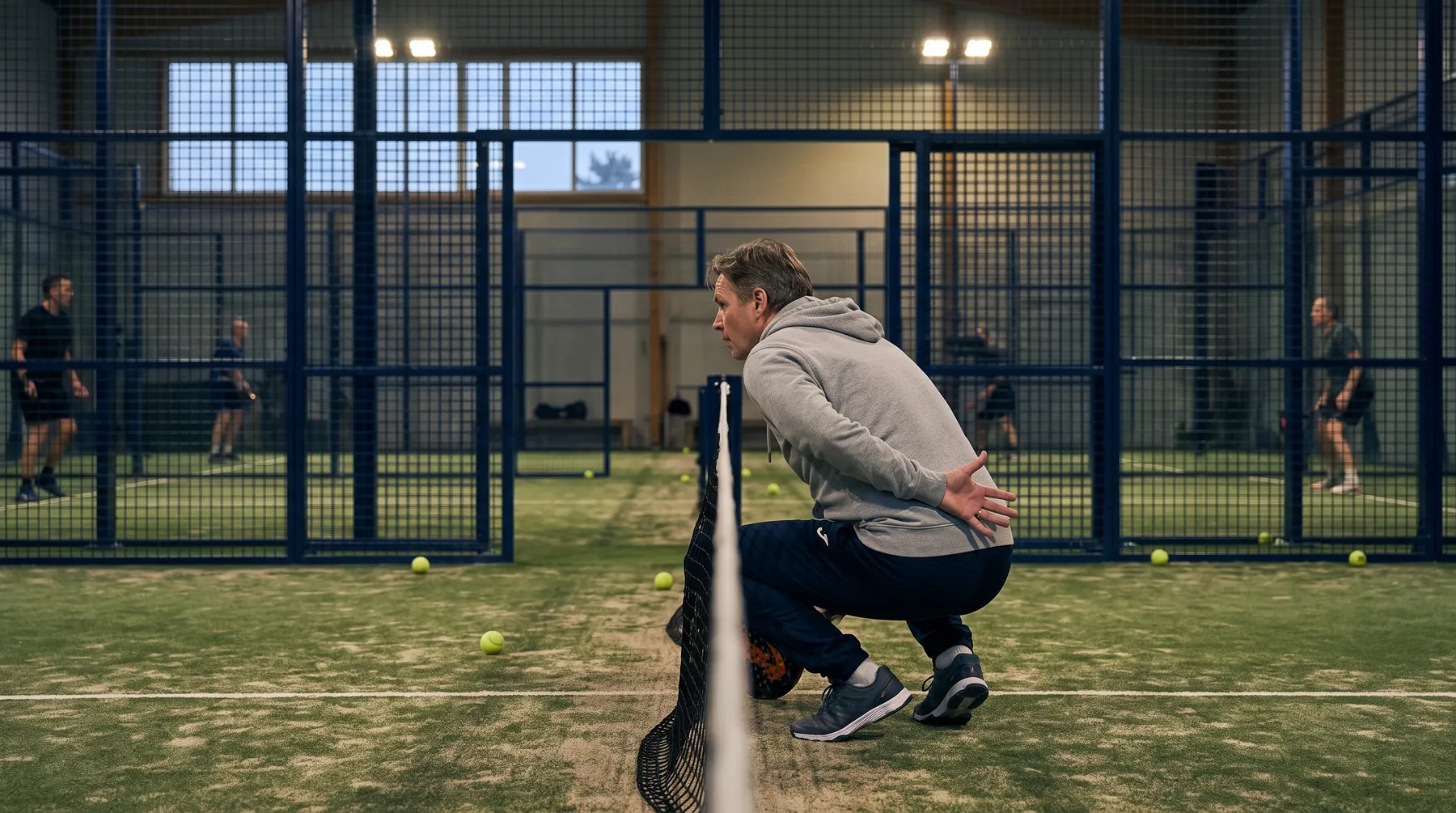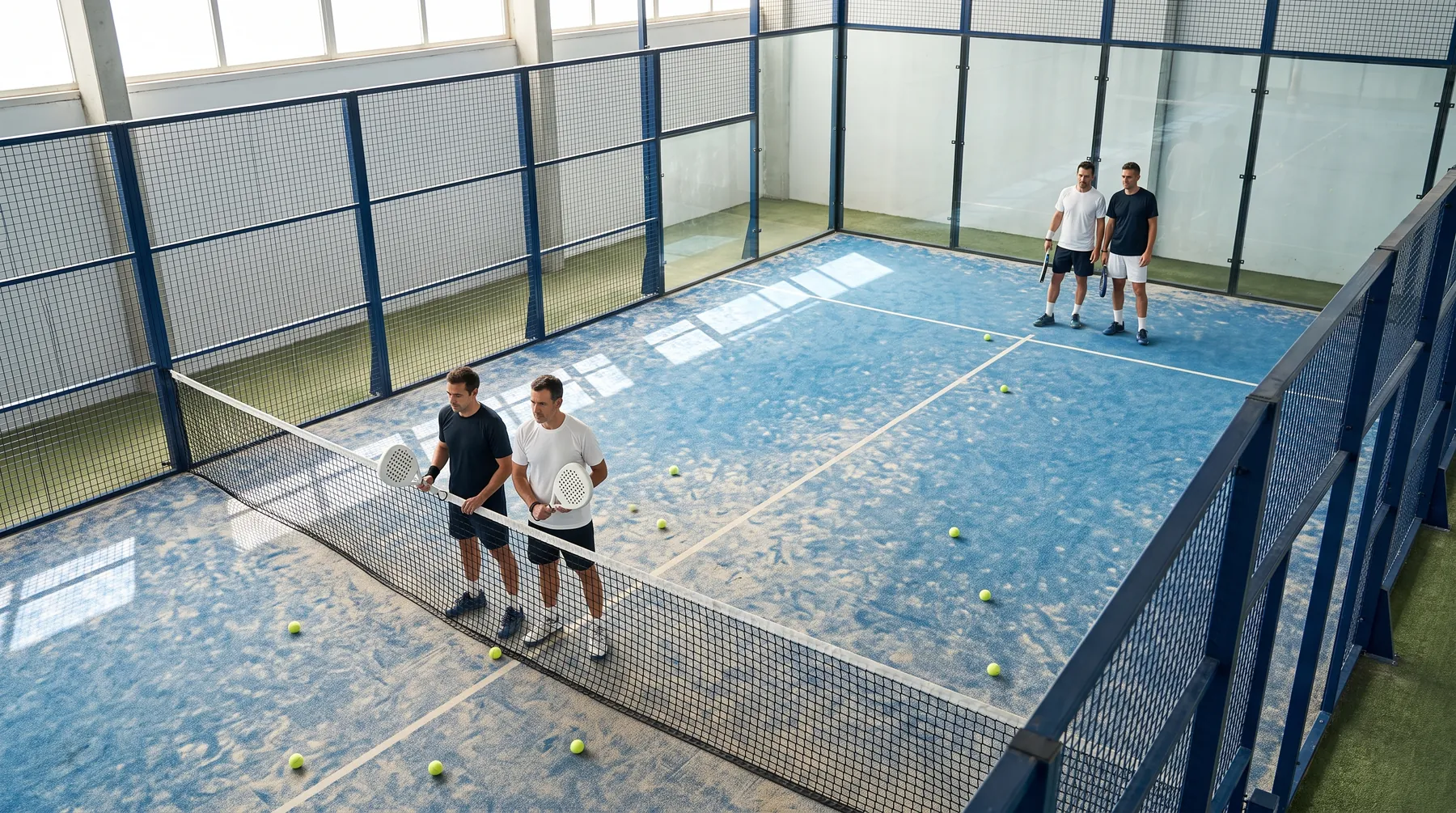
“Left or right?” A new partner will often ask before you’ve even opened the balls, and if you’ve been playing on whichever side was free, it can feel like a test.
It isn’t one. The two halves of a padel court ask slightly different things of a player, and choosing between you is mostly a matter of who is better at what.
What the rules say about sides
Less than you might think.
The rule
In the first game of each set, the receiving pair decide which of them receives first. That player takes the first serve of every game until the set ends, and the order can only change at the start of a new set (FIP Rules of Padel).
In practice that fixes one of you on the right and one on the left for the whole set, at least for the return of serve. Once the serve has been returned, you can both go anywhere on your side of the net. The sides decide who returns which serve and who usually covers which half. They don’t fence you in.
A quick note on names. Standing at the back and facing the net, the right side is often called the forehand side, or the “drive” side in Spanish clubs. The left side is the backhand side, from the Spanish “revés”, meaning backhand. For two right-handers that describes the corners well: the player on the right has their forehand towards the side glass, and the player on the left has their backhand there.
The right side
The traditional job on the right is to build the point. The right-side player takes plenty of balls early in the rally, plays a lot of cross-court exchanges with the opponent opposite, and tries to keep the ball deep and awkward until their partner gets something to attack. Coaches tend to describe the ideal right-sider as the steady one who reads where the rally is going.
For a right-hander, the ball down the middle comes to the backhand. That’s one reason the middle usually goes to the partner on the left, and why the right-side player’s backhand down the line matters: it stops the opponents walking into the net unchallenged.
The left side
The left side traditionally belongs to the player who finishes points. For a right-hander on the left, the middle of the court is on the forehand, so a lob or a loose ball through the centre is theirs.
That means more overheads, especially the bandeja (Spanish for “tray”, a controlled, sliced overhead that keeps you at the net). A bandeja from the left is a far easier shot than a high backhand volley from the right, which is why middle lobs usually go to the left-side player.
Covering the middle as well as your own corner means more ground and more decisions. Left-side players tend to be the more mobile, more aggressive half of the pair, and they need a reliable overhead more than a spectacular one.
The roles have blurred
All of the above is the textbook version. The Padel School and adidas coach Alberto Pulido both say the gap between the two roles has narrowed, and that good players now attack and defend from either side. Plenty of strong right-side players finish points, and plenty of left-side players build them.
So treat the descriptions as tendencies, not job titles. At club level the question is simpler: which of you is happier with the ball above your head, and which of you is calmer when the rally gets long?
| Right side | Left side | |
|---|---|---|
| Traditional role | Builds the point | Finishes the point |
| Middle balls (two right-handers) | Backhand, so usually left to the partner | Forehand, so usually theirs |
| Lobs down the middle | Awkward high backhand | Bandeja or smash on the forehand |
| Suits a player who is | Patient and good at reading the rally | Confident overhead, moves well |
Where left-handers play
Nearly every source agrees on this one. If one of you is left-handed, the left-hander usually plays on the right. That puts both forehands in the middle, and both overheads too, so the centre of the court is covered from either side. The backhands end up against the side glass, where there’s less to do with them.
It does raise a new question, because now you both have a good claim on the middle ball. Agree a default before you start and call it early. If two left-handers pair up, everything simply mirrors: one of you plays the right as the builder, the other the left with the forehand in the middle.
If you’re still new
The Padel School’s advice is not to pick a side too early. Playing both shows you what your partner needs, and it makes you easy to pair with at a social. Some coaching sites go further and suggest beginners start on the right, because it asks for fewer risky shots.
Both views are reasonable. We’d spend the first few months swapping regularly, and if you have to choose, the right side is the gentler place to learn.
Wherever you stand, the basics are the same: defend from the back together and go forward together. The beginners’ positioning post shows where “together” is at each stage of a rally.
How to decide as a pair
If you play regularly with the same person, have an honest five-minute chat. Work through it roughly in this order:
- Is one of you left-handed? Then the left-hander usually goes right, and you can stop there.
- Whose overhead is more reliable today, not on their best day? That player has a good case for the left.
- Who is steadier on the first few balls of a rally, and less likely to go for too much? That points to the right.
- Still can’t decide? Play a set each way and count the errors, not the winners. Keep whichever arrangement gives away fewer cheap points.
Leave assumptions out of it. In mixed doubles there’s a habit of sending the man to the left by default. Sometimes that’s the right call, sometimes not. Whoever has the more reliable overhead and moves better should take the left. The mixed doubles section of our women’s padel guide makes the same case.
If you’re playing with someone new, sort sides out before the warm-up, not halfway through the first set. Ask which side they usually play and whether they mind swapping. Most players have a preference and will be glad you asked.
Changing your mind
Your side isn’t a life sentence. Players change as their game develops, and a pairing that works one way with one partner may work better the other way with someone else. Professionals switch sides too, sometimes when they change partners.
If something isn’t working, try the other arrangement for a set and see which one leaks fewer points. The positioning and tactics guide goes into how a pair shares the middle once the rally is moving. And the next time a partner asks “left or right?”, you’ll have an answer that comes from playing both.
Next on the blogPadel elbow: causes, prevention and when to see someone