“Win the club ladder by Christmas.” “Get to a 3 on the app.” “Stop being rubbish at the back glass.” Most padel goals sound like one of these, and most of them fade by October, because none of them tells you what to do on Tuesday night.
Sport psychologists have a fairly settled view on what makes a goal useful, and it fits padel well. Most of it comes down to knowing which parts of your game you actually control.
Why “get better” doesn’t work
A goal only helps if it changes what you do. “Get better” doesn’t, because you can’t act on it in the middle of a rally. It also gives you no way to tell whether it’s working, so after a few weeks it quietly turns into “play padel and hope”.
The common checklist is SMART: specific, measurable, achievable, realistic and time-bound. You don’t need to fill in a form. The two that matter most are specific (what exactly will change?) and measurable (how will you know?).
Three kinds of goal
Coaches and sport psychologists usually sort goals into three types. The difference between them is how much of each one you control.
| Type | What it’s about | Padel example |
|---|---|---|
| Outcome | Results against other people | Reach the top four of the club ladder |
| Performance | Your own standard, measured | Land 8 first serves out of 10 |
| Process | What you do, shot by shot | Finish the serve, then move in to the net |
Outcome goals are motivating, but you only partly control them. You can play your best and still lose to a pair who played better, or win because the other side had an off night. Performance goals depend only on you. Process goals are the only ones fully in your hands, which is why sport psychology sources recommend putting most of your attention there.
Set it from the top, work from the bottom
A tidy way to link the three, from a 2022 article on goal setting in Frontiers for Young Minds, is to set them top-down and work on them bottom-up.
Start with the result you’d like, say moving up a group in your club’s social league. Ask what standard that needs: perhaps fewer points thrown away from the back, and a serve you can trust. Then ask what you’d do differently on court to get there. That last answer is your process goal, and it’s the one you take into every game.
Once you’re playing, flip it round. Look after the process goal each week. The performance numbers tend to follow, and the outcome becomes more likely, though never certain.
- Write the outcome. One sentence, with a rough date.
- Pick one performance number. Something you can count in a game or a drill.
- Choose one process goal. A single thing you’ll do on every relevant ball.
- Book a review. Put a date in your phone four to six weeks away.
Process goals that suit padel
Good process goals are short enough to remember in the middle of a point. A few examples by level:
- New to the game: let every ball that bounces past the service line come off the glass before you hit it. (The glass is where most beginners leak points.)
- Rallying comfortably: when you’re stretched or behind the play, lob high and deep instead of hitting harder.
- At the net a lot: aim every volley past the service line, and split step as the opponent hits.
- Working on overheads: play a bandeja (the controlled, sliced overhead) on every deep lob, and save the smash for the short ones.
Pick one. Two at most. If you’re unsure which, the mistakes most beginners make are a decent shortlist, since fixing any of them shows up in results quickly.
Track a few things, not everything
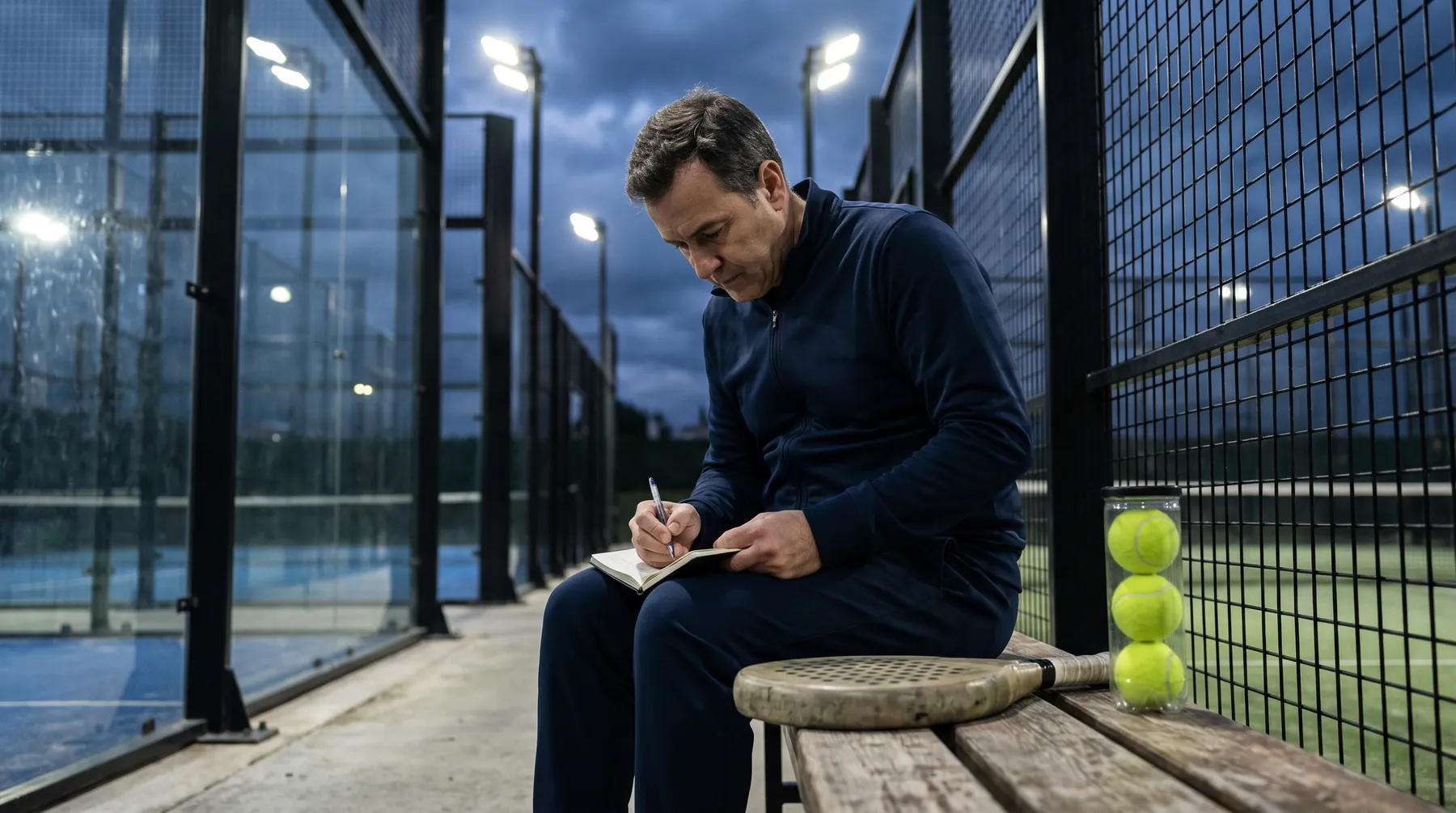
A performance goal needs a number, and the number needs somewhere to live. A note on your phone is plenty. Record it straight after you play, while you still remember.
Keep the list short. Three numbers you actually write down beat ten you mean to. Some that work well:
- First serves in, out of your first ten of the night.
- Your best rally count in a drill, such as a ladder rally or volley to volley.
- Points you lost by going for a winner from the back.
Drills make numbers easier to collect than matches, because the conditions stay the same each time. Our drills and practice guide gives most drills a score to beat for exactly this reason.
Judge a night by your process goal, not the scoreline. “I lobbed every time I was stretched” is a good evening, even if you lost 6-2.
Make it a little bit hard
Goals work best when they sit just outside your comfort zone. Too easy and you’ve hit it in a week; too hard and you stop believing it. The research summary in Frontiers adds two more points: choose the goal yourself (you’ll stick to it longer than one someone handed you) and review it now and then.
Beginners do better with short, easy goals that bring quick wins and build confidence. Experienced players can take on longer, tougher ones.
Some weeks will go badly. A bad night against a strong pair says very little about whether your process goal is working. The same article notes that being kind to yourself after a setback tends to help people take responsibility and improve, not slack off. Write the number down anyway and move on.
When a lesson makes sense
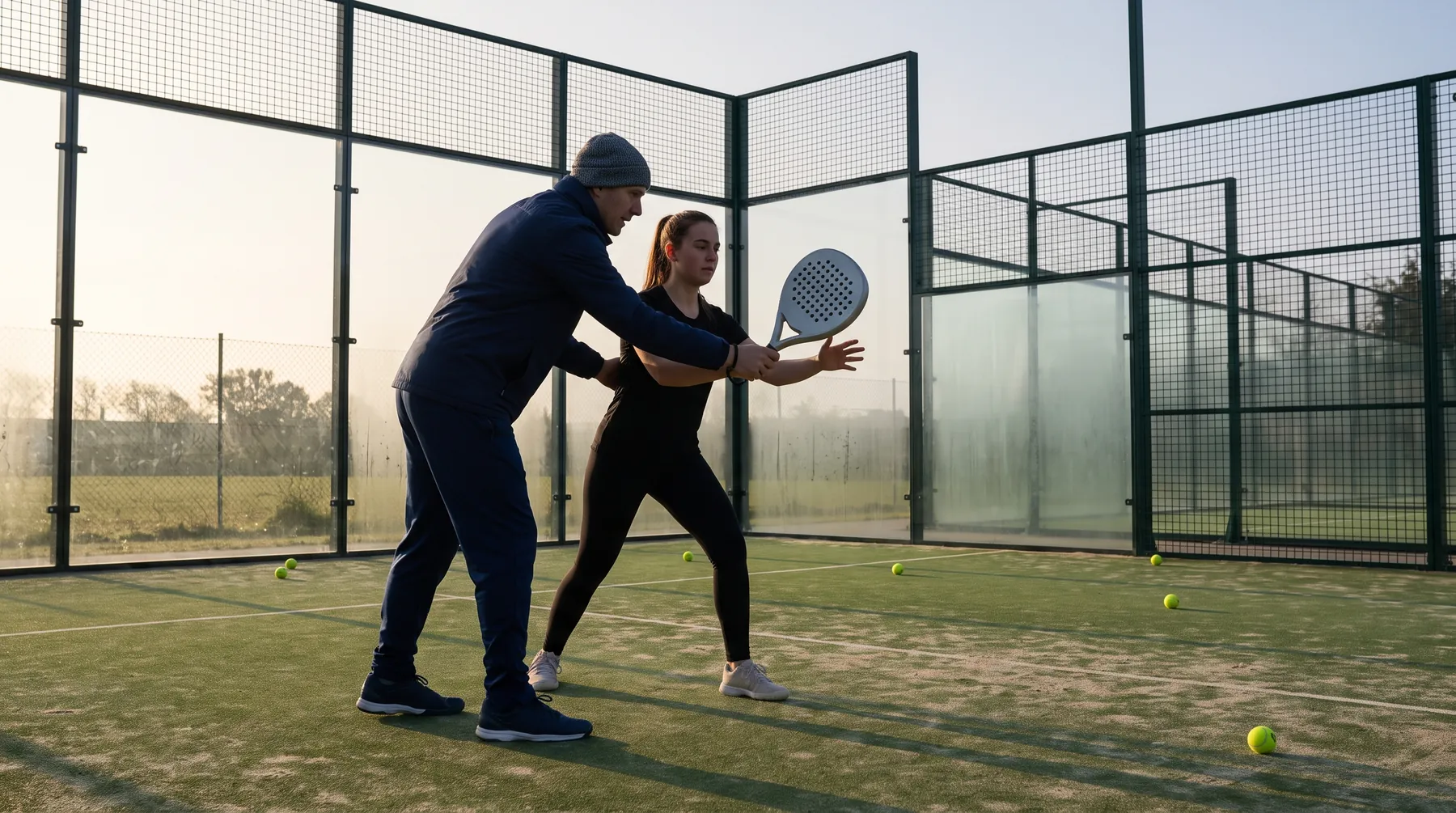
Goals tell you when something is stuck. If you’ve worked on the same process goal for a month or so, your number hasn’t moved, and you can’t see why, that’s a good moment for a lesson. A coach can usually spot in minutes what you’d spend months guessing at.
The other good moment is early. The Padel School points out that players from other racket sports often skip lessons, rise quickly through social games, then stall a year or two later because the fundamentals of the glass and overheads were never quite right. Habits are easier to shape before they set.
Take your goal and your numbers along. “My bandeja lands short four times out of ten and I’d like it deep” gives a coach far more to work with than “I’d like to improve”.
If your problem is finding time to work on any of this, practising when you only play once or twice a week covers how to turn ordinary games into practice.
Next on the blogWhere to stand: positioning for beginners