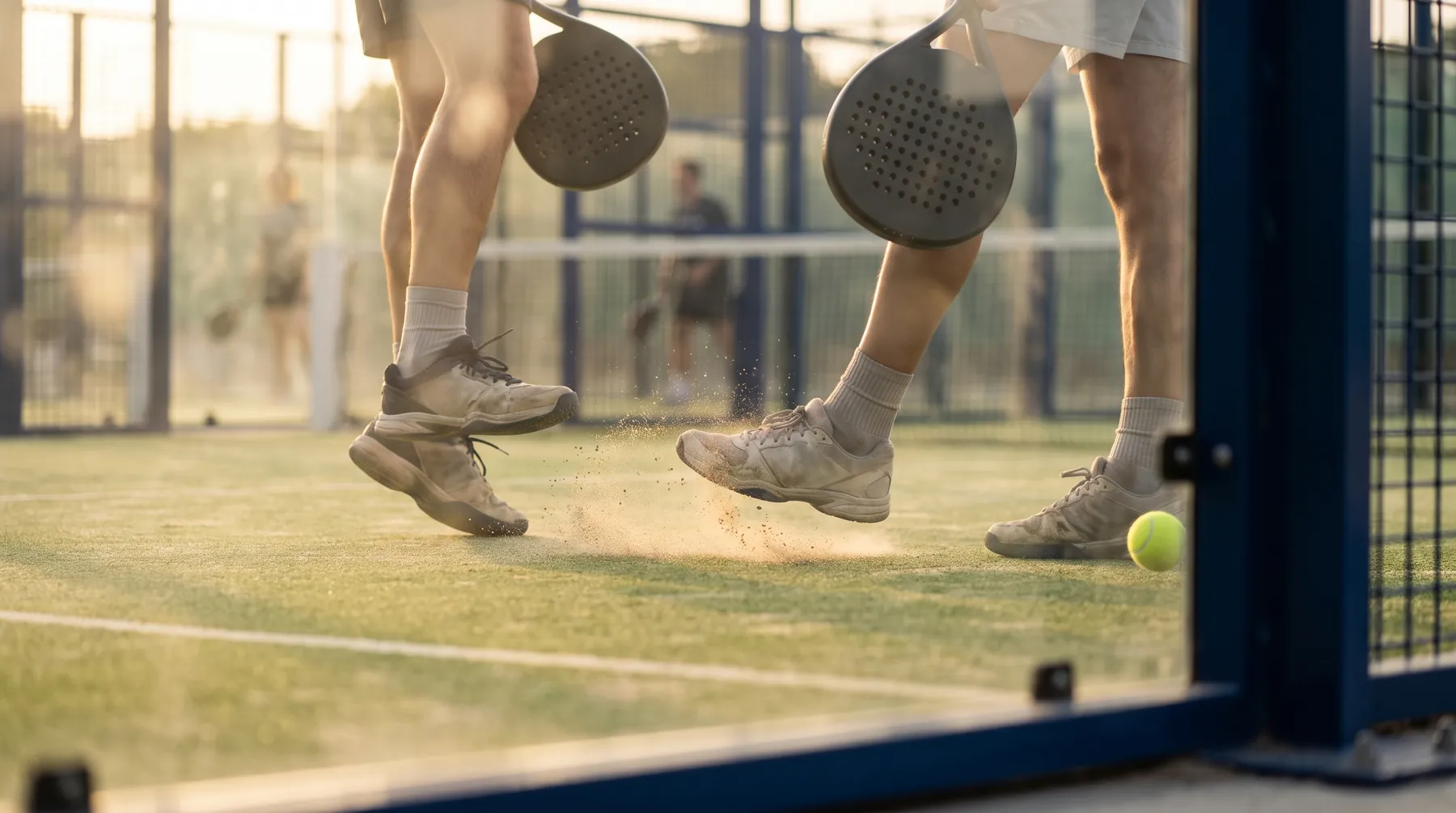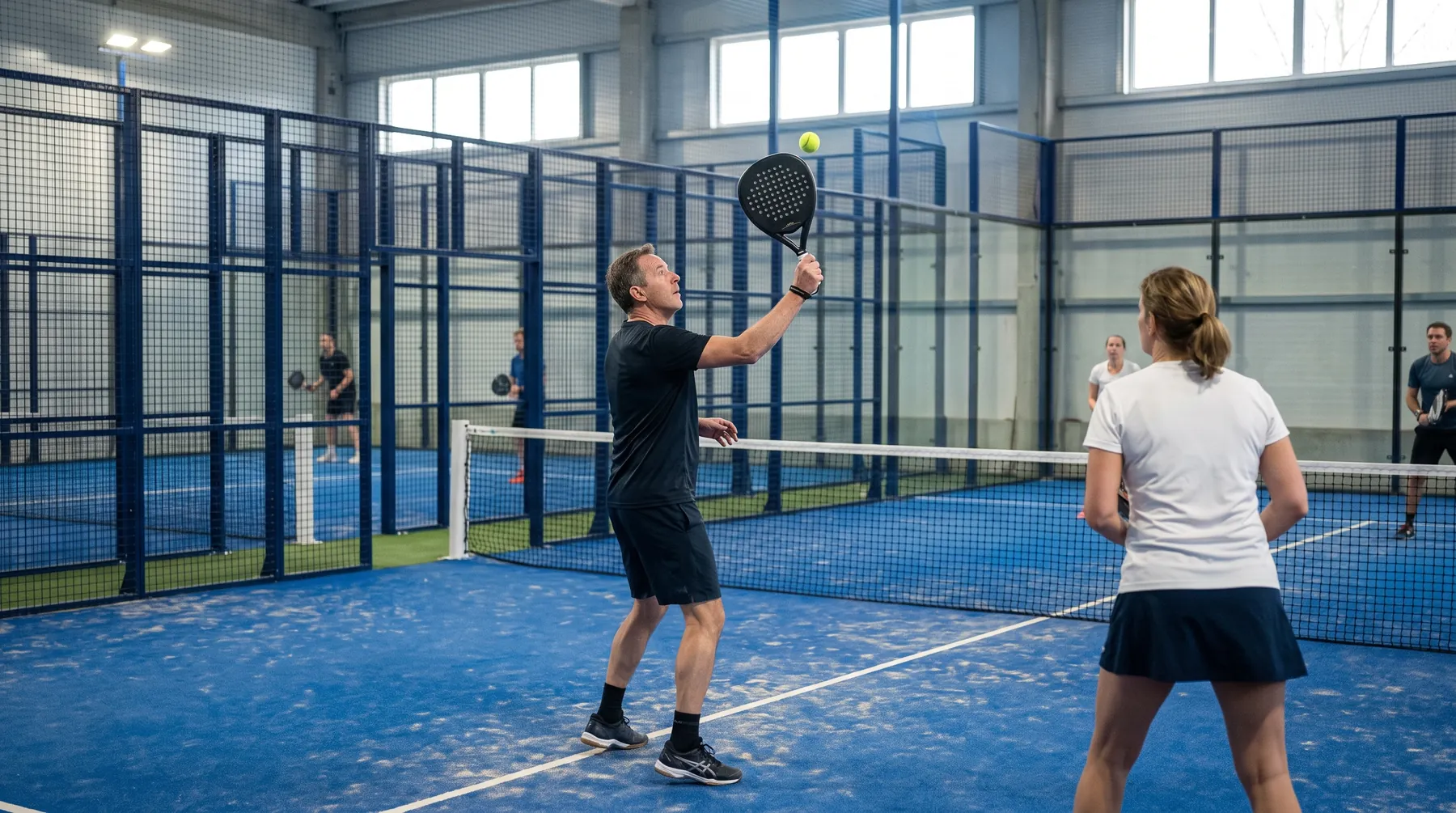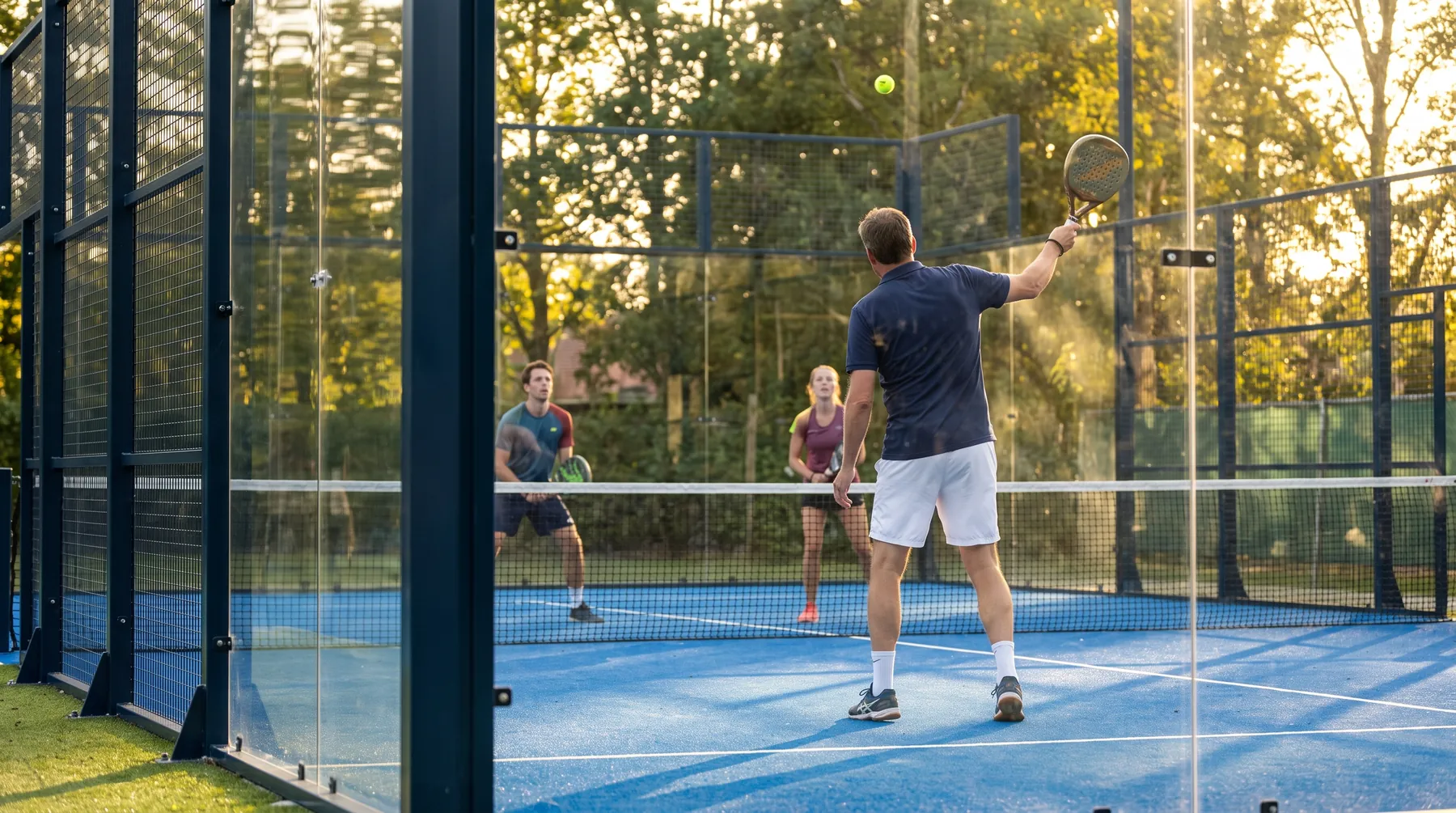
The padel serve is underarm, below the waist, and rarely fast. So why do so many club points end on the return?
Mostly because people try to do too much with it. The serve isn’t dangerous in itself. What it does is give the serving pair a head start to the net, which is where points are won, and the return’s job is to cancel that head start. Manage that every time and you’ve had a good evening, even if you never hit a winner off a serve.
The rules that apply to you as the receiver
A handful of FIP rules shape everything that follows:
- You must let the serve bounce in your service box before you hit it. Volleying the return isn’t allowed, even though volleys are fine at any other point in a rally.
- If the serve hits you or your racket before it bounces, the point goes to the server.
- A serve that bounces in your box and then hits the glass is good and in play. One that bounces in and then hits the metal mesh is a fault.
- You can stand anywhere on your side of the court, and so can your partner.
- In the first game of each set, your pair decides who receives first, and that player takes the first serve of every game until the set ends.
And one that catches people out: once you’ve swung at a serve, you can’t claim you weren’t ready. Everything the server has to get right is in the serve rules.
Where to stand
Coaches give slightly different starting spots, but they land in the same area. Stand roughly a metre in front of your back glass, and a stride or two in from the side glass on your half. Too close to the side glass and the ball cramps you as it comes out; too far back and you’re pinned against the back wall with no angle.
Then adjust to the server. Against a soft, short serve, take half a step in so you meet the ball before it dies. Against someone who spins it into the side glass, give yourself more room.
Your partner’s starting spot varies more. Some pairs keep both returners back, which is the safer shape while you’re learning. Others put the partner nearer the service line, ready to move forward or pounce on a weak volley. Either works, as long as you both move together once the return has gone.
Reading the serve
Time a small split step (a light hop onto both feet) for the moment the server strikes the ball. It lets you push off in any direction instead of being caught flat-footed at the bounce.
After that, watch the bounce more than the flight. Two kinds of spin tell you most of what you need:
- Sidespin from a right-handed server tends to hit the side glass and come away from it, towards you. Don’t rush in; the ball will come into your hitting zone.
- Slice keeps the ball low after the bounce and can make it hug the side glass. Stand a little closer and expect a lower contact point. Left-handers and backhand serves often produce this one.
Get your racket back before the ball bounces, every time. Most returns that go wrong are late, not badly aimed. Watch for patterns too. Club servers rarely change their serve much during a match, so by the third game you should know what’s coming.
Take it early, or let it come off the glass?
Here the advice seems to clash. Some coaches say to take most returns before they reach the glass, so the servers get less time to settle at the net. Others say a serve landing near the front of the side glass should be allowed to come off it, because snatching at it early leads to rushed, mistimed returns.
They’re describing different serves. If the ball is going to sit up in open court, take it early and steal some time back. If it’s going to strike the side glass soon after the bounce, let it rebound and play it as it comes out, using the same movement you’d use when playing off the glass anywhere else.
Where to send it
The safe default is cross-court, back towards the server and away from their partner at the net. The diagonal is the longest line on the court, so it gives you the most margin, and it keeps the ball away from the player already set to volley.
| The serve you get | A sensible return |
|---|---|
| Good serve, tight into your side glass | A firm block cross-court, low, at the server’s feet |
| Good serve down the middle | A high, deep lob to buy time |
| Short or easy serve | Attack: a lob over the net player, or a chiquita (a soft, low ball) at the incoming server’s feet |
The lob may well be the most common return in padel. It pushes the serving pair straight back and lets you take the net in one shot, provided you can land a lob deep under a bit of pressure.
Two returns to avoid: a flat, firm ball straight at the net player, and one that floats into the middle of the court at a comfortable height. Both hand the servers an easy volley.
On a big point, think “make them play one more”. A return that simply lands deep and low is worth more than a spectacular one that finds the net.
Keep the swing short
The return isn’t the place for a big topspin drive. The serve doesn’t bounce high enough to attack safely, and a long swing makes you late. Use a compact backswing, a firm wrist and a slightly open racket face, and either block the ball or put a little slice on it. Keep moving through the ball so you’re already heading forward after contact.
What happens after the return
If your return is good (a deep lob, or a low ball the server has to dig up), go forward with your partner straight away. Taking the net is the reason you played it, and you can’t take it from the back glass.
If your return is weak, stay back together and defend. The worst outcome is one of you charging in while the other stays put, or both of you stopping in no man’s land, the zone from about a step behind the service line back to the second post on the side wall. Moving forward and back as a pair is the heart of basic positioning, and the return is where it starts.
Practising the return
Returns are easy to practise because you only need one other person and half a court. The drill below is a good start, and there are more serve and return drills in our padel drills and practice library.
Try this on court
Ask a partner to serve while you return cross-court.
- Ten of the same serve in a row. Aim to land every return past the service line on their side.
- Then mix it up: one into the side glass, one down the middle, one short.
- Last round: after every return, move up to the net as if the point were live.
That last round is the one people skip, and it’s the one that changes matches. A good return followed by standing still is only half a return. If you want the server’s view of all this, the serve and return guide covers both ends of the exchange.
Next on the blogIndoor and outdoor padel courts: what changes when you move inside