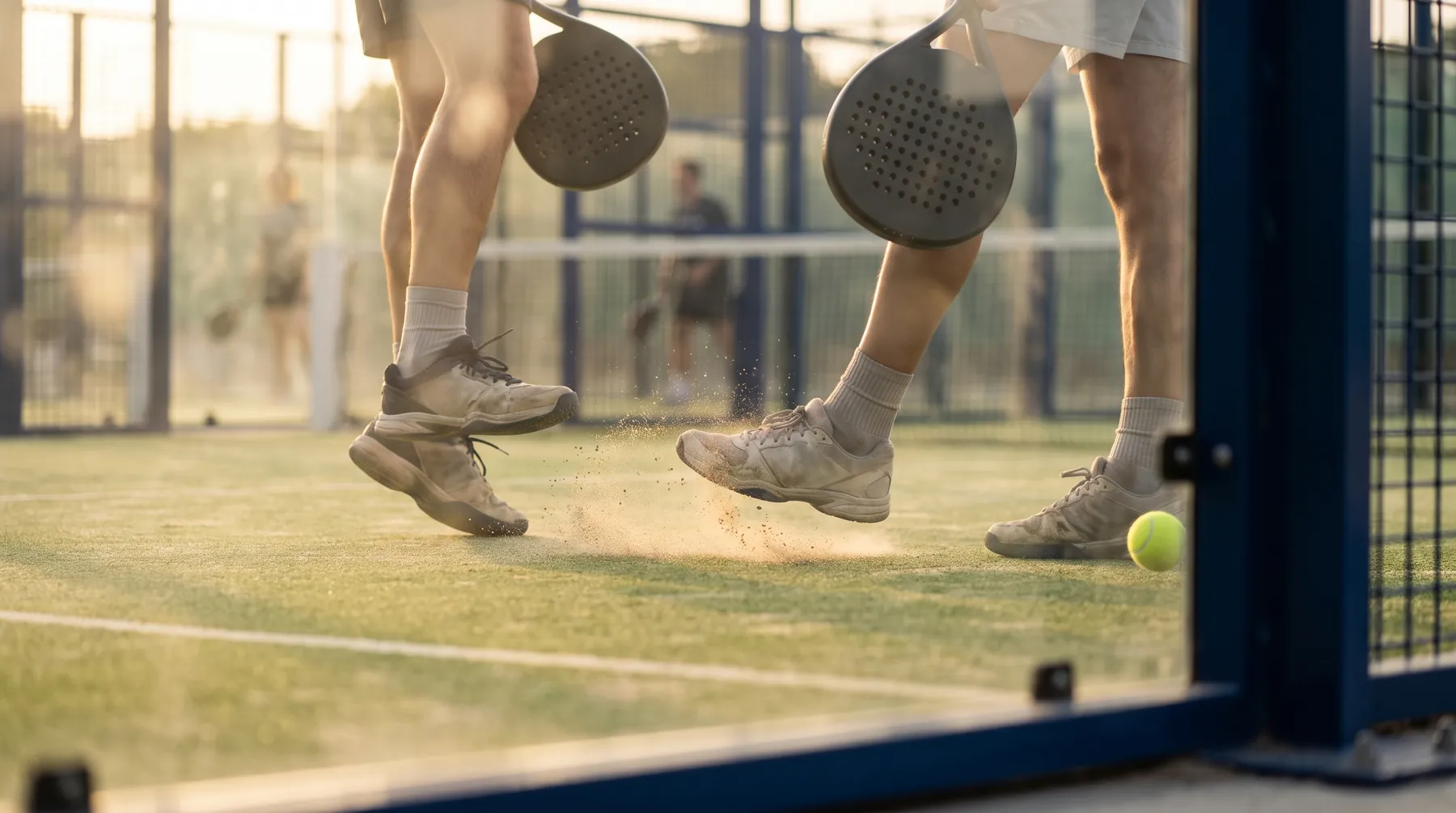
If you come to padel from tennis, the lob probably feels like giving up. You only hit one when you’re stretched and out of ideas, and you half expect it to come back at twice the speed.
Padel turns that round. The lob is the ordinary way to move the other pair off the net, and the net is where most points are won. Between good players a single rally can contain four or five of them.
What the lob is for
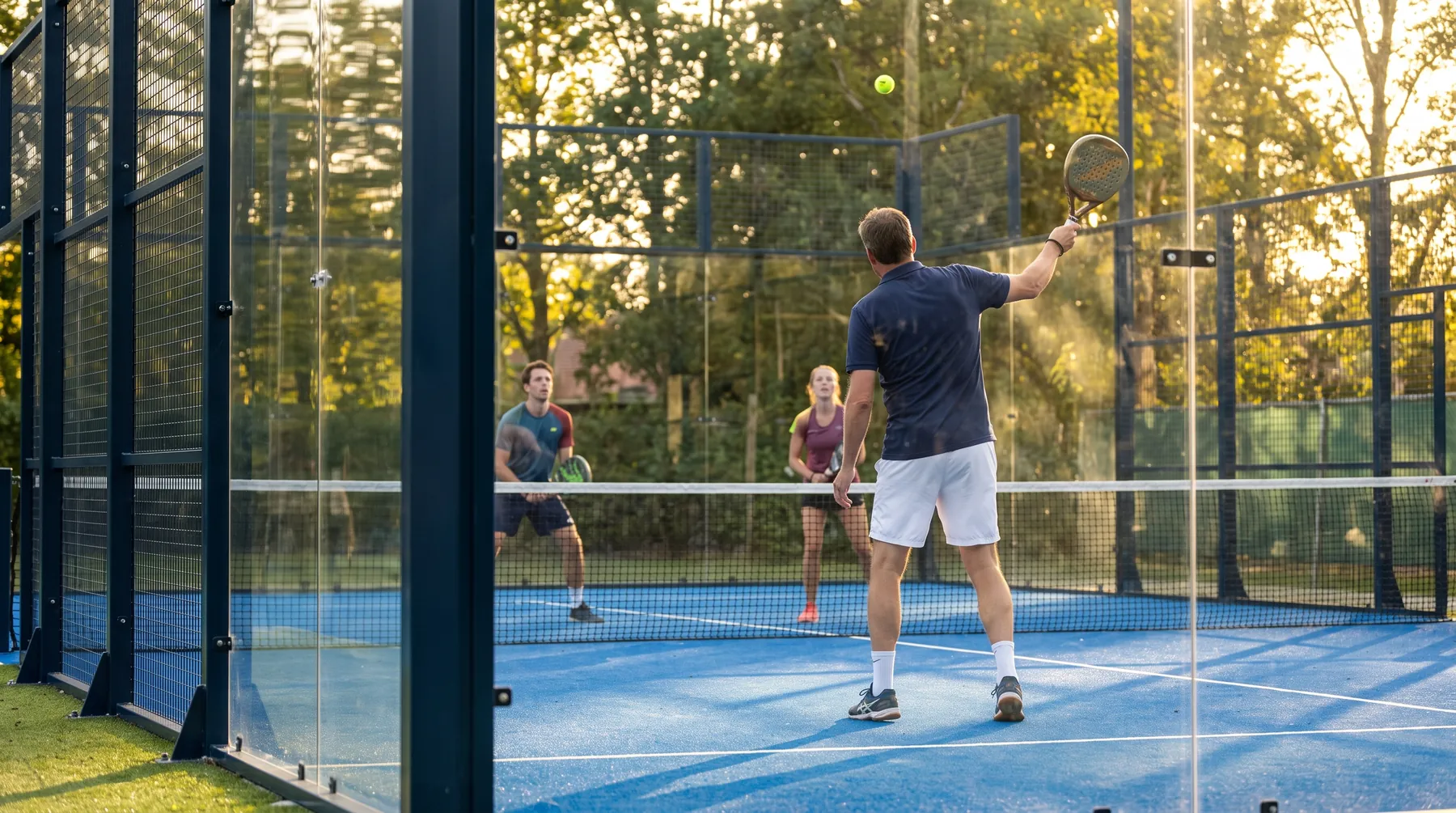
Picture the usual situation. The other pair are side by side near the net, volleying everything, and you’re at the back. Hitting harder rarely helps, because a fast ball just gives them a fast volley. Put the ball over their heads instead and they have to turn and chase it, and while they do, you and your partner move forward and take the net yourselves.
A lob also slows the rally down. A high ball takes a while to come down, which gives you time to get back into position. And it forces the other pair to play an overhead. The bandeja (a controlled, sliced overhead) and the víbora (a faster version with sidespin) are two of the hardest shots in the game to play well, so every lob is a small test of their technique.
When and where to lob in a match deserves its own post later in the series. Here we’re only interested in making the shot itself reliable.
Defensive and attacking lobs
Coaches usually split the lob into two kinds, and it helps to know which one you’re playing before you swing.
A defensive lob is the one you play under pressure, often off the back glass. It goes high, with plenty of margin, and its only job is to buy time and stop the other pair finishing the point. Depth matters more than anything.
An attacking lob comes off an easier ball, when you’re balanced and the other pair are tight to the net. It can be a little lower and quicker, so they can’t get back in time, and you follow it forward straight away.
Coaches lean different ways here. Some treat the lob mainly as a pressure-release shot. Others say you should lob mostly from comfortable balls, because a lob from a bad position tends to come out short. We think both are right: in trouble, lob high and safe; balanced, lob with intent.
How to hit it
You use the same continental grip as for most padel shots (if yours wanders, find the continental grip again before you work on this). What changes is the racket face and the swing path.
- Turn early. Get side-on with the racket back, as you would for a normal groundstroke.
- Get low. Bend your knees so you’re under the ball.
- Open the face. Tilt the strings so they point up towards the sky.
- Swing up. Bring the racket from low to high and meet the ball slightly in front of you.
- Finish high. Push up through your legs as you hit and end with the racket above your shoulder.
Keep the swing smooth and the wrist quiet. Height comes from the open face and the upward path. A flick of the wrist feels as if it ought to help, but it makes the depth a lottery.
A lot of lobs are played after the ball has come off your back glass. The steps are the same, but the footwork matters more. Move away from the glass, let the ball come out to you and get under it before you lift it. That movement is covered properly in the post on playing off the glass.
Height and depth: where to aim
A lob fails in one of two ways. Too short or too low, and it’s a gift for an overhead. Too long, and it hits the back glass before it bounces, which loses you the point.
Advice on the ideal spot varies. LTA Padel’s coaching page says to land the ball just beyond the service line and short of the back glass, while other coaches aim deeper, into the back corners.
We’d treat it as a band. There’s only about three metres between the service line and the back glass, and a good lob lands anywhere from just past the service line to a metre or so short of the glass. Deeper is harder to attack, but leaves you less room for error.
Height matters too. You want the ball well above the reach of a player stretching up with a racket, and high enough that it drops steeply. A steep ball bounces up rather than racing into the glass, so it doesn’t hand them an easy rebound.
Lob cross-court when you can. The diagonal is the longest line on the court, so the ball has more distance to come down in, and you get more margin than with a lob down the line.
Indoors, outdoors and the roof
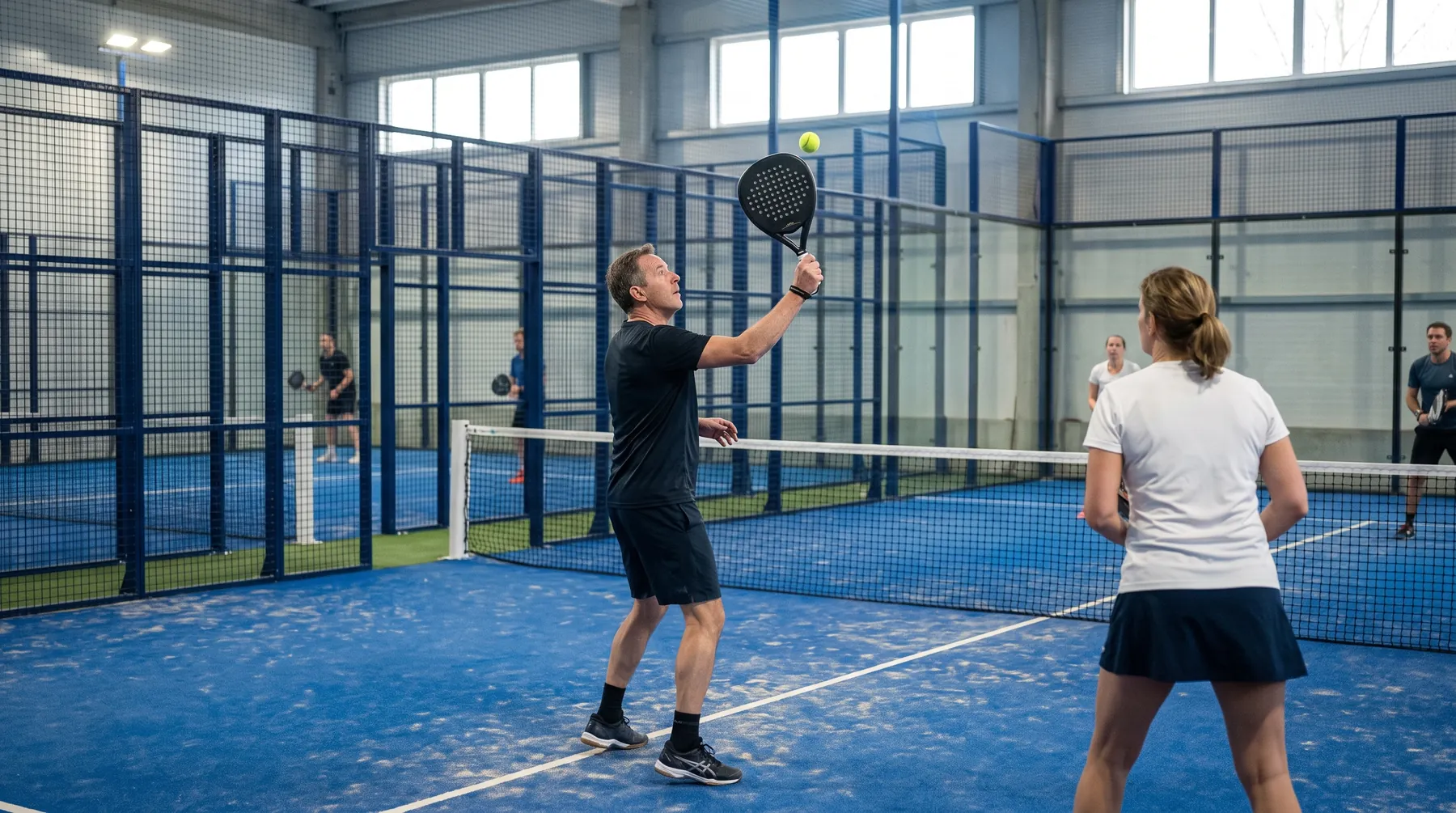
Indoors, look up before you play. A lob that hits the ceiling, a beam or a light before it bounces is lost. The FIP Rules of Padel set a minimum clear height of six metres over the whole court and suggest eight for new venues, but some older halls feel lower, especially at the ends. Adjust your height to the building in the first few games.
Outdoors, the wind can carry a lob long or hold it up short, so give yourself more margin when it’s gusty. The sun helps you: a lob that makes the net player look straight into it is much harder to smash. This being Britain, you may well get both in the same set.
Common mistakes
Coaches tend to flag the same handful of errors:
- A flat lob that clears the net player’s head by a racket length, which is exactly the height they like to hit.
- Lobbing with the wrist, so one goes long and the next lands mid-court.
- Hitting a good lob and then standing there admiring it. If it’s deep, move forward with your partner; that’s why you played it.
- Moving forward after a short lob. If it’s going to be smashed, stay back and defend together.
- Putting every lob in the same place, so the other pair settle into a rhythm.
Two drills to groove it
Start with touch. Bounce the ball gently up off your strings a few times, then let it drop and lob it to a partner at the net. You’ll feel how an open face and a soft swing lift the ball, and that feeling is most of the shot.
Try this on court
Play points where every rally has to open with a lob.
- One pair stands at the net and feeds; the other starts at the back.
- The back pair must lob the first ball, then play the point out.
- Swap ends every two points.
- Put a towel or two cones past the service line and score a bonus point for any lob that lands beyond them.
It feels odd for the first few rallies. Keep at it for a couple of sessions and the lob stops feeling like a last resort. When it does, the lob and defence section of our drills library has harder versions.
Once your lobs are landing deep, the next question is where you and your partner should be standing when the ball comes back. The positioning and tactics guide answers that, and the bandeja and víbora guide shows the overheads your opponents will try to answer it with.
Next on the blogThe padel return of serve: where to stand, what to hit, and when to move