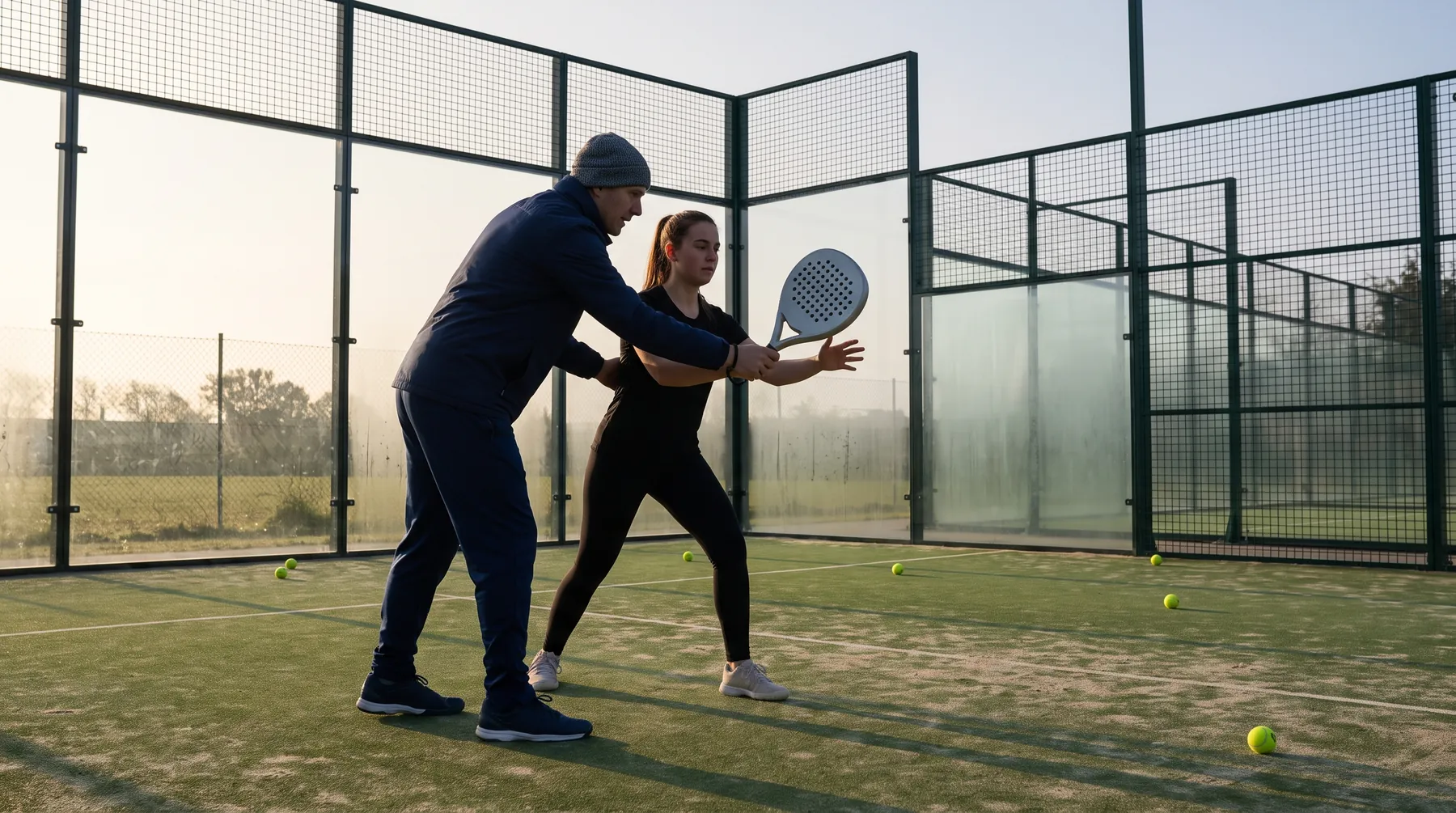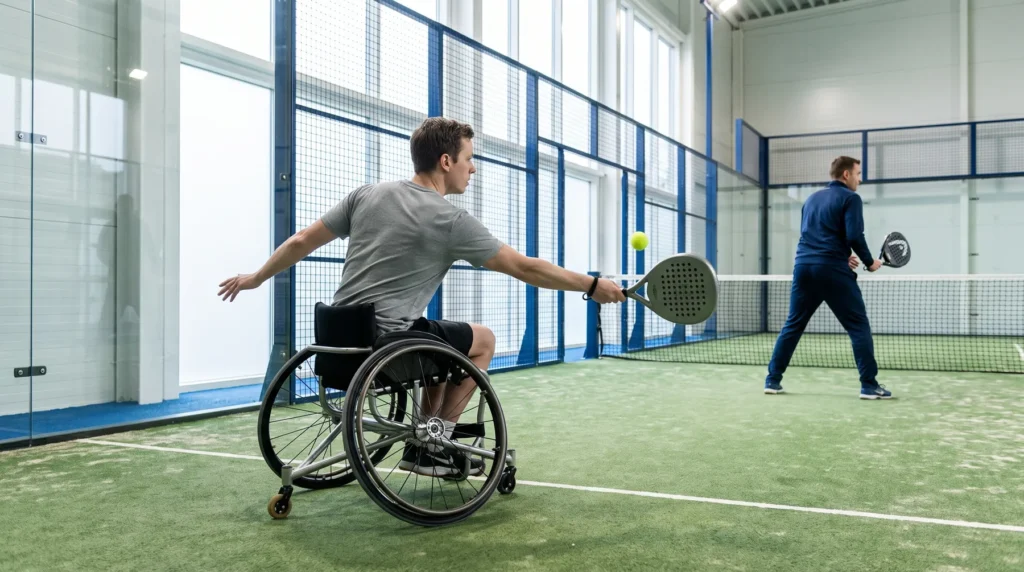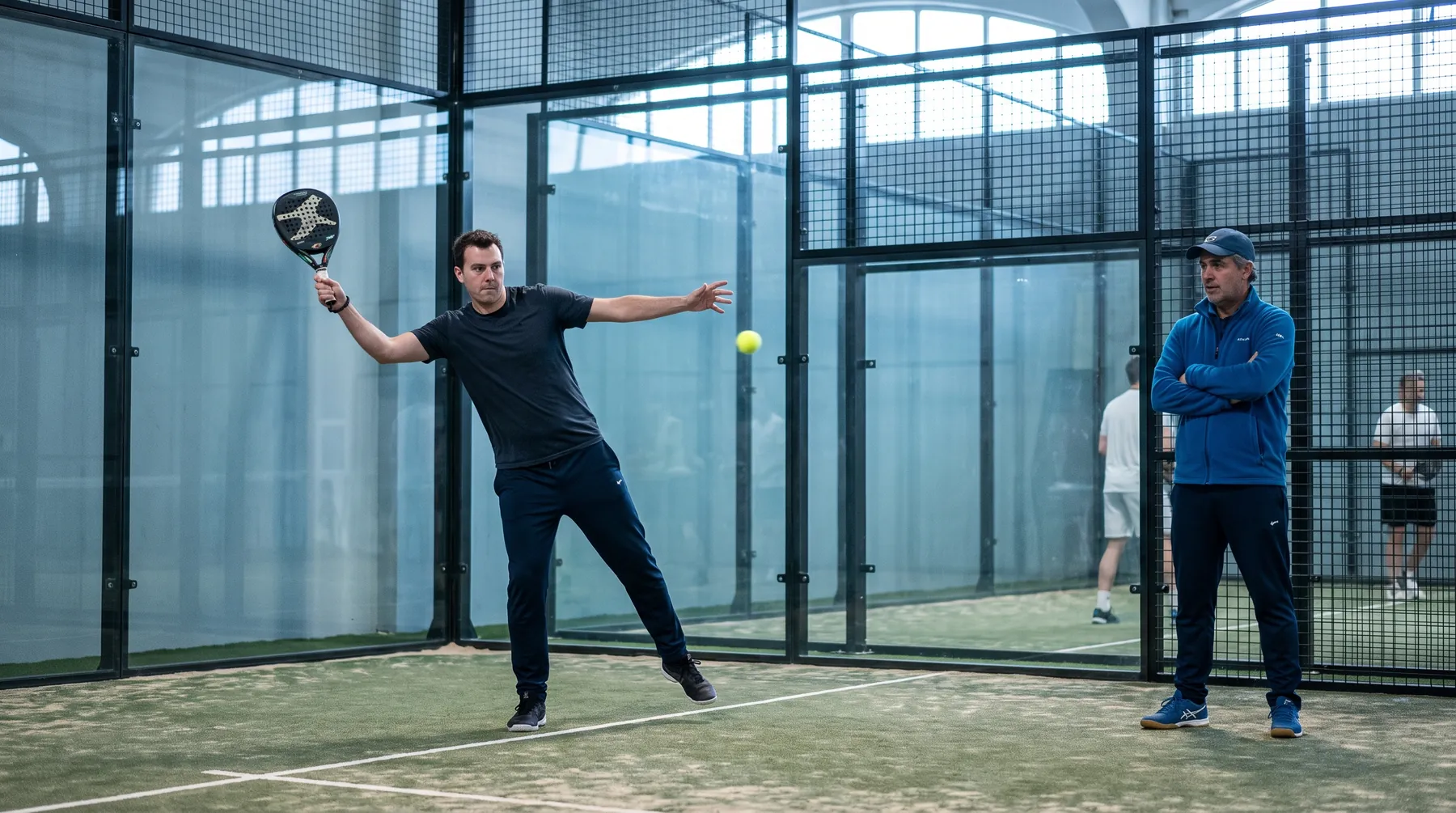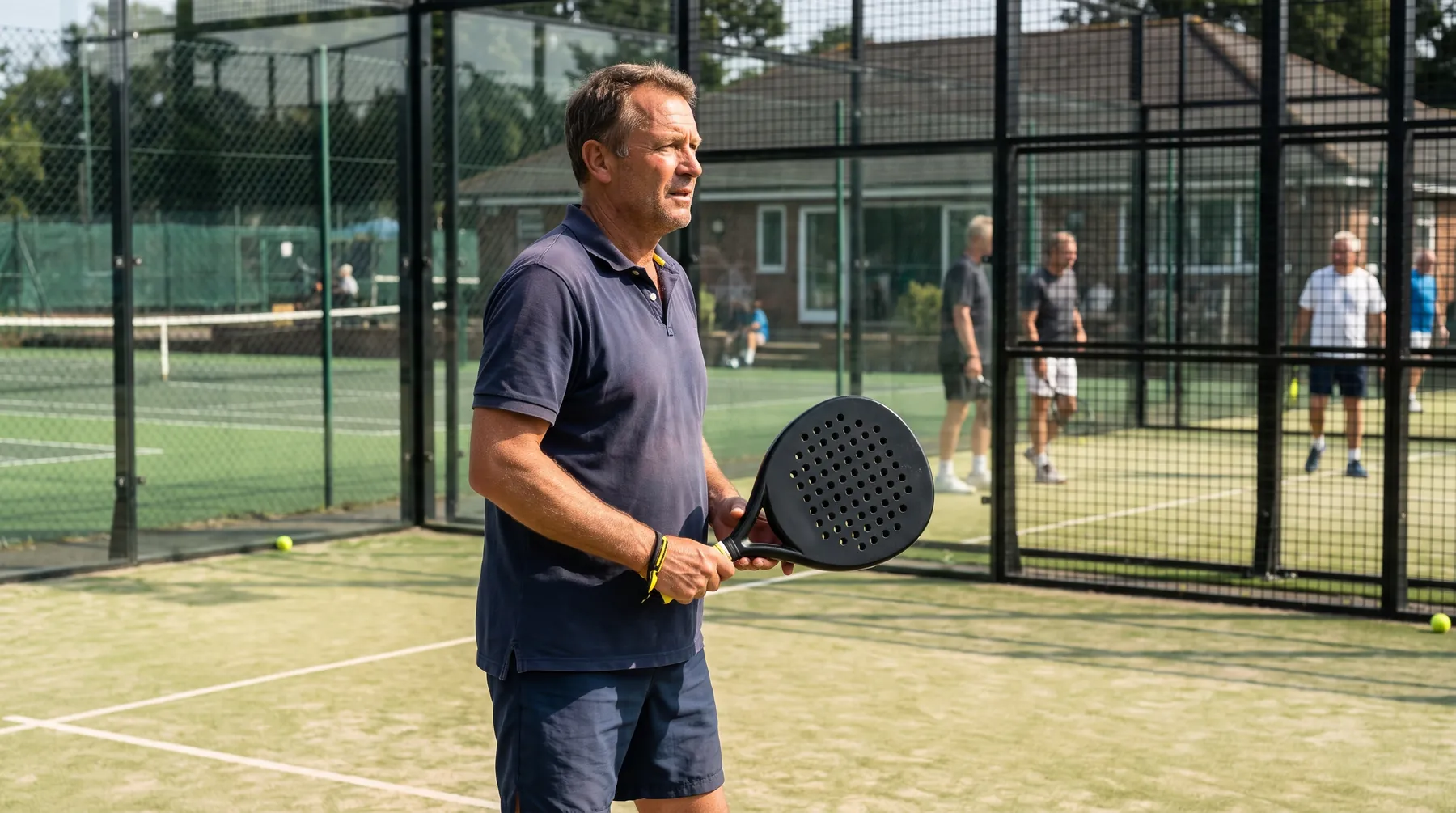
Tennis players tend to love padel for about three sessions. You already know how to watch a ball onto a racket, the scoring is the same, and you’ve probably played doubles. Then a ball you’d have chased comes back off the glass behind you, and your best forehand flies into the back wall and sits up for a smash.
That gap between what feels right and what works is what we’re dealing with here: what your tennis gives you, and what to change.
The quick comparison
On paper the two games are close relatives. In practice a few differences change almost everything about how points are won.
| Tennis | Padel | |
|---|---|---|
| Court | 23.77m x 10.97m for doubles, open at the ends | 20m x 10m, enclosed by glass and mesh |
| Net height at the centre | 91.4cm | 88cm |
| Racket | Strung, up to 73.7cm long | Solid and perforated, up to 45.5cm long, wrist cord compulsory |
| Ball | Standard pressure | Lower pressure and a fraction smaller, so it bounces lower |
| Serve | Overarm, a weapon | Underarm, at or below the waist, after a bounce |
| Format | Singles or doubles | Doubles almost everywhere |
| Scoring | 15, 30, 40, game; advantage | The same, with golden point or Star Point as options at 40-40 |
The padel court is about a quarter smaller in area than a tennis doubles court, and the walls are in play once the ball has bounced. That last part is where most of the adjustment happens. The 40-40 options are new too, and how padel scoring works explains them.
What carries over
Quite a lot, which is why tennis players are often rallying comfortably within an hour.
- Your ball sense, because judging speed, spin and bounce is most of the battle in any racket sport.
- A short, firm tennis volley is close to what you need at the padel net.
- Knowing where your partner is and covering the middle, habits padel rewards from day one.
- A split step, the small hop as your opponent hits, keeps you ready to move either way, and padel’s fast exchanges at the net make it even more useful.
- You already know the scoring, how to play a big point and how a set unfolds.
The serve stops being a weapon
You’ll notice this one first. In padel you bounce the ball and hit it underarm, at or below your waist, diagonally into the box. There’s no overhead serve at any level.
So the serve starts the point instead of winning it. A good one lands deep, stays low after it comes off the back glass, and gives you time to follow it to the net. Hitting it hard usually just puts it into the back wall on the full, or gives the receiver a high, easy bounce. The serve rules have a few details that catch tennis players out, waist height above all.
Let the ball come off the glass
A tennis player’s instinct is to take the ball early, before it gets past you. In padel that often means rushing a shot you didn’t need to rush. Once the ball has bounced, you can let it hit the back or side glass and play it as it comes back out, with more time and a better position.
It feels wrong for the first few sessions. Turning to follow the ball into the corner, then waiting for it, goes against years of tennis footwork. Persevere: the sooner you trust the glass, the sooner padel starts to make sense. Our guide to playing off the glass breaks it down.
Grip and swing
Most padel shots are played with a continental grip, the one you’d use for a tennis volley or serve. If your tennis forehand uses a semi-western or western grip, the continental will feel weak at first. Give it time. The closed face that suits heavy topspin on a tennis court makes volleys and shots off the glass harder.
The swing gets shorter too. The racket is short and solid with no strings, and the ball doesn’t need a big wind-up to reach the other side of a 20-metre court. A compact swing with a bit of slice keeps the ball low, and low balls are much harder to attack in padel than fast ones.
Power works against you
Of all the habits, this is the one that costs tennis players most. On a tennis court a hard, deep drive can be a winner. On a padel court the same shot bounces, hits the back glass and comes out to your opponent at a nice height. You’ve done the work, and they get the easy ball.
Overheads follow the same logic. A padel smash has to be hit hard and steep enough to bounce out of the court or die awkwardly off the glass, and anything less comes back off the wall for your opponents to play.
Much of the time the better choice is the bandeja (a controlled, sliced overhead that keeps you at the net) or the víbora (a faster, more aggressive version with sidespin). Our guide to the bandeja and víbora explains both.
For your first few weeks, set yourself a rule: no smash unless the lob lands near the service line in front of you. Everything else gets a bandeja. You’ll lose fewer points and keep the net far more often.
Positioning as a pair
In club tennis doubles, one up and one back is normal. In padel it leaves a gap down the middle that opponents will aim at all day. Padel pairs move together: both at the net when attacking, both back near the glass when defending, and moving up or back at the same time.
The net is the position that wins points. Most rallies are a contest over who holds it, and the main way to take it off the other pair is the lob. In tennis the lob is a rescue shot. In padel you’ll use it in almost every rally to push the net pair back so you can move forward.
The zone from about a step behind the service line forward to the second side post is known as no man’s land, and it’s where you’re most exposed. Get through it quickly, either forward to the net or back to the glass. Our guide to positioning and tactics covers where to stand in each phase of a rally.
Unlearning, one habit at a time
Trying to fix everything at once usually ends with you thinking about your feet while the ball goes past. Pick the glass first, because it changes the most points.
Try this on court
With a partner feeding from the other side, ten minutes at the start of a booking:
- Your partner hits a firm ball deep to your side.
- Turn sideways and let it bounce, then hit the back glass.
- Play it as it comes out, aiming high and deep (a lob), not hard and flat.
- Swap after ten balls.
Once that feels normal, work on the smash rule from the tip box above, then on moving up and back with your partner. Each one takes a few sessions to stick, and the tennis background starts paying off properly when it does.
Next on the blogPadel etiquette: the unwritten rules