A lot of people meet padel the same way. A friend books a court, sends a link to the group chat, and somebody asks what padel actually is. It’s a fair question. The sport looks a bit like tennis, a bit like squash, and it isn’t quite either. So before this blog gets into shots and kit, here’s the game from the court up.
The short version
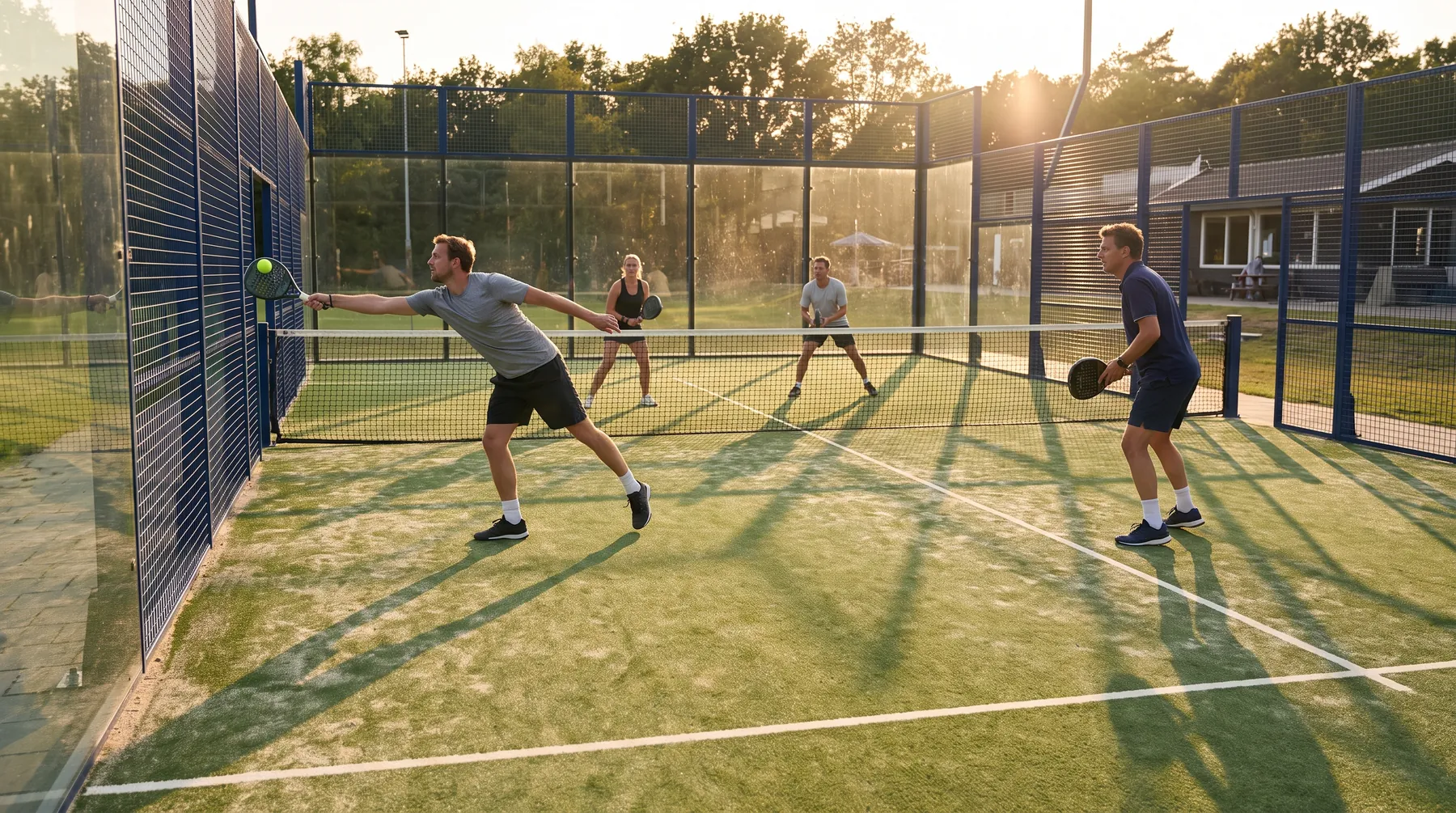
Padel is a racket sport for four people, played in pairs on an enclosed court about a quarter smaller than a tennis court. You serve underarm, the scoring works like tennis, and the walls are part of the game: once the ball has bounced on your side, you can let it come off the glass and still play it.
That last part is what makes padel feel different. A ball that would be a winner in tennis can come back off the back wall and give you a second chance. Rallies last longer, so beginners get far more hits, and plenty of people are trading proper rallies before their first hour is up.
The court
A padel court is 20 metres long and 10 metres wide, split by a net that sits at 88cm in the middle and 92cm at the posts. The back walls are glass, the sides are part glass and part metal mesh, and there are openings on each side so players can get in and out.
| Part of the court | Measurement |
|---|---|
| Playing area | 20m x 10m |
| Net height | 88cm at the centre, 92cm at the posts |
| Service line | 6.95m from the net |
| Back wall | Glass 3m high, with 1m of mesh above it |
The lines only matter when you serve. After that, the whole court is in play, and the walls become surfaces you can use.
How a rally works
Every shot has to go over the net and land on the floor of the other side before it touches anything else. If your shot hits their glass or mesh first, it’s out.
The rule
Under the FIP Rules of Padel, once the ball has bounced on your side it stays in play if it then hits your walls or mesh. You just have to return it before it bounces a second time.
So once the ball is down on your side, you have options. You can hit it straight back, or let it rebound off your back or side glass and play it from there (our guide to playing off the glass covers how). You can even play it off your own wall back over the net, a shot called the contrapared. Two bounces, though, and the point’s gone.
A few other rules catch new players out:
- You can volley at any point in a rally, except on the return of serve.
- If the ball hits you or your partner, you lose the point.
- Either partner can play any ball. There’s no rule about taking turns, but you can’t both hit the same one.
- If a ball bounces in and then flies out through a side opening, you’re allowed to chase it outside the court, on courts built with the space for it.
The serve
Serving is underarm. You bounce the ball behind the service line, hit it at or below waist height, and send it diagonally into the opposite service box. You get two attempts, as in tennis.
After it lands in the box, a serve can hit the glass and stay in play. If it lands and then hits the metal mesh, it’s a fault. A serve that clips the net and still lands in the right box is a let, so you take it again. The serve gets a post of its own soon, because it’s where most club arguments start.
Scoring
If you know tennis scoring, you already know padel’s: 15, 30, 40, game. Six games with a two-game lead wins a set, and most matches are the best of three sets, with a tie-break at 6-6.
The one thing to settle before you start is what happens at 40-40. The international rules allow three options: traditional advantage, a single “golden point” where the next rally wins the game, or the newer Star Point system the professional tours brought in for 2026. Most social games use advantage or the golden point. Agree it on court and nobody argues about it later. The rules and scoring guide has the full detail.
The racket and the ball
A padel racket has no strings. It’s a solid, perforated paddle with a foam core, shorter than a tennis racket and usually 340 to 375g. The rules cap the length at 45.5cm and require a wrist cord, so use it.
Rackets come in three broad shapes. Round ones are forgiving and easier to control, diamonds have more power but a smaller sweet spot, and teardrops sit between the two. If you’re thinking about buying one, start with how to choose a padel racket.
The ball looks like a tennis ball but runs at slightly lower pressure, so it bounces lower and stays in rallies longer. Tennis balls aren’t a good substitute. They play differently off the glass, and they can be hard on a padel racket.
Why it’s taken off in Britain
Padel started in Acapulco in 1969, when Enrique Corcuera built a walled court at his holiday home. It spread to Spain and Argentina in the 1970s and has been huge in both ever since.
Britain came to it late, then quickly. The LTA’s figures show 69 courts in 2020. By the end of 2025 there were 1,553 courts at 559 venues, and 860,000 people played at least once that year, more than double the year before.
Part of the reason is how fast it is to pick up, so the first session is fun rather than frustrating. Venues like it too: four players fit on a court that takes a fraction of the space of a tennis court, which makes it easy for leisure centres and gyms to add a few.
And you’re never on your own out there. The court is small enough to chat across, and a game of four turns into a social without anyone planning it.
What it costs to play
Prices vary a lot by area and time of day. The LTA puts the average off-peak booking at around £7 per person per hour. Club price lists we’ve looked at range from £3 to £5 each at quieter venues to around £14 to £21 each for peak courts in central London. Most venues hire rackets for a few pounds, so trying it costs no more than the court.
Getting your first game
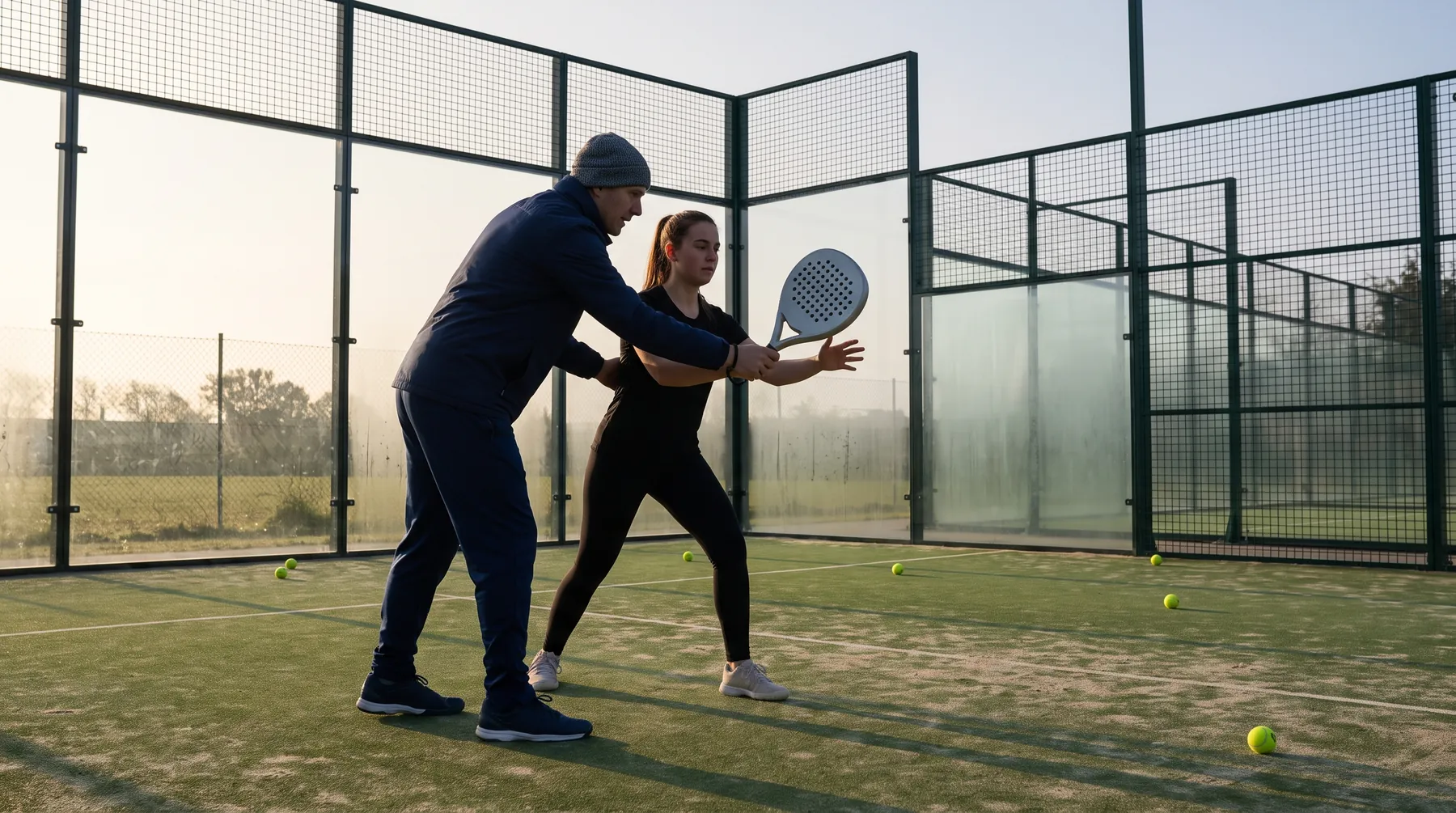
The easiest start is a beginner or “intro to padel” session at a local venue. These are set up for people who’ve never played, a coach runs them, and you can turn up on your own without rounding up three friends. If you’d rather just book a court, our court finder has UK venues with opening hours, facilities and booking links.
Wear trainers with a flat, grippy sole, not running shoes. Running shoes are built for going forwards, and padel is mostly sideways.
Bring water, borrow a racket from the venue, and don’t worry about the walls on day one. Let the ball bounce, hit it back over the net, and the glass will start to make sense by the end of the hour. The beginner’s guide is there if you want more before you go.
Next on the blogHow padel scoring works: advantage, golden point, Star Point and tie-breaks