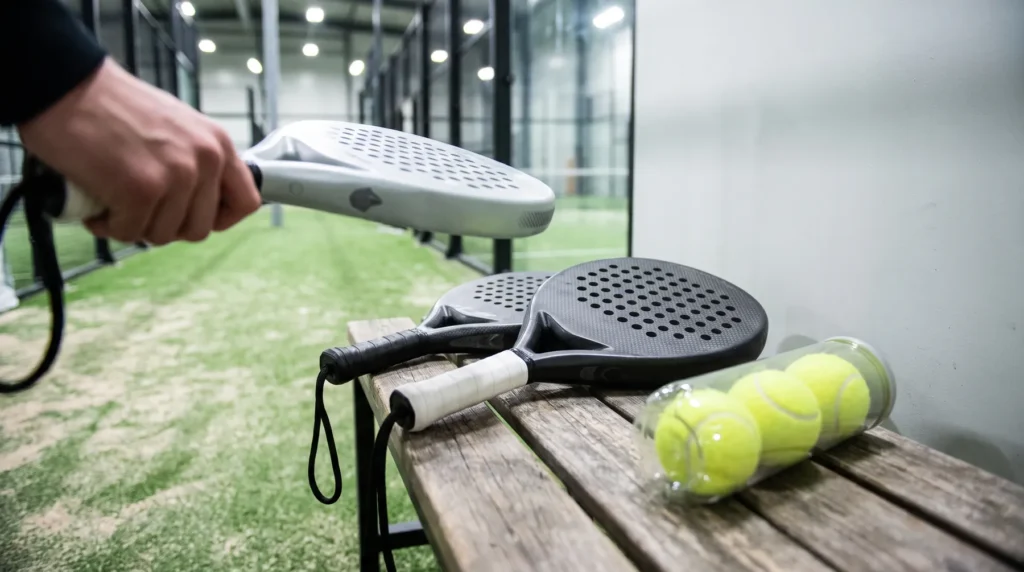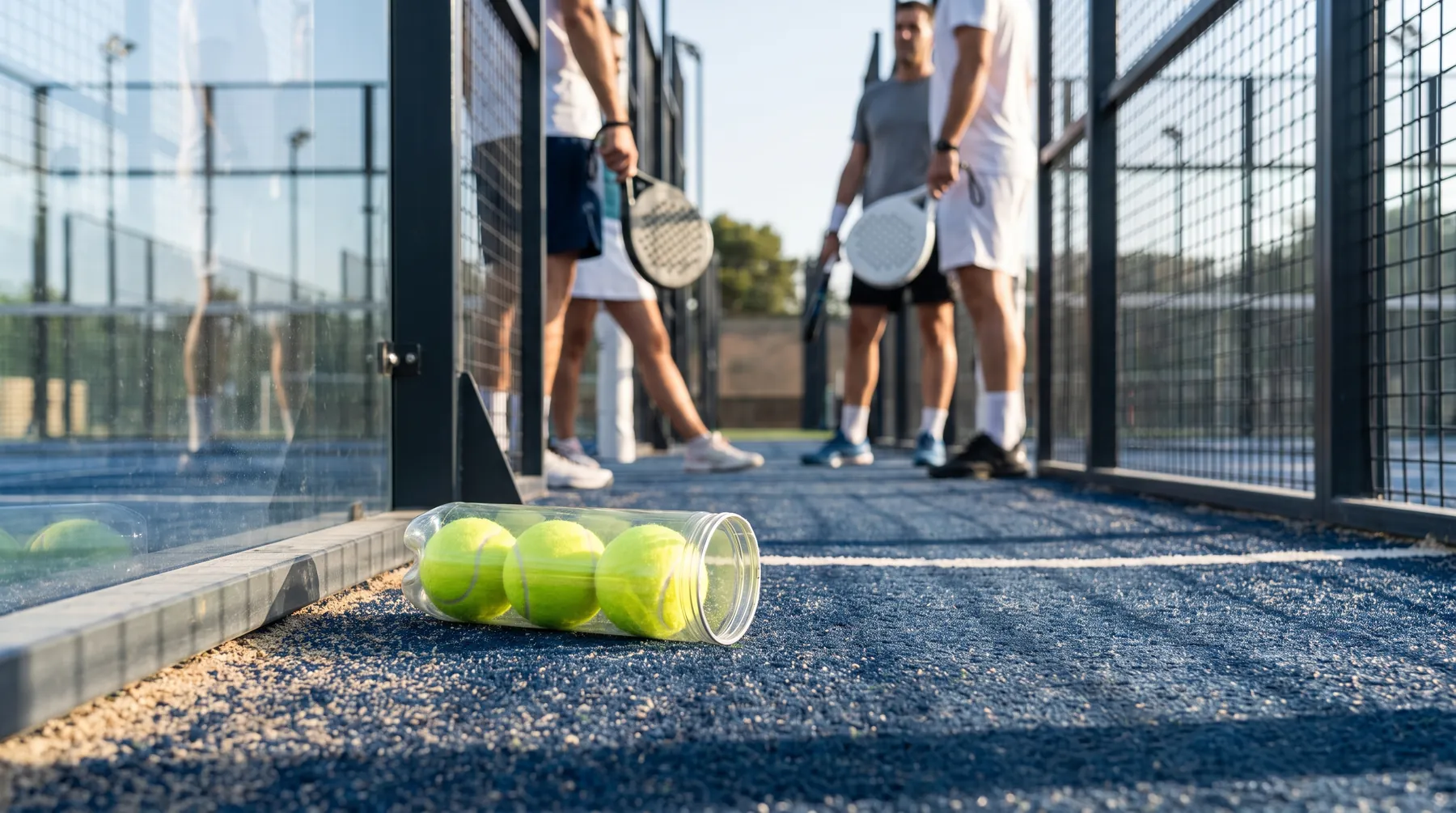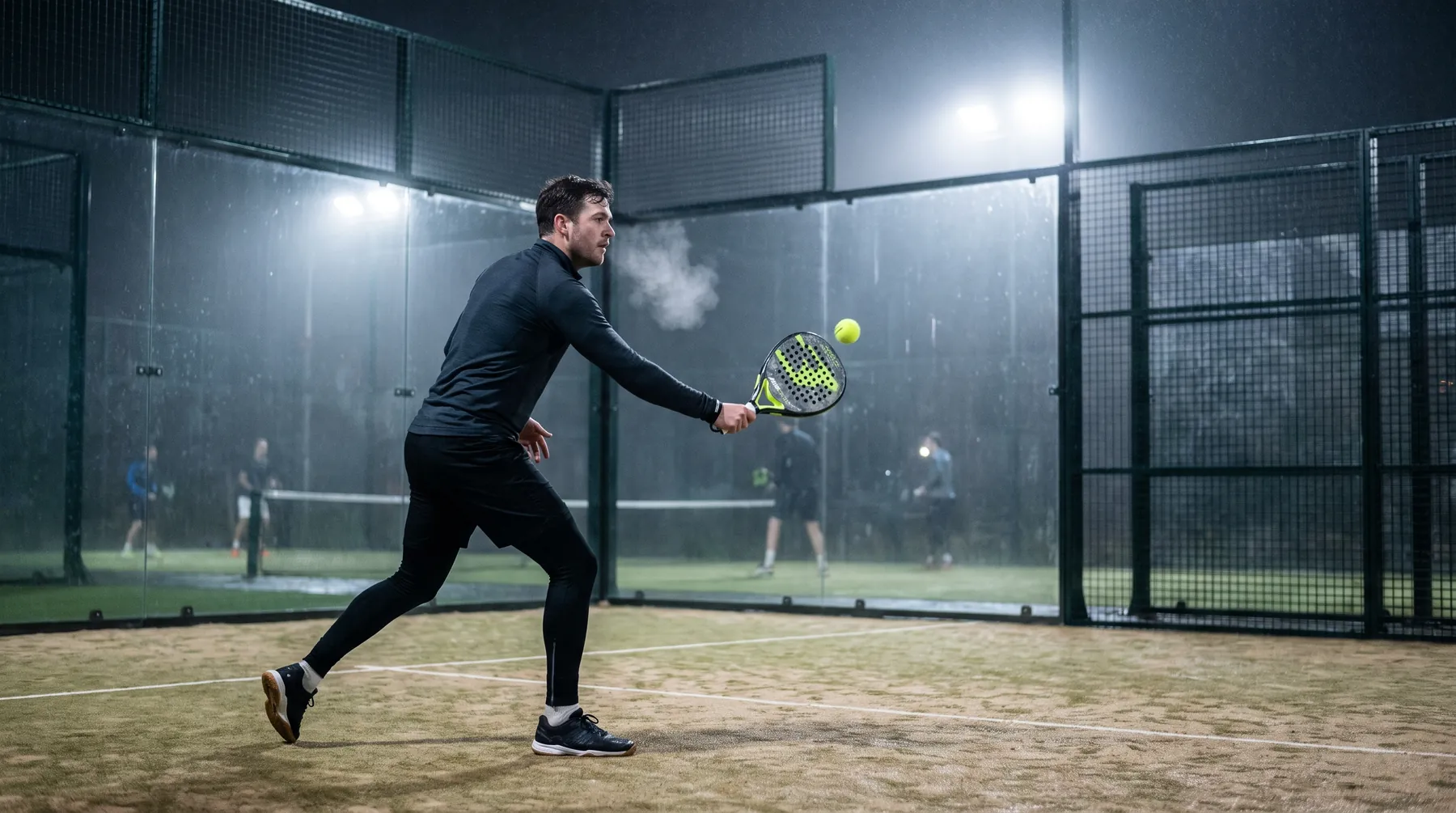
Padel grew up in places where winter means a jumper in the evening. In Britain it means drizzle, frost on the turf and dark by half four.
None of that is a reason to stop. The LTA points out that courts can be quieter in winter, and we’d argue a season of cold, slow balls makes you a better player by spring. You just have to dress for it and accept that the ball won’t behave the way it did in July.
Covered, indoor or open
Your first winter decision is the court. A fully indoor hall takes the weather out of it. A canopy keeps the rain off but not the cold or the wind, and an open court gets whatever the day throws at it.
The LTA’s guidance for venues notes that uncovered courts see a drop in use over winter while covered ones stay busy, so book covered slots early. How a roof changes the ball, the glass and the price is laid out in the post on indoor and outdoor courts.
What to wear
Start the session wearing more than you think you need. The LTA’s reasoning is simple: taking a layer off once you’re warm is easier than putting one back on after you’ve cooled down. A sensible winter outfit looks something like this:
- A thin base layer that pulls sweat away from your skin, so you aren’t standing in a damp shirt between points.
- A long-sleeved top or a light zip-up jacket you can strip off quickly at a change of ends.
- Leggings or running tights under your shorts, or tracksuit bottoms that don’t flap about when you lunge.
- A dry top for afterwards. The LTA suggests packing a spare change of kit in case of a downpour.
Avoid anything bulky. A big coat restricts your shoulders, and overheads are the first shots to suffer. If you can’t swing freely in it, leave it on the bench. There’s more on fabrics and layers in the etiquette and what-to-wear guide.
Shoes and a damp court
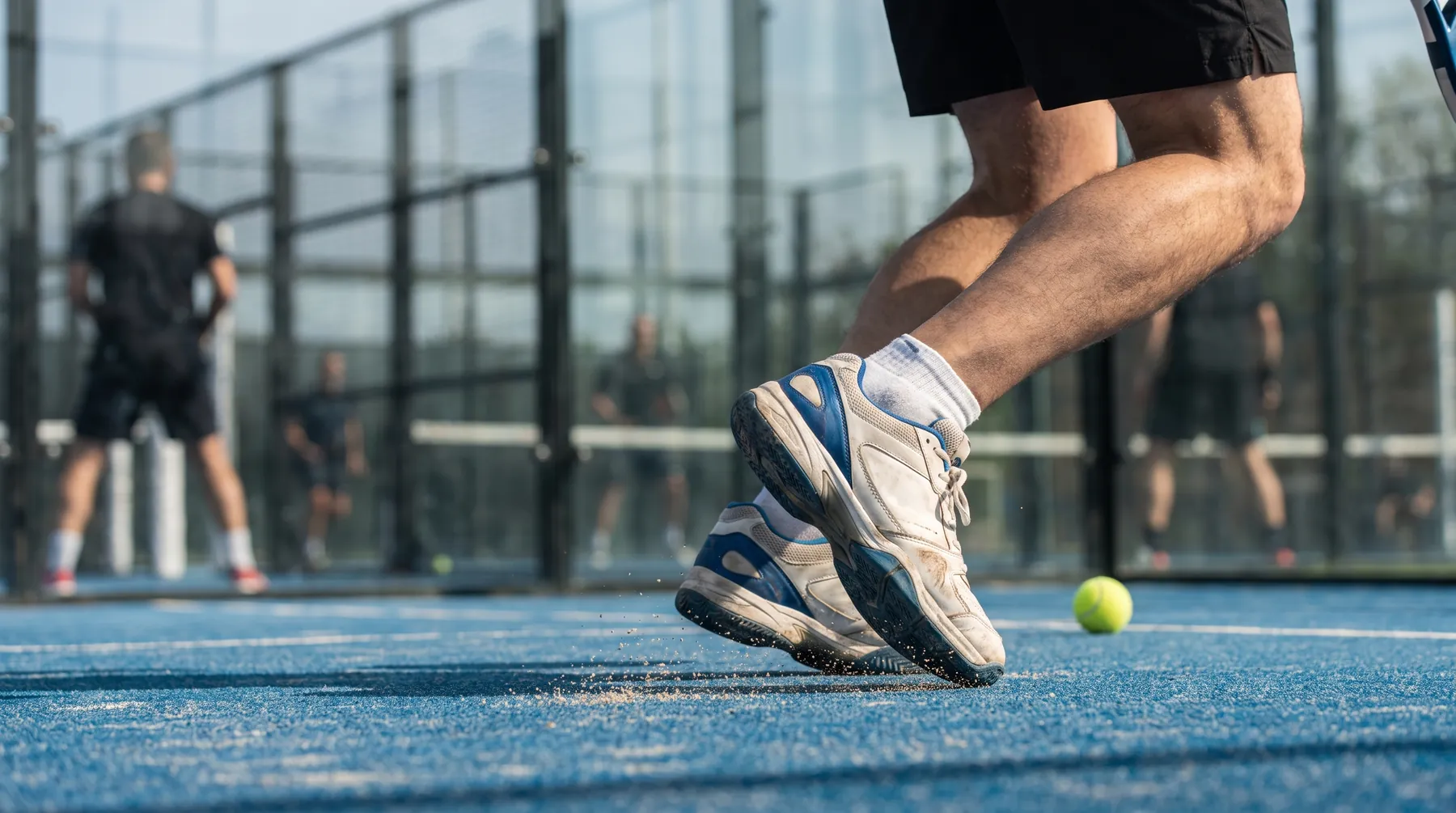
Wet artificial grass is slippery, and worn soles make it worse. Both the LTA and Red Bull’s winter guide put grip near the top of their lists, so look at your treads before the season starts. Which sole patterns cope with a sandy, damp court, and when a pair is finished, are both in the padel shoes post.
Check the court as well as your feet. The LTA advises looking at the surface before you start and during the session, because a court can stay slippery long after the rain has stopped. If it starts raining or snowing, if somebody slips, or if the surface just feels wrong, stop. If there’s a weather warning out, postpone. Nobody remembers a cancelled game; everyone remembers a torn hamstring.
Take a small towel and a spare overgrip in your bag. Wet grips get slippery, and a quick wipe or a fresh overgrip at a change of ends costs a minute and saves a lot of mishits.
A longer warm-up
Cold muscles are less forgiving, and padel’s sudden stops, lunges and overhead swings find that out quickly. The LTA recommends allowing around 90 minutes for a one-hour session in winter: about 15 minutes to warm up beforehand and 15 to cool down afterwards, so you don’t stiffen up on the drive home.
Our ten-minute warm-up works all year. In winter, stretch the first part out until you feel properly warm, keep your layers on through it, and stay on your toes between shots once you start hitting. The Padel School makes the same point: standing still during the knock-up undoes the work you’ve just done.
Drink water too. You won’t feel as thirsty as you do in summer, but you still sweat under all those layers.
What the cold does to the ball
Padel balls are pressurised, and cold air lowers that pressure. The ball feels heavier, travels less far and comes off the glass with very little life. Damp makes it heavier still. The guide to shoes, balls and grips explains how ball pressure works and how long a tube lasts.
The glass changes as well. On cold, damp days condensation builds up on the walls, and coaches describe balls that drop almost straight down after hitting them. A slow ball arriving at the glass is the worst for this. Three adjustments help:
- Stand closer to the back glass than you would in summer, because the ball won’t come out as far.
- Bend your knees and get your racket low early. Most winter rebounds stay low, and bending from the back to reach them is a good way to hurt it.
- Open a fresh tube more often. Once balls stop bouncing consistently, they make the game harder and are rougher on your arm.
How the game changes
In summer, a hard smash bounces high off the back glass and often wins the point. In winter it doesn’t bounce as far, so the other pair have a much easier time getting it back. Expect slower points and longer rallies.
The LTA suggests you’ll hit more bandejas (the controlled, sliced overhead) than flat smashes. When you do smash, it describes what Spanish players call a winter smash: hit flatter and deeper, so the ball bounces past the service line and skids through low instead of climbing over the opponents’ heads.
Try this on court
Ten minutes on the winter smash at the start of a cold session.
- Your partner lobs from the back; you stand at the net.
- Hit flat and deep, aiming to bounce the ball just past their service line.
- Your partner tells you whether it skidded through low or sat up off the glass.
The lob works in your favour. A slow ball that lands deep pushes the net pair back and gives you a chance to take the net, which is why Red Bull’s guide makes it a core winter shot. If yours tends to land short, fix the lob before the cold sets in.
On a wet court the LTA also suggests relying less on the glass and coming forward more, since the bounce off wet walls is so unpredictable.
Coaches at The Padel School see winter as a good time to work on technique. The damp ball takes some of the spin off, so volleys, bandejas and víboras (an overhead hit with sidespin) have to be built on clean contact, and that pays off when the warmer weather comes back.
Do you need a winter racket?
You’ll read that some players switch rackets for winter, but the advice points two ways. An adidas padel coach, interviewed by All For Padel, suggests a softer racket in the cold to help the heavier ball come off the face, and says some top players use a harder racket in summer and a softer one in winter.
The Padel School suggests the opposite: a slightly heavier, harder racket with a rough face for extra grip on a wet ball.
For most club players we wouldn’t buy a second racket for the cold. Learning the conditions with the racket you know will help more. Do look after the one you have, though. NOX advises protecting rackets from cold, and the same goes for summer heat, so bring yours into the house overnight instead of leaving it in the car.
Rain and dark evenings
Light drizzle can be playable if the court stays safe and the balls aren’t soaked, with shorter, more controlled shots. Heavy rain is another matter. Balls soak up water, get heavy and stop bouncing, which is hard on elbows and shoulders, and the court becomes dangerous. Move indoors or rebook.
Light is the other winter problem. Make sure your booking includes floodlights, and if they aren’t on, don’t play in the gloom. A ball you lose against a dark sky is the one that ends up hitting you, or sends you stumbling over your own feet chasing it.
Next on the blogThe bandeja: how to hit padel’s controlled overhead