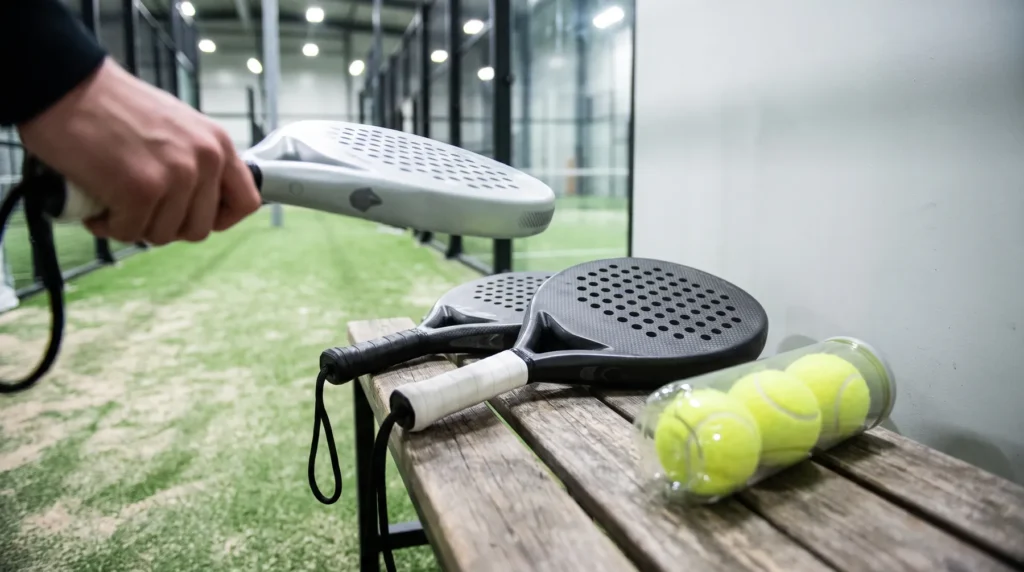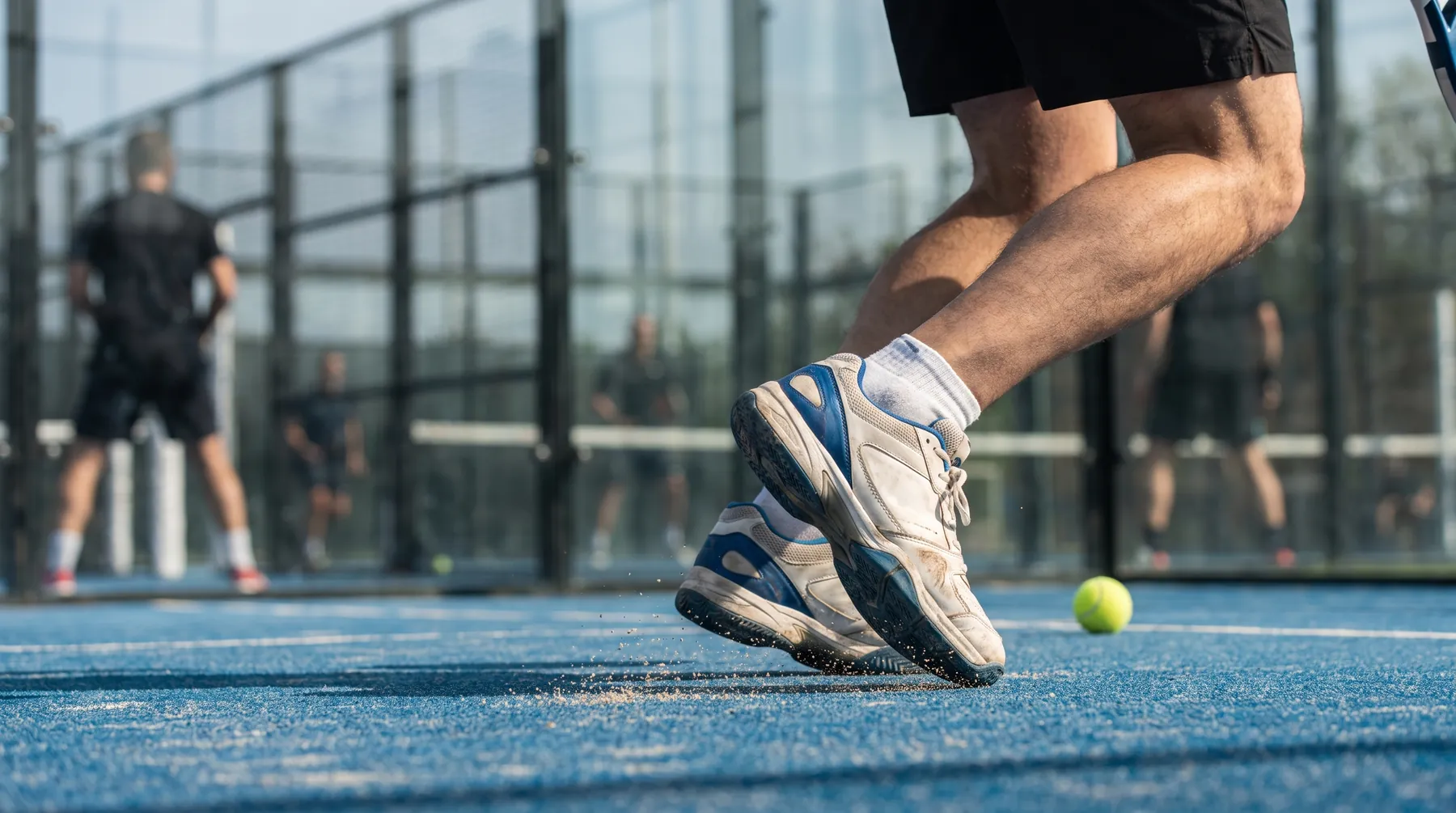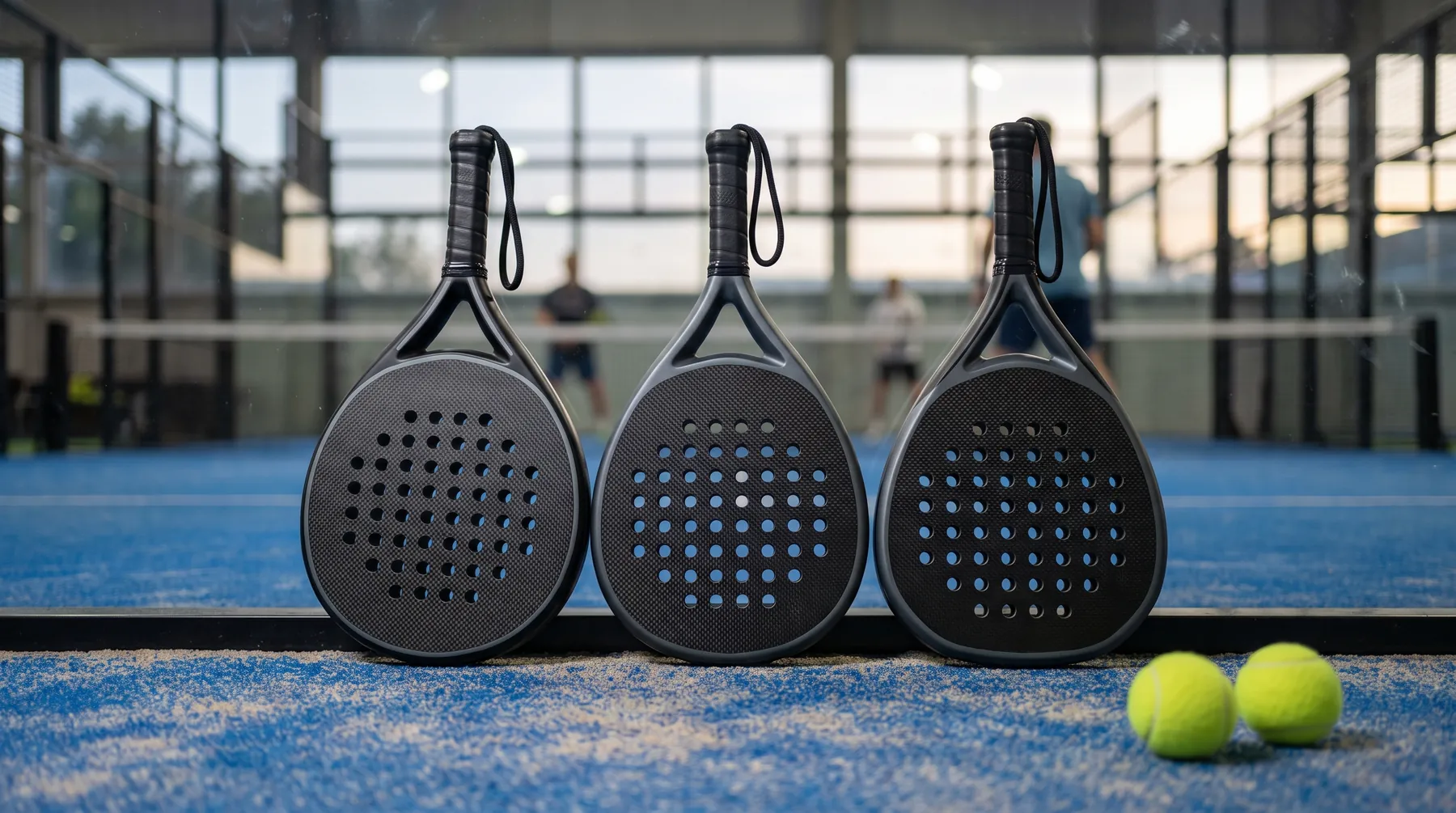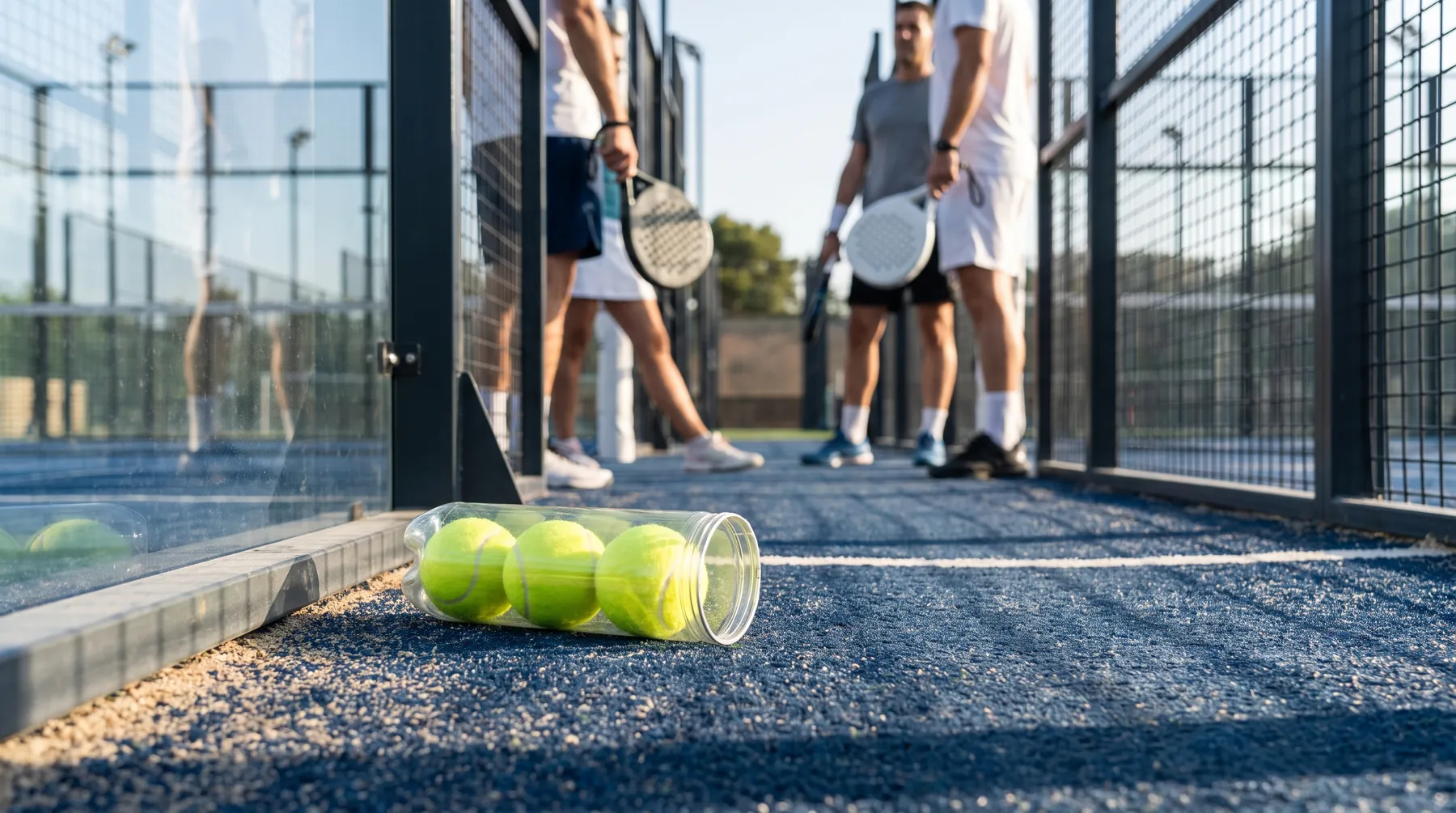
Every group has someone who turns up with a tube of tennis balls. They’re the same colour and roughly the same size, and they were in the cupboard. Ten minutes later everyone has given up chasing balls flying off the back glass and someone has gone to buy padel balls at reception.
The two balls look almost identical, but they’re built to different specifications, and on a padel court the difference shows quickly. Here’s what sets a padel ball apart, and how to tell when a tube is finished.
What the rules say
The FIP Rules of Padel set out what an official ball has to be:
- A rubber ball with a smooth, even outer surface, in white, yellow or another colour that stands out clearly from the court.
- Between 6.35cm and 6.77cm across, and between 56.0g and 59.4g in weight.
- When a new ball is dropped from 2.54m onto a hard surface, it should bounce back between 135cm and 145cm.
- An internal pressure set by the rules, which works out at roughly 10 to 11.5 psi (pounds per square inch).
There’s also an exception for altitude. Above 1,000m, where thinner air makes balls fly further, a different ball with a lower bounce can be used. That matters more for a padel holiday in the mountains than for a Tuesday night in Leeds.
Padel balls and tennis balls compared
Put the two specifications side by side and the gap is smaller than you’d expect, which is exactly why people mix them up.
| Padel ball (FIP) | Standard tennis ball (ITF) | |
|---|---|---|
| Diameter | 6.35 to 6.77cm | 6.54 to 6.86cm |
| Weight | 56.0 to 59.4g | 56.0 to 59.4g |
| Drop test from 2.54m | 135 to 145cm | 135 to 147cm |
| Internal pressure | Lower | Higher |
So a padel ball weighs the same as a tennis ball, it’s a touch smaller, and it’s pumped up less. That lower pressure is the part that counts.
Why tennis balls don’t work
A drop test onto concrete is a gentle bounce. Padel isn’t gentle. You’re hitting the ball with a solid racket with no strings to soak up the impact, and then the ball hits glass, which doesn’t absorb much either. A firmer, higher-pressure tennis ball comes off both much faster, so it shoots off the back wall before anyone can get to it.
The game relies on the ball slowing down enough off the glass for you to play it (the guide to playing off the glass shows how much that rebound shapes a rally). With a tennis ball, lobs sail long and the walls stop being a second chance and start being a problem.
Children are the one exception. For juniors starting out, LTA Padel suggests the slower orange or green tennis balls used in junior tennis, which have lower compression and are easier to play with. A standard yellow tennis ball in an adult game is another matter.
How long a tube lasts
Padel balls come in pressurised tubes of three, and they start losing pressure the moment you open the tube, whether you play with them or not. A half-used tube that has sat in your bag for a month won’t play like a new one.
For most club games, a tube of pressurised balls is good for two to four matches before it feels noticeably flatter. Hard hitters will kill them faster, and gentle social players will get a bit more out of them. Professional matches change balls far more often than that.
You’ll notice a tired ball before you can measure it. It feels heavier off the racket, it doesn’t come off the back glass as far, and your lobs start dropping short. The felt also goes fluffy, which slows the ball down further.
Not sure if your balls are finished? Drop an old one and a new one from the same height, side by side, onto a hard floor. If the old one comes up clearly lower, it’s time for a fresh tube. A squeeze works too: a dead ball gives much more under your thumb.
Dead balls and your arm
A flat ball has a knock-on effect that’s easy to miss. Because it comes off the racket with less pace, you start swinging harder to get the same depth.
Over a long session that’s more work for your forearm and elbow, which is the last thing you want if you’re prone to padel elbow (a softer racket helps too, as we explained when choosing your first racket). Fresh balls are cheap compared with a physio appointment.
Pressurised, pressureless and the labels on the tube
Most balls you’ll play with are pressurised. There are also pressureless balls, which get their bounce from a thicker rubber wall instead of the air inside. They feel heavier and a bit duller, but they keep their bounce for much longer, so you’ll mostly find them in coaching baskets and ball machines. We’ll go into those properly in a later post.
Among pressurised balls, brands sell different versions, often labelled for speed or control. The labels aren’t standard across brands, so read what each one is designed for. As a rough rule, faster, harder balls suit strong players and warm conditions, and slower ones give beginners more time.
Brands also vary more than their tubes suggest. An independent Swedish test by Testfakta, carried out at an FIP-accredited lab in Valencia, found clear differences in speed, bounce and how quickly the balls softened, even between brands claiming similar figures. If a ball feels wrong to you, try a different one.
Weather and storage
Temperature changes how a ball plays. On a cold winter evening, especially on an outdoor court, balls feel slower and heavier, and they don’t come off the glass as far. In summer they fly. Bear that in mind before you blame your racket.
Keep unopened tubes somewhere cool and dry. The worst place is a car boot in the sun, where heat speeds up pressure loss even through a sealed tube. If you play less than once a week, a ball pressuriser (a tube you pump up to keep balls under pressure) slows the decline, though it won’t bring a dead ball back.
When you’re booking a game, agree who’s bringing balls. Most venues sell tubes at reception, and cracking open a new tube for a match is good form, one of the small habits in padel etiquette that keeps a regular group going. In a group that plays weekly, taking turns means nobody’s buying every time. Our kit guide has balls, shoes and grips in one place if you’re stocking up.
Next on the blogYour first women’s padel session: socials, clinics, leagues and picking a level