A sore elbow is the injury padel is best known for, and it often follows a sudden jump in how much someone plays.
Most of what feeds it is within your control: how much you play, what you play with, and how you hit the ball. Below is what padel elbow is, why the game brings it on, what you can change, and when to stop guessing and get it looked at.
One thing first. This is general information, not a diagnosis. If you’re in pain, a GP or physiotherapist who can examine you will help far more than any article.
What padel elbow is
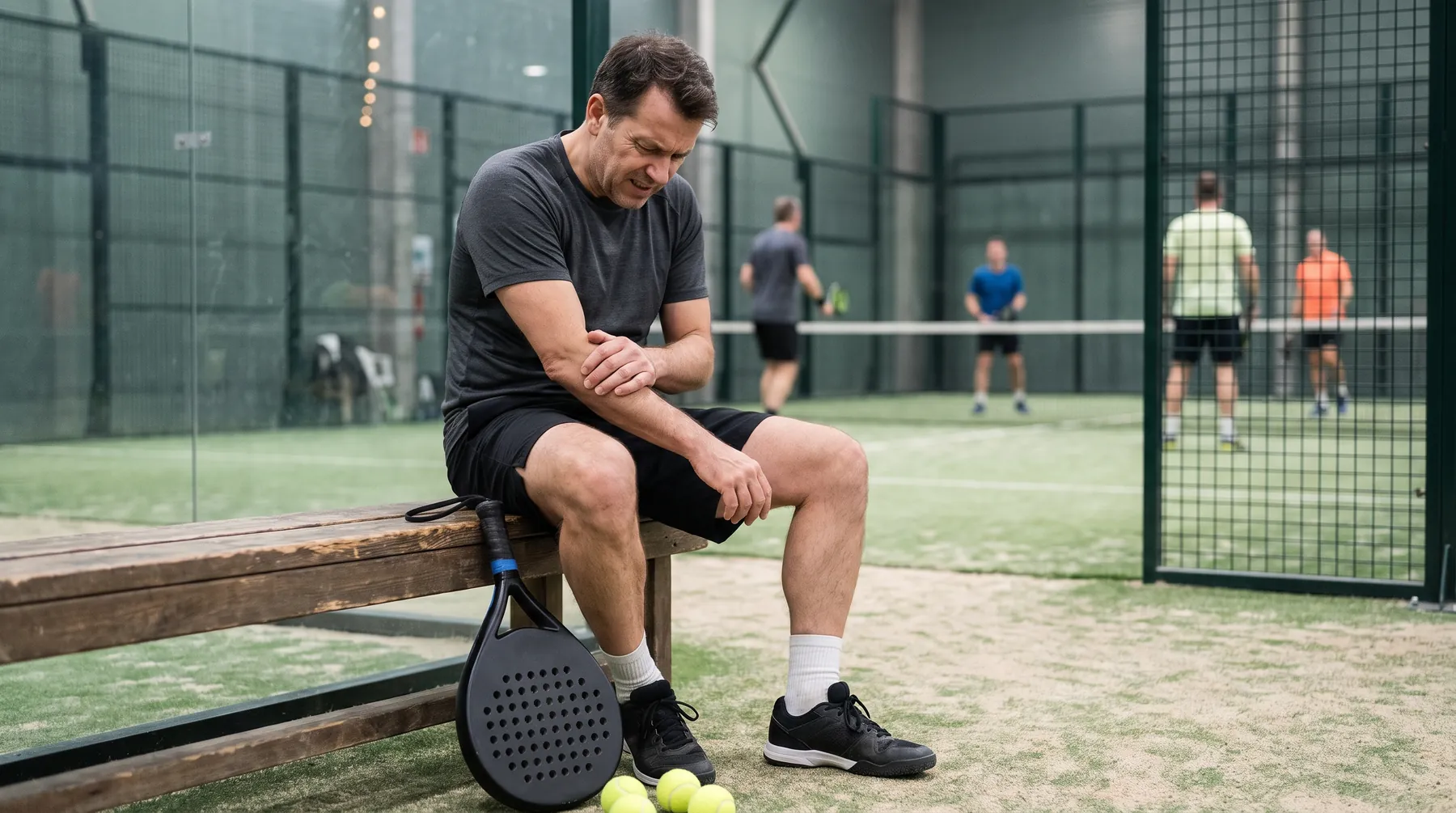
Padel elbow is the name players give to pain on the outside of the elbow. Medically it’s the same problem as tennis elbow. The muscles that pull your wrist back and steady it while you grip run along the top of your forearm and attach to a bony point on the outside of the elbow. When the tendon there is loaded more than it can cope with, over and over, it gets sore.
The NHS lists the main signs:
- pain on the outside of the elbow, anything from mild discomfort to a constant ache that disturbs your sleep;
- pain that gets worse when you grip something, lift or bend your arm, or move your wrist;
- tenderness or swelling around the elbow, and pain in the forearm;
- difficulty straightening the arm fully.
A UK sports clinic writing about padel adds that it’s often worse the morning after a match than during it, and that everyday things like shaking hands or lifting a kettle can set it off.
How common it is
A 2023 systematic review in BMJ Open Sport and Exercise Medicine pulled together eight studies of padel injuries, and the elbow came out as the most frequently reported injury site. A sports medicine review in the Aspetar journal puts elbow problems at around one in five padel injuries.
There’s a catch in that headline. The elbow is the single most injured spot, but the legs as a whole (calves, ankles and knees together) account for more injuries overall, a balance we looked at when asking whether padel is good exercise. The NHS also notes that tennis elbow is most common between the ages of 35 and 54, which covers a big slice of the people taking up padel.
Why padel causes it
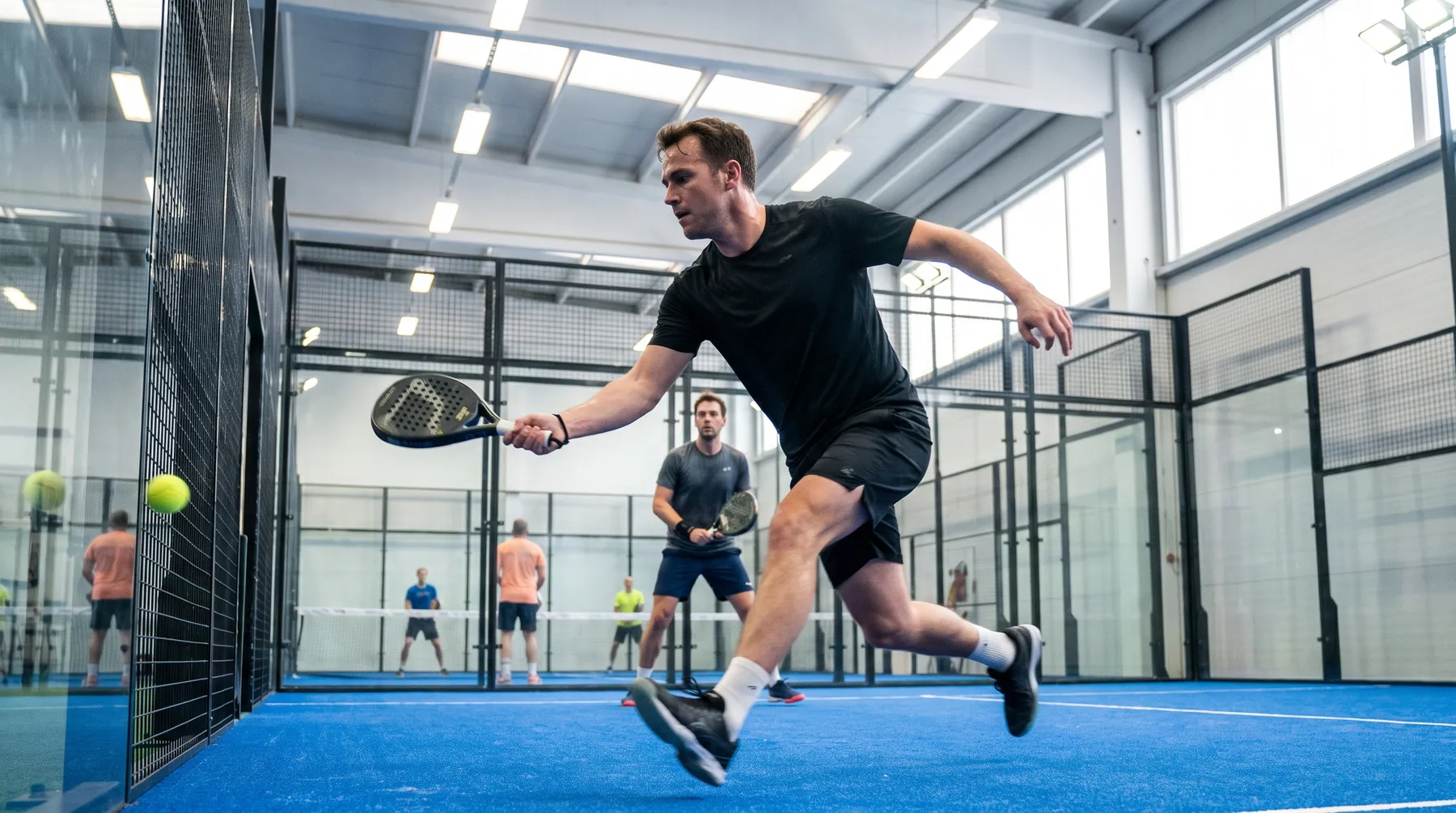
Every shot involves gripping the racket and controlling it with the forearm. The walls keep the ball in play, so rallies run longer and you repeat that action more often than you might expect. Most cases come from a mix of the following:
- Playing a lot more, quickly. Physios and coaches mention this most: occasional games turn into several a week before the body has adapted.
- Technique. The Aspetar review notes that recreational players tend to hit backhands with the wrist bent, which puts extra strain on the tendon. Off-centre hits add vibration.
- Kit. A heavy or head-heavy racket, a hard racket, a grip of the wrong size, and old, soft balls all make your forearm work harder.
- Cold, damp weather, which makes balls feel heavier, so each shot asks a little more of the arm.
- Being new to racket sports. A 2025 German study of padel players, summarised by the same UK clinic, found that players who didn’t also play other rebound sports hurt their elbow significantly more often.
Changes that take load off your elbow
None of these guarantees you’ll stay injury-free, but each one reduces how hard your forearm has to work.
Build up gradually. If you’ve caught the bug and want to play more, add sessions one at a time and leave rest days between hard ones. A sudden jump in court time is the trigger the sources mention most.
Look at your racket. If your elbow is sensitive, a round racket with a low or even balance, a soft core and a fibreglass face is the kindest combination. Avoid heavy or head-heavy models for now. The racket buying guide explains how shape, weight and balance trade off.
Use decent balls. Old, low-pressure balls make you swing harder to get the same pace, and padel balls lose their bounce faster than most people expect.
Check the grip. A handle that’s too thin or too thick makes you squeeze harder. Overgrips let you build it up, and learning to hold the racket more loosely between shots helps too. The grip post covers how tight is tight enough.
Vary the pace. Hitting every ball as hard as you can is hard on the arm and usually poor padel anyway. Lobs, soft balls to the feet and controlled volleys win plenty of points with far less effort.
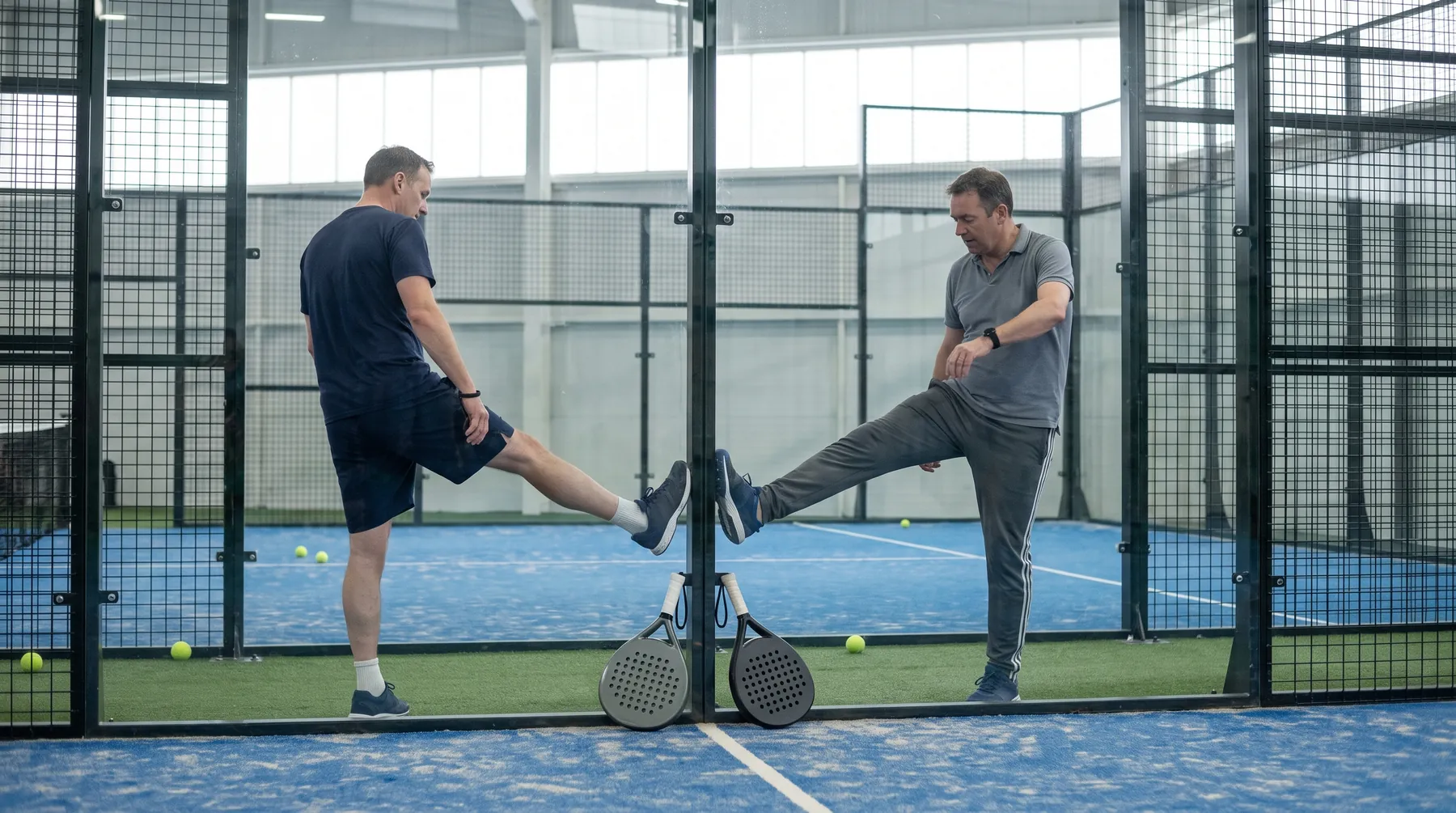
Strengthen and warm up. Physios writing for padel players recommend strength work for the forearm and the rotator cuff (the small muscles that steady the shoulder), plus a proper warm-up before you start hitting hard.
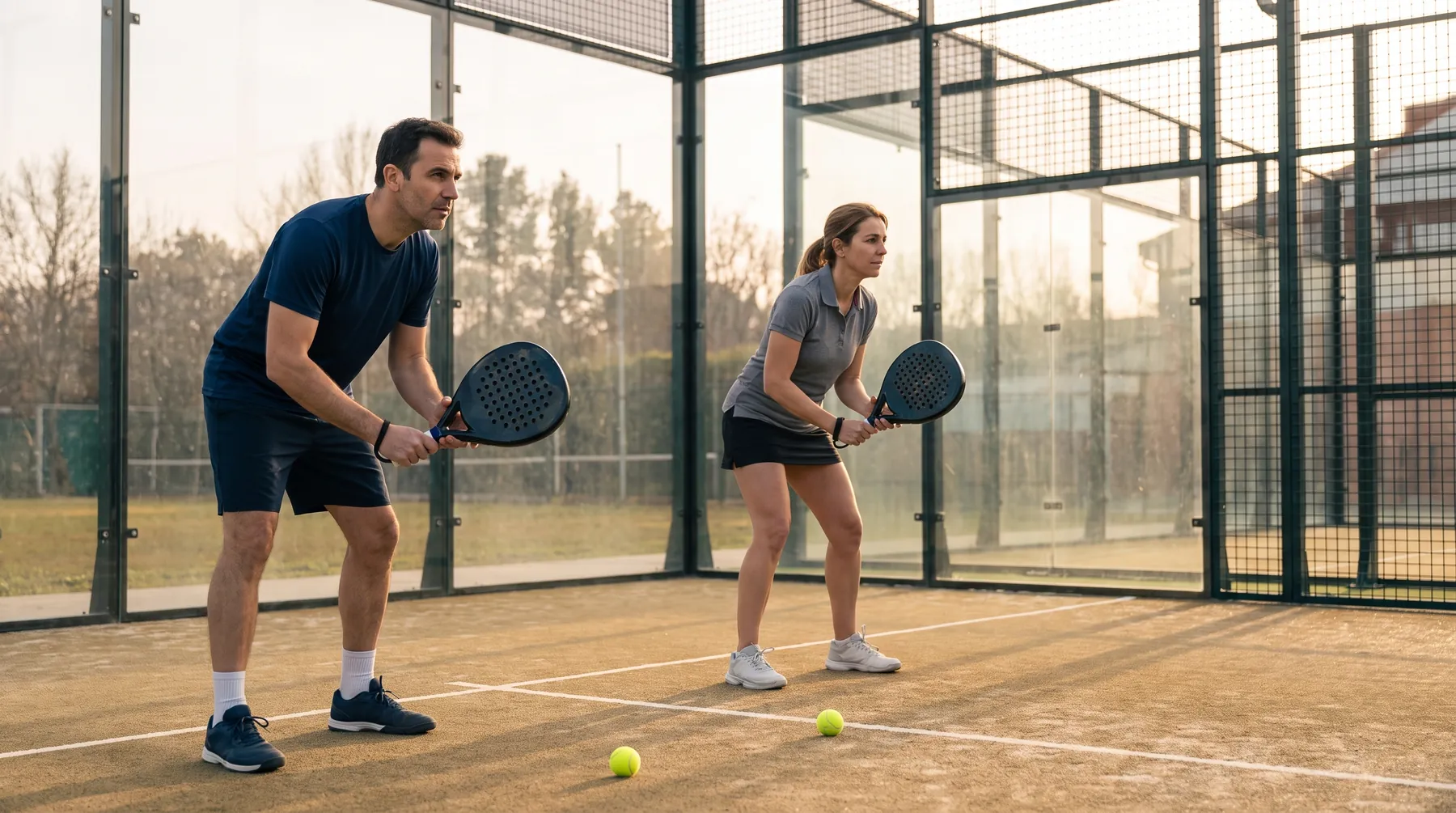
Get a few lessons. A coach can spot a bent-wrist backhand or a late contact you’d never notice yourself, so a short block of lessons can protect your arm as well as improve your game.
Notice where the ache appears. If it’s worse after sessions with old balls, in the cold, or with a borrowed racket, that’s a useful clue about what to change first.
If your elbow already hurts
The NHS says tennis elbow usually goes away with rest, though it can sometimes last more than a year. Its self-care advice is to:
- cut down on, or stop, the things that make it worse, which for most players means a break from padel;
- use paracetamol, or rub an anti-inflammatory gel on the area;
- try a hot or cold pack (a bag of frozen peas works) wrapped in a towel, for up to 20 minutes every two to three hours;
- do simple exercises such as gently bending and straightening the arm;
- try a forearm strap or an elbow or wrist brace, which pharmacies sell.
Avoid playing through it. Elbow tendon pain tends to build slowly, and a niggle you ignore for a month can become one that keeps you off court for much longer. When it settles, come back gradually, with shorter sessions and an eye on the technique and kit changes above.
When to see a professional
For most elbow pain the route is simple. A few symptoms shouldn’t wait, though. This is what the NHS advises:
| If | What to do |
|---|---|
| It still hurts after at least two weeks of rest and self-care | See a GP. In many areas you can refer yourself to NHS physiotherapy (community MSK services) instead. |
| Six weeks of home treatment hasn’t helped | Physiotherapy may help, usually stretching and strengthening for the wrist and forearm. |
| Your arm hurts when you exercise but settles when you rest, or it’s swollen and you have a very high temperature or feel hot, cold or shivery | Contact NHS 111. |
| Severe pain and you can hardly move the arm, a snap or a change in shape after an injury, or tingling or numbness | Go to an urgent treatment centre or A&E. |
| Sudden arm pain with pressure, heaviness or squeezing across your chest | Call 999. This can be a sign of a heart attack. |
The NHS notes that surgery is only an option if tennis elbow is still there after six to twelve months, so most people never get near it. For a stubborn case, a physio who knows racket sports is a good shout, because they’ll look at your playing load, grip and technique as well as the elbow itself.
Keep it in proportion
Plenty of players get a sore elbow at some point, and most are back on court after a rest, a change of racket or balls, and a slower build-up. Playing through the first few weeks of pain is the surest way to turn a niggle into a long lay-off.
So if your elbow aches the morning after a match, take it as a nudge to look at what’s changed: more sessions, a new racket, a tired tube of balls, a cold snap. Fixing that early is much easier than fixing the tendon later.
Next on the blog: padel for kids and juniors in the UK. What age children can start, what kit they need, and how junior coaching and competitions work.