The hardest part of your first padel session is usually the bit before it. Which session do you book? Do you need special shoes? Who brings the balls? Is it going to be embarrassing? Padel is about as easy as racket sports get for a first go, and you can turn up with very little. Here’s what to sort out beforehand.
Pick the right kind of session
There are three common ways in, and they suit different people.
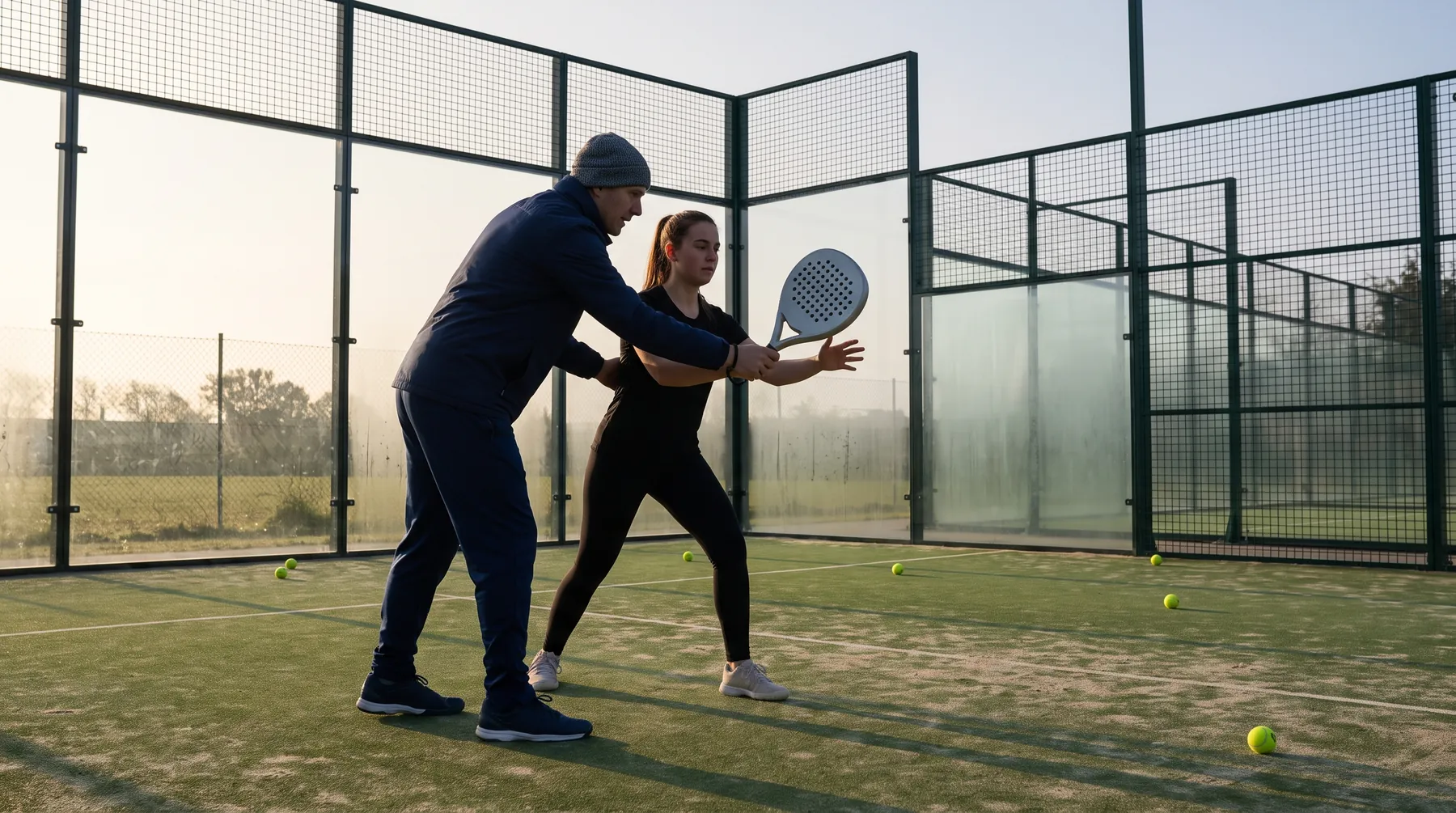
- An intro or beginner session is the gentlest start. A coach runs it, the venue provides rackets and balls, and everyone on court is new. You can book on your own. For most people this is the best first step.
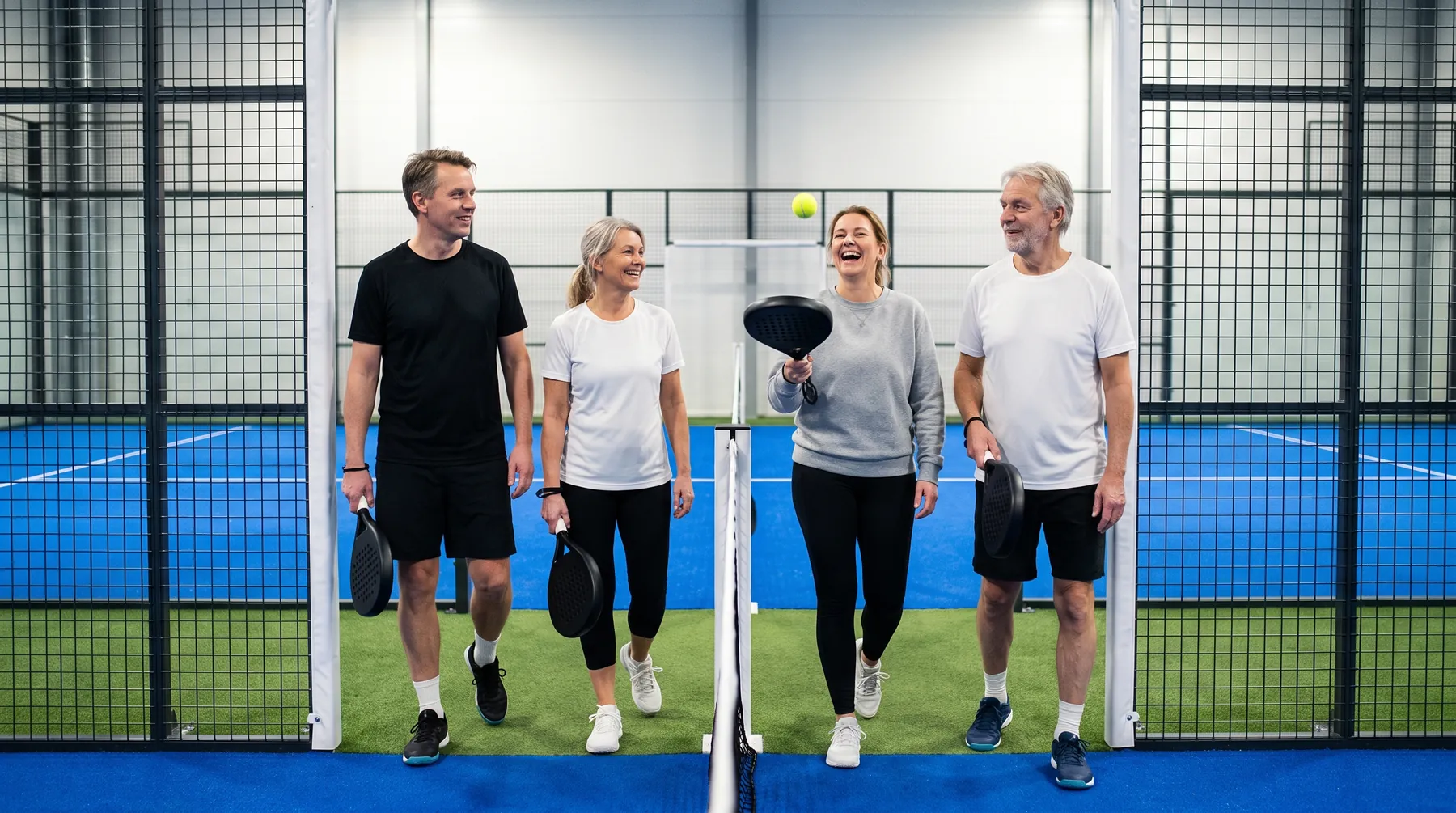
- At a social or mix-in, the venue fills the courts and rotates partners every few games. Check the listing, because some are open to all levels and some expect you to have played before.
- If you already have three other people keen to try, you can simply book a court for an hour. It’s the cheapest option per person, but nobody will show you what to do.
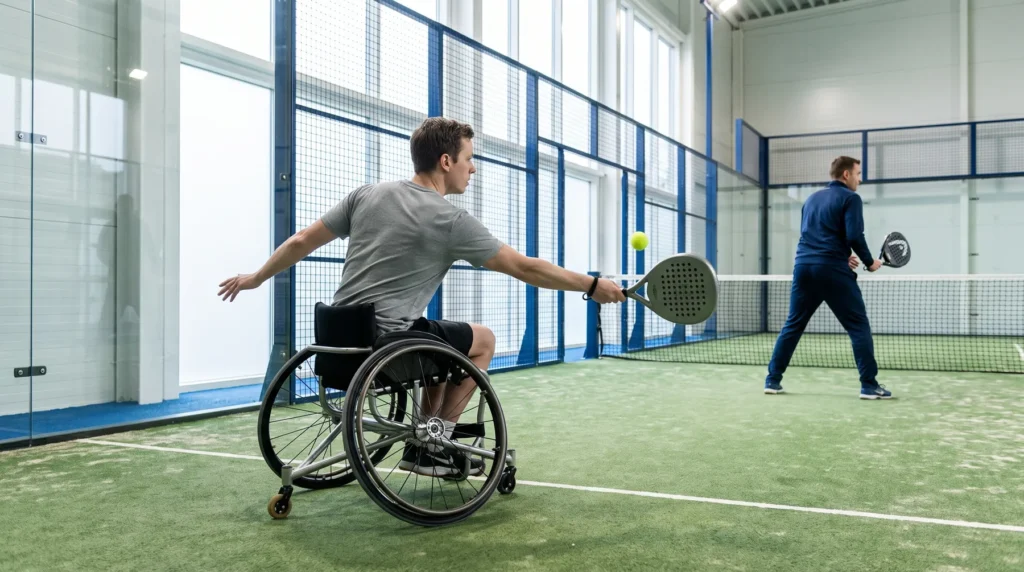
If you’re the only one in your group who’s interested, don’t let that stop you. Intro sessions and socials are built for exactly that, so the venue does the job of finding the other three. Some venues also run inclusive sessions for disabled players and wheelchair users, and adaptive and wheelchair padel explains what to ask before you book one.
How booking works
Most UK venues take bookings online, either through their own website or through an app such as Playtomic. You’ll usually need an account, and you pay when you book. Check a few things before you press the button:
- On some systems the person who books pays for the whole court and collects from everyone else. Others let each player pay their share.
- Many venues charge in full if you cancel inside 24 or 48 hours.
- Weekday evenings and weekends cost more almost everywhere.
- An outdoor court in Britain needs different clothing from an indoor one, so check which you’ve booked.
The apps and club systems are covered in more detail in how to book a padel court in the UK. To see what’s near you, with booking links, try our court finder.
What to wear
There’s no dress code at most venues beyond sports clothing. Shorts, leggings or a skirt, and a top you can sweat in, are all fine. Avoid jeans and anything that restricts your arms.
Shoes are the one thing that really matters. Padel courts are usually artificial grass with sand worked into it, and you spend the whole session making short sideways steps, stopping and turning.
Running shoes are built for moving forwards, have little support at the sides, and slide about on sandy turf. Tennis or other court shoes with a flat, grippy sole are much better for a first session. If you keep playing, padel shoes are usually the first thing to buy.
For outdoor courts in Britain, dress for the weather and bring a layer you can take off once you’ve warmed up. Take off rings, bracelets and dangly earrings before you go on. The court is small and rackets move quickly.
What to bring
The list is short:
- Water, and more of it than you expect to drink.
- A towel, and a spare top if you’re driving home afterwards.
- Your court shoes, if you’d rather change at the venue.
- A way to pay for racket hire, if it isn’t included in the booking.
Rackets and balls are usually provided on intro sessions. For a court booking, check whether the venue sells or lends balls. When you pick up a hire racket, put the wrist cord on. The rules require it, and padel rackets are solid enough to hurt if one slips out of someone’s hand.
What it costs
Prices vary a lot across the country and through the day. The LTA’s figures put the average off-peak booking at around £7 per person for an hour, or about £27 for the court. Price lists we’ve looked at range much wider than that.
| What | Typical cost |
|---|---|
| Court share at a quieter venue, off-peak | £3 to £5 each per hour |
| Court share at a mid-range venue | £6 to £9.50 each per hour |
| Court share at peak time in central London | £14 to £21 each per hour |
| Racket hire | Free to a few pounds |
Intro sessions and socials are priced per person, so you won’t be stuck paying for an empty place on court. If you book a court yourself and only three turn up, the venue will usually still charge for the full court.
On the day
- Arrive early. Ten or fifteen minutes is plenty. Courts run on tight hourly slots, and the clock starts whether you’re on court or still tying your laces.
- Say it’s your first time. At an intro session or a social, tell the organiser. They’ll pair you sensibly.
- Warm up together. Spend a few minutes hitting the ball to people so they can hit it back. Nobody’s keeping score yet.
- Agree the 40-40 rule. Advantage or golden point? Settle it before the first serve and nobody argues later (how padel scoring works explains both).
You don’t have to know every rule. If you know that the serve is underarm, that the ball has to bounce on the floor before it hits the glass, and that you can play it after it comes off your own wall, that’s enough. The serve rules are where beginners slip up most, so they’re worth five minutes on the way there.
What the first hour feels like
Most people can keep a rally going within their first session, which is a big part of why padel has spread so fast. The racket is short and solid, the court is small, and the walls give you a second chance at balls you’d have missed (there’s more on that in what padel is).
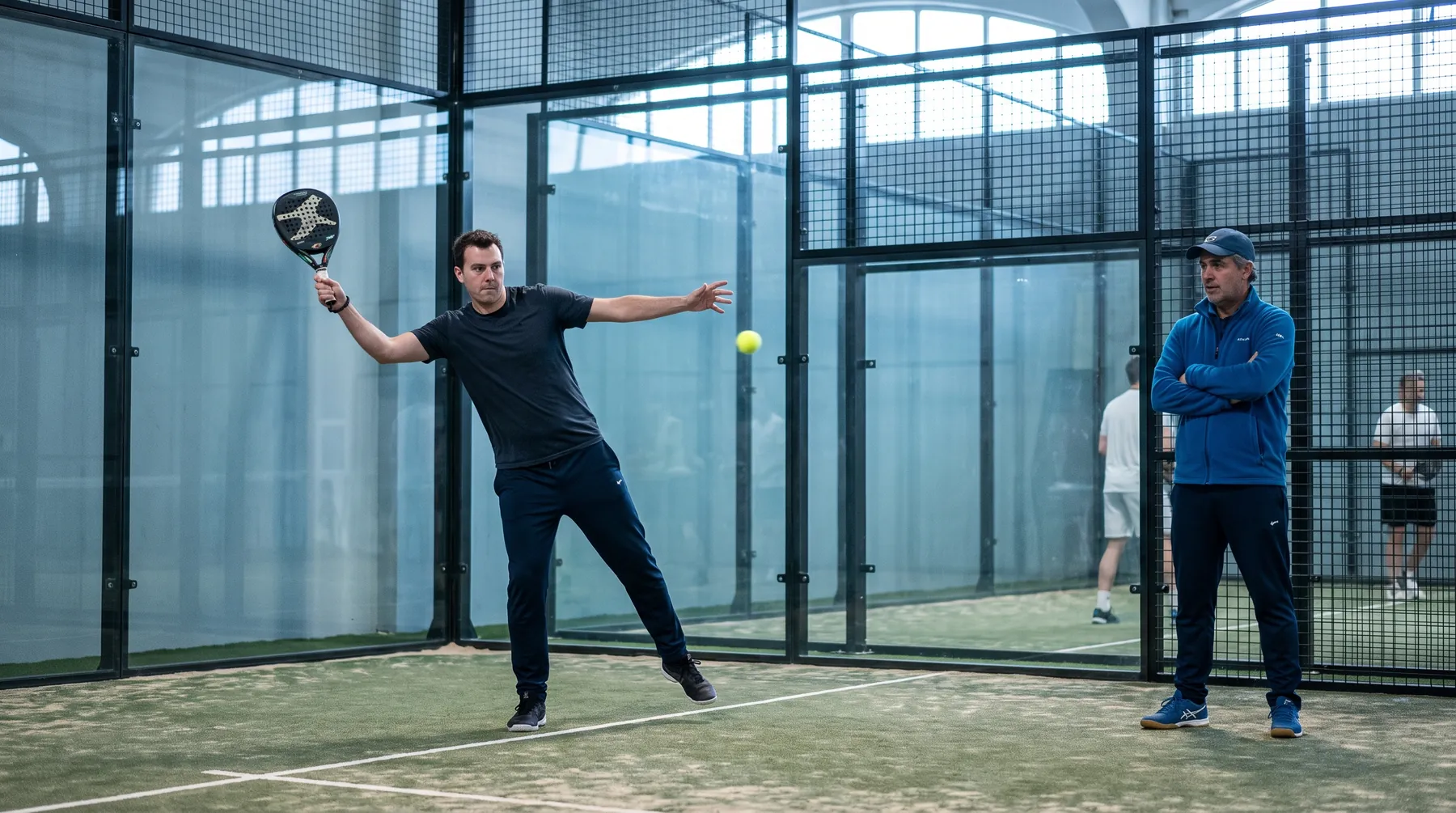
The glass is the part that takes time. Your instinct will be to chase the ball towards the back wall and hit it before it gets there. Try waiting instead: let it bounce, let it come off the glass, and hit it as it comes back towards you. You’ll misjudge plenty in the first few sessions, and so does everyone else.
Two habits help straight away. Call “mine” or “yours” on any ball that comes down the middle, and try to stay level with your partner so you move up and back together.
If your first session is a court booking with friends, spend ten minutes just rallying before you start keeping score. Everyone gets used to the glass, and the first game is a lot less chaotic.
After the first session
If you enjoyed it, keep hiring a racket for a few more sessions before you buy one. You’ll know much more about what you like once you’ve tried a few. Shoes are the better first purchase, because they make the biggest difference to how comfortable and safe you feel on court. The guide to padel shoes, balls and grips explains what to look for in a sole.
Next on the blogPadel for tennis players: what carries over and what doesn’t